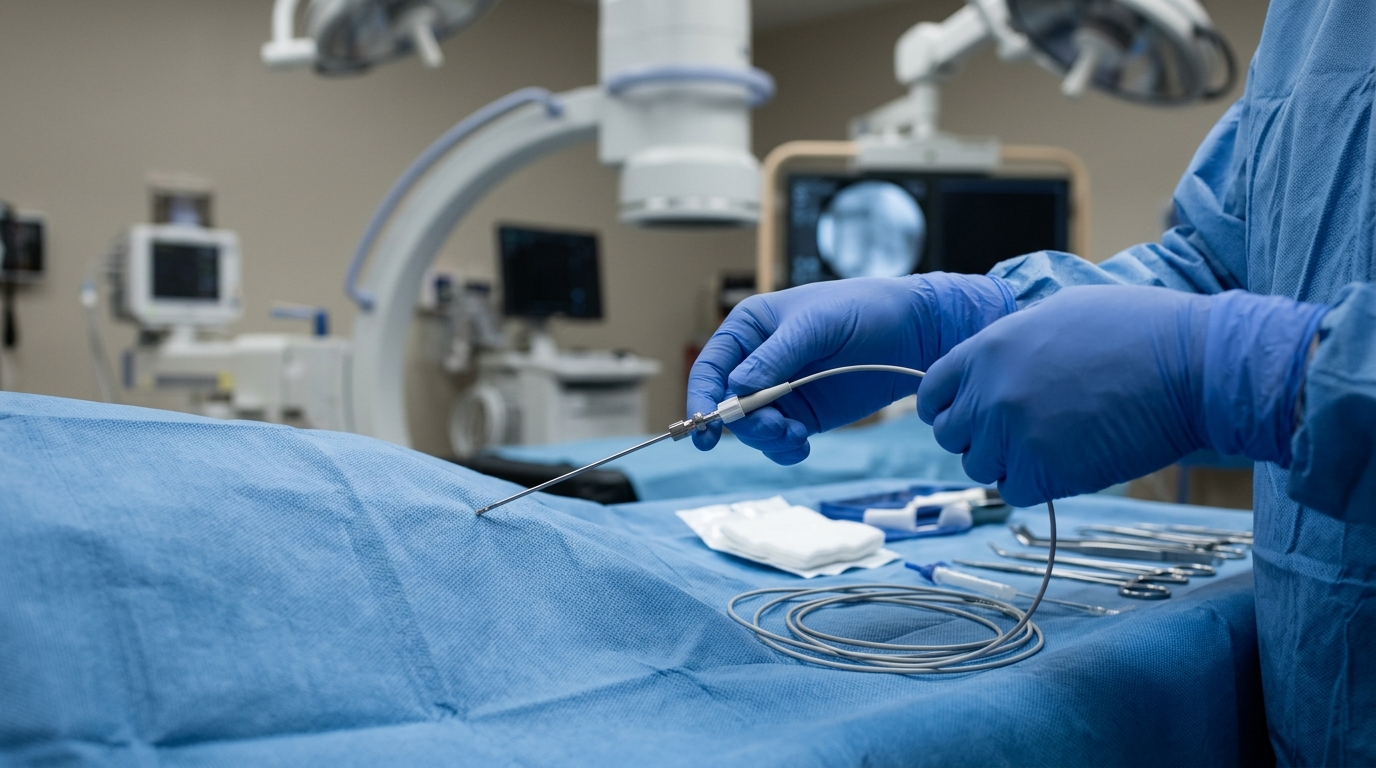
An international panel of interventional pain specialists has established the Leiden–Nice Consensus, creating a standardized clinical framework combining reproducible technical operating parameters with stepwise diagnostic and therapeutic algorithms for pulsed radiofrequency interventions in chronic pain. Introduced in 1998 by Menno E. Sluijter, pulsed radiofrequency emerged as a nondestructive alternative to continuous radiofrequency neuroablation, delivering high-intensity electrical fields without producing high-temperature thermal lesions. Over two decades, clinical utilization expanded across spinal, peripheral nerve, and articular structures, yet widespread implementation remained impeded by divergent technical protocols and absent clinical pathways. Convening across two sequential symposia in Leiden, the Netherlands, and Nice, France, the expert workgroup integrated device programming standards with structured clinical workflows. The resulting living document establishes pulsed radiofrequency as a primary neuromodulatory intervention for peripheral noncancer chronic pain while setting uniform parameters to enhance scientific reproducibility and patient safety across global pain centers.
The development of standardized protocols reflects an imperative to resolve reporting discrepancies and procedural heterogeneity in interventional pain literature. A structured query of the National Library of Medicine PubMed database revealed a marked increase in annual pulsed radiofrequency publications since 2015, demonstrating expanding clinical adoption. Despite this growing scientific output, the authors observed that adherence to structured methodological reporting remains deficient across interventional pain studies, generating inconsistent clinical outcomes and obstructing translation. While clinical reports consistently indicate that the technique is safe with negligible adverse event rates across neuropathic disorders, spinal conditions, and joint pain, the underlying literature frequently lacks adequate reporting of voltages, exposure durations, electrode geometry, and impedance ranges. By establishing explicit procedural baselines, the consensus initiative seeks to eliminate arbitrary technical variation, improve data comparability across international trials, and establish reproducible foundations that allow clinicians to reliably translate research findings into everyday clinical practice.
The consensus methodology incorporated elements of both Delphi methodology and a modified nominal group technique to formulate each clinical recommendation. Preceding symposia were approved by the London Pain Forum, assembling panels of anesthesiologists, orthopedists, and pain specialists. Four core investigators—Dr. Daniel de Moraes Ferreira Jorge, Dr. Alexandre Teixeira, Dr. Olav Rohof, and Dr. Luis Josino Brasil—participated in both the April 2024 meeting in Leiden and the 2025 assembly in Nice, ensuring conceptual continuity alongside rotating international experts. Consensus statements and algorithms were drafted in advance by the workgroup chair and refined during meetings through iterative discussion. Recommendations were evaluated through an open yes–no voting process, requiring unanimous agreement, defined as 100 percent affirmative votes, before formal adoption. To support deliberations, the multidisciplinary group conducted PubMed literature searches focusing on English-language full-text studies published from January 2020 to November 2025, evaluating candidate publications specifically on study design and technical pulsed radiofrequency parameters.
The broad literature review identified 196 total citations evaluating spinal pulsed radiofrequency interventions across four anatomical targets: 111 dorsal root ganglion studies, 40 medial branch records including 21 facet joint investigations, 31 discogenic pain publications, and 15 sacroiliac joint reports. Following systematic deduplication across indexing categories, unique records underwent abstract screening. Citations were excluded if they represented reviews, consensus statements, non-pulsed modalities, continuous ablation, or nonspinal targets. Subsequent full-text analysis eliminated papers lacking procedural parameters, missing full texts, containing duplicate cohorts, or misclassifying targets. Following screening, included publications comprised 71 dorsal root ganglion studies, 36 peripheral nerve reports, 19 intra-articular investigations, six medial branch papers, four discogenic studies, and one sacroiliac joint publication. Because this synthesis functioned as a consensus-guided narrative review rather than a formal systematic review, study selection was reported descriptively without a PRISMA flow diagram, prioritizing parameter extraction over formal evidence grading.
The technical standards established during the 2024 Leiden Consensus specify operating settings, cannula dimensions, and exposure durations across anatomical targets. For dorsal root ganglion interventions, the workgroup established an operating intensity of 35 volts delivered for six minutes, maintaining tissue impedance between 200 and 400 ohms. Cannula specifications require a six-centimeter electrode for cervical procedures and a ten-centimeter electrode for lumbar applications, each with a ten-millimeter active tip. For medial branch nerves, the guidelines recommend 40 volts for four minutes using a ten-millimeter active tip, with six-centimeter needles for cervical and ten-centimeter needles for thoracic and lumbar targets. The panel emphasized that nondestructive neuromodulation avoids paraspinal muscle denervation and subsequent intrinsic muscle atrophy associated with continuous radiofrequency ablation. Intra-articular applications require extended durations due to joint tissue biology, stipulating eight minutes for small joints using five-millimeter active tips and twelve minutes for large joints using ten-centimeter needles with ten-millimeter active tips.
Complex spinal procedures, including intradiscal and sacral interventions, incorporate rigorous verification safeguards. For discogenic pain, the consensus recommends delivering 40 volts for 15 minutes utilizing a 15-centimeter electrode with a 15-millimeter active tip positioned adjacent to the pain generator. The panel highlighted cohort data from Fukui and Rohof encompassing 145 patients, where intradiscal pulsed radiofrequency delivered at 60 volts for 12 to 15 minutes achieved significant pain reductions sustained across three to 12 months. Needle entry requires fluoroscopic imaging, low impedance below 200 ohms, sensory testing at 1.5 volts, and prophylactic antibiotics upon entering the disc. For central sensitization, sacral pulsed radiofrequency is introduced through the sacral hiatus at 45 volts for 15 to 20 minutes using ten- or 15-centimeter electrodes, scaled to spinous process tenderness on examination. The dispersive plate is placed over the high thoracic or low cervical spine, facilitating electromagnetic field propagation across the neuraxis.
Biophysical guidelines defined by the Leiden workgroup establish parameters governing energy delivery modes, probe geometry, and electrical field distribution. Although literature frequently documents standard settings of two hertz with 20-millisecond pulses, the panel advocates three or five hertz at five milliseconds with active tips of ten millimeters or less. This configuration maintains the duty cycle below 0.025, maximizing electric field excitations while limiting thermal accumulation to avoid tissue ablation. Probes with five-millimeter active tips produce no measurable heat spikes, concentrating therapy on neuromodulation. The consensus endorsed the Sluijter–Teixeira–Poisson mode, where pulses follow a stochastic, Poisson-like distribution with variable frequencies and widths. Monopolar delivery remains standard, with exceptions reserved for obesity or cardiac pacemakers. The workgroup emphasized replacing the term ground plate with dispersive plate, positioning it close to the intervention site to optimize field coverage while maintaining asepsis, and explicitly advised against concurrent corticosteroid administration to avoid suppressing therapeutic immune responses.
Translational and experimental evidence cited by the workgroup indicates that pulsed radiofrequency operates through multifaceted cellular and molecular mechanisms rather than gross thermal destruction. These cellular pathways provide a biological rationale for observed clinical pain relief and explain why shorter active tips, such as five-millimeter electrodes, effectively eliminate thermal spikes while concentrating biological actions on immune and neuromodulatory processes within target tissues.
The 2025 Nice Consensus established diagnostic algorithms across spinal, joint, and persistent pain states to ensure interventions follow comprehensive clinical assessment. For cervical facet pain, magnetic resonance imaging must exclude surgical pathology before initiating cervical medial branch pulsed radiofrequency, escalating to dorsal root ganglion neuromodulation if symptoms persist. In shoulder pain, intra-articular application serves as the primary intervention, followed by suprascapular nerve neuromodulation if relief remains incomplete. For knee osteoarthritis, intra-articular pulsed radiofrequency, with or without viscosupplementation, constitutes the first step, escalating to genicular nerve targeting at superior medial, superior lateral, and inferior medial branches while avoiding the inferior lateral branch to prevent common fibular nerve injury. Hip protocols endorse pericapsular nerve group blocks combined with pulsed radiofrequency to modulate femoral, obturator, and accessory obturator nerves. Thoracic algorithms direct interventions toward medial branches or intercostal nerves, utilizing erector spinae plane blocks as adjuncts and dorsal root ganglion neuromodulation as secondary options.
The integrated consensus establishes an overarching five-stage escalation pathway that positions nondestructive neuromodulation ahead of surgical or ablative alternatives. Clinical management commences with thorough clinical evaluation (step A) to rule out red flags and surgical indications, adhering to the physical examination maxim to put your finger before the needle. Patients then transition to conservative physical and pharmacological therapies (step B) before proceeding to pulsed radiofrequency neuromodulation (step C). In refractory cases, focused peripheral nerve interventions (step D) are pursued, reserving continuous radiofrequency ablation (step E) strictly for persistent pain, advanced joint degeneration, or intractable oncologic syndromes where neuromodulation has failed. The authors emphasized that their guidelines constitute expert consensus supported by published literature rather than high-level evidence from randomized controlled trials, representing an adaptable living document rather than rigid mandates. Future multicenter investigations and prospective clinical trials are necessary to validate diagnostic algorithms, evaluate long-term structural durability across targeted tissues, and refine technical parameters across diverse patient populations.
Subject of Research: Standardization of pulsed radiofrequency technical parameters and clinical treatment algorithms for chronic pain management.
Article Title: The Leiden–Nice Consensus (2024–2025)—Technical Standardization and Clinical Algorithms for Pulsed Radiofrequency for Chronic Pain
Article References: de Moraes Ferreira Jorge, D., Rohof, O., Teixeira, A., Ergönenç, T., Brasil, L. J., Elhalwagy, A., da Fonseca, P. R. B., de Araujo, J. L., & Marsili, F. (2026). The Leiden–Nice Consensus (2024–2025)—Technical Standardization and Clinical Algorithms for Pulsed Radiofrequency for Chronic Pain. Pain and Therapy, 15(5), 1167-1185. https://doi.org/10.1007/s40122-026-00885-0
Image Credits: AI Generated
DOI: 10.1007/s40122-026-00885-0
Keywords: pulsed radiofrequency, chronic pain management, Leiden-Nice Consensus, neuromodulation, dorsal root ganglion, medial branch nerve, intra-articular intervention, sacroiliac joint pain, discogenic back pain, genicular nerves, pericapsular nerve group, central sensitization, duty cycle, dispersive plate, Sluijter-Teixeira-Poisson mode, voltage-gated sodium channels, nominal group technique
News Source: Ophelia Keating. (November 18, 2026). Global Pain Consensus Standardizes Pulsed Radiofrequency Protocols and Stepwise Treatment Algorithms. Scienmag.