


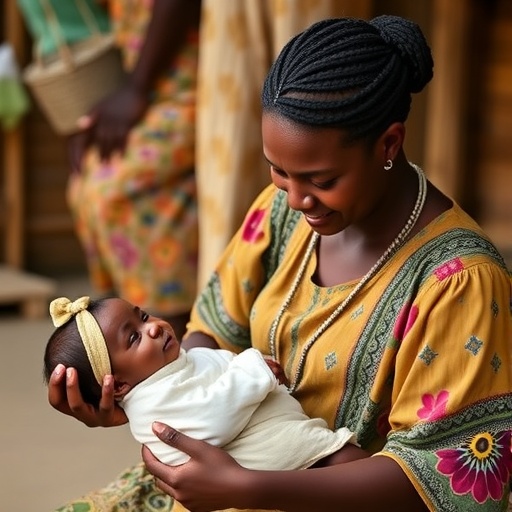
In a groundbreaking movement to elevate global health education, a novel model originating from Ethiopia is captivating the medical community worldwide. The Ethiopian Newborn Quality Improvement ECHO initiative, as detailed in the latest publication in the Journal of Perinatology, represents a transformative approach to addressing newborn care through collaborative, knowledge-sharing networks empowered by technology. This initiative is not merely a local intervention; it encapsulates a paradigm shift with profound implications for global health education systems.
Central to this innovative model is the adaptation of the Extension for Community Healthcare Outcomes (ECHO) framework, which traditionally connects specialists with primary care providers in underserved regions. What sets the Ethiopian iteration apart is its targeted focus on newborn care quality, an area critically linked to neonatal mortality rates that continue to challenge low- and middle-income countries. By deploying a scalable and sustainable educational platform, this program unites healthcare providers across Ethiopia, facilitating continuous quality improvement through mentorship, data-driven feedback, and peer learning.
The initiative confronts the entrenched barriers of geographical isolation and resource constraints, leveraging virtual platforms to democratize specialized knowledge. The model’s core mechanism revolves around regular tele-mentoring sessions, during which experts at tertiary centers engage with frontline clinicians. This interaction allows for real-time case discussions, sharing of best practices, and collective problem-solving strategies. Such an interactive format transcends traditional didactic learning, fostering an engaged community of practice that is dynamic and responsive to local healthcare contexts.
A critical technical facet underpinning the success of the Ethiopian Newborn Quality Improvement ECHO is its integration with established health information systems. The program utilizes a robust data collection and analysis framework that supports tracking of clinical outcomes, process metrics, and adherence to evidence-based protocols. This data-centric approach ensures accountability and continuous refinement of care practices, contributing to measurable improvements in neonatal health indicators.
Healthcare professionals participating in the initiative report enhanced clinical decision-making capabilities and increased confidence when managing complex neonatal cases. The mentorship model cultivates a culture of continuous learning and quality improvement, integral to sustaining healthcare gains in resource-limited environments. Moreover, it fosters professional solidarity, reducing the sense of isolation often experienced by clinicians working in rural or remote settings.
The Ethiopian experience offers compelling evidence that technology-enabled networks can bridge knowledge gaps effectively without necessitating substantial infrastructural investments. By repurposing readily available virtual meeting tools and integrating local expertise, the model exemplifies cost-effective innovation. Importantly, the initiative emphasizes co-creation and respects local knowledge systems, ensuring that interventions are contextually appropriate and culturally sensitive.
This model’s implications extend well beyond Ethiopia, serving as a blueprint for other countries grappling with neonatal mortality and workforce training challenges. Its scalable framework can be adapted to various health domains and geographical settings, promising a ripple effect across global health education landscapes. The initiative demonstrates that global health capacity-building must move beyond sporadic workshops or conferences, embracing continuous, interactive, and technologically mediated learning.
The success of the Ethiopian Newborn Quality Improvement ECHO also challenges traditional paradigms of knowledge transfer, advocating for bidirectional learning where frontline providers contribute valuable insights on practical challenges and innovations. Such democratization of expertise not only enhances care quality but also empowers health workers, fostering ownership and motivation essential for sustainable improvements.
An intriguing aspect of this initiative is its alignment with global health priorities, including the Sustainable Development Goals, particularly those aimed at reducing child mortality and improving maternal health. By focusing efforts on neonatal care, the program directly addresses critical determinants of child survival and long-term developmental outcomes, underpinning broader health system strengthening efforts.
Furthermore, the initiative incorporates a rigorous evaluation methodology, employing mixed methods to assess both quantitative health outcomes and qualitative aspects such as provider experience and system-level changes. This comprehensive approach ensures that the model’s impacts are well-documented and informs iterative improvements, reinforcing the learning culture it promotes.
Collaboration across multiple sectors, including governmental health agencies, academic partners, and international organizations, has been instrumental in the initiative’s design and execution. This multi-stakeholder engagement exemplifies a holistic approach to global health challenges, recognizing that sustainable solutions require integrated efforts and shared accountability.
The Ethiopian Newborn Quality Improvement ECHO represents an exemplar of how digital health innovations, when thoughtfully implemented, can accelerate progress toward equitable, high-quality healthcare. It underscores the necessity of adaptive models that consider local realities while harnessing global expertise, a balance critical for meaningful and lasting transformation.
In sum, this model is more than an educational tool; it is a catalyst for systemic change within neonatal care frameworks. As the program continues to evolve, its outcomes will surely inspire similar adaptations worldwide, reinforcing the principle that knowledge sharing, powered by technology and human collaboration, holds the key to advancing global health equity.
This ambitious initiative marks a significant milestone in reimagining global health education modalities. It provides a compelling case for leveraging tele-mentoring and data-enabled feedback loops as integral components of healthcare improvement strategies. The model’s replicability and adaptability suggest its potential to become a cornerstone in global health education, driving innovations that resonate across disciplines and continents alike.
With neonatal mortality remaining a pressing challenge globally, the Ethiopian Newborn Quality Improvement ECHO stands out as a beacon of hope and a testament to the power of innovation, partnership, and unwavering commitment to the health of the most vulnerable.
Subject of Research: Newborn quality improvement through technology-enabled global health education models, focusing on Ethiopia
Article Title: A model for global health education through the Ethiopian newborn quality improvement ECHO initiative
Article References:
Rent, S., Claassen, C.C., Diego, E. et al. A model for global health education through the Ethiopian newborn quality improvement ECHO initiative. J Perinatol (2025). https://doi.org/10.1038/s41372-025-02454-3
Image Credits: AI Generated
DOI: 09 December 2025
Tags: collaborative healthcare networksdata-driven feedback in healthcareECHO model in healthcareEthiopia newborn care initiativeGlobal health educationneonatal mortality reduction strategiespeer learning in medicinequality improvement in newborn carescalable education platformstechnology in health educationtele-mentoring for cliniciansunderserved regions healthcare solutions



