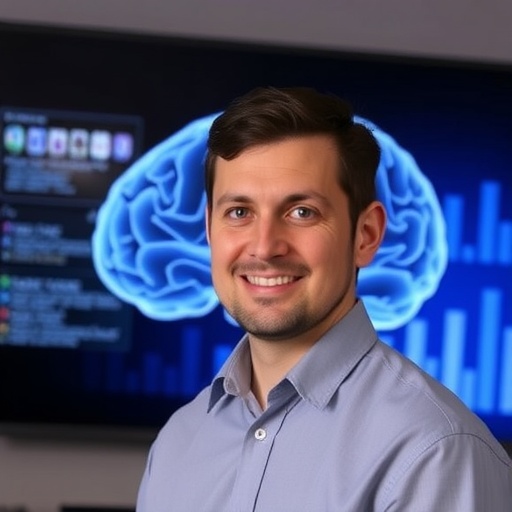
Ryan Corces, an esteemed investigator at Gladstone Institutes, has recently been honored as a 2026 recipient of the Pershing Square Foundation’s MIND Prize, a distinguished award that recognizes visionary thinkers pushing the boundaries of neuroscience, cognition, and neurodegenerative research. This accolade spotlights scientists whose pioneering work harnesses innovative methodologies to unravel the complex biological and environmental factors influencing brain health and disease progression, with a particular focus on devastating illnesses like Alzheimer’s disease.
The MIND Prize, bestowed annually to a select group of eight researchers, is designed not only to recognize outstanding contributions to neuroscience but also to catalyze transformative collaborations across academia, industry, philanthropy, and other sectors committed to advancing brain science. Each laureate receives $750,000 disbursed over three years to fuel high-risk, high-reward projects aimed at decoding the intricate mechanisms underlying neurodegeneration and dementia. This generous support enables researchers like Corces to deploy state-of-the-art technologies to interrogate previously inscrutable facets of neurological disorders.
Corces’ research trajectory is deeply embedded in deciphering how the interplay of genetics and environmental factors influences the susceptibility to neurodegenerative diseases. His lab, rooted within Gladstone’s Institute of Neurological Disease, aims to bridge critical gaps in the understanding of Alzheimer’s disease by investigating families with high incidence rates of the condition yet lacking identifiable pathogenic mutations. This paradox challenges existing paradigms that largely attribute Alzheimer’s risk to known gene variants, revealing a pressing need for novel approaches to identify unrecognized genetic contributors.
Employing a cutting-edge combination of artificial intelligence and CRISPR genome-editing techniques, Corces’ project endeavors to sift through vast genomic datasets to discover and validate elusive genetic drivers that may predispose individuals to Alzheimer’s disease. AI-driven algorithms facilitate the identification of subtle genetic variations and complex gene-environment interactions that traditional analytic methods often miss. CRISPR technologies then provide a precise toolkit to experimentally test these candidates, enabling functional characterization within cellular and animal models to establish causal links to disease mechanisms.
Such an integrative technological approach is groundbreaking, not merely for its capacity to identify unknown pathogenic variants but also for its promise in stratifying Alzheimer’s disease into molecularly distinct subtypes. By achieving this level of resolution, researchers can tailor therapeutic interventions more effectively, targeting the root causes at a genetic and epigenetic level before irreversible neurodegeneration sets in. The implications for clinical practice could be profound, shifting Alzheimer’s treatment paradigms toward individualized prevention and early intervention.
Alzheimer’s disease remains arguably the most complex and intractable neurodegenerative disorder facing the global population. Its multifactorial etiology, involving an interplay of genetic predispositions, lifestyle factors, and age-related changes, has made it notoriously resistant to conventional research and therapeutic approaches. The escalating prevalence of Alzheimer’s, projected to afflict nearly 13 million Americans by 2050, underscores the urgent need for innovative research to illuminate its pathogenesis and facilitate the development of effective treatments.
Neri Oxman, Trustee of the Pershing Square Foundation, highlighted the transformative potential encapsulated within this year’s cohort of MIND Prize recipients. She emphasized the unprecedented convergence of advanced biologic research with computational power, particularly AI, which is enabling the community to bridge molecular structures with behavioral phenotypes and genetic determinants with environmental modifiers. This synthesis heralds a new era where scientific serendipity—merging diverse disciplines and novel technologies—can accelerate breakthroughs against neurodegenerative diseases.
The significance of Corces’ work is further underscored by comments from Lennart Mucke, MD, director of the Gladstone Institute of Neurological Disease, who lauded the fusion of AI and CRISPR as an essential paradigm shift needed to reveal the hidden drivers of Alzheimer’s. His endorsement signals strong institutional support for research ventures that push beyond traditional frameworks and harness the synergistic potential of computational and molecular biology in disease modeling and drug discovery.
Beyond the laboratory, the Pershing Square Foundation remains a pivotal force in fostering research excellence. Founded in 2006, this family foundation is committed to backing innovative leaders and transformative projects addressing key challenges across health, education, economic development, and environmental sustainability. Its philanthropic influence has catalyzed progress in myriad domains, highlighting the critical role of strategic funding in nurturing cutting-edge scientific discovery with tangible societal impact.
Gladstone Institutes, where Corces conducts his research, epitomizes an unconventional research model that disrupts conventional science paradigms. Established in San Francisco’s dynamic Mission Bay district, Gladstone is a nonprofit institution renowned for attracting pioneering minds and prioritizing visionary scientific pursuits that challenge the status quo. Their ecosystem, designed to support blue-sky research and early-stage innovation, aligns seamlessly with Corces’ focus on leveraging disruptive technologies to address some of the most formidable challenges in neurodegenerative disease.
As Alzheimer’s continues to impart an enormous socioeconomic burden—a devastating toll on patients, caregivers, and healthcare systems worldwide—the imperative to illuminate its underlying causes and intervene early has never been greater. Corces’ AI-CRISPR integrated approach offers a powerful beacon of hope, promising to identify novel genetic risk factors that have remained undetected with conventional analysis, thereby enabling precision medicine approaches poised to alter the landscape of dementia care.
The MIND Prize’s investment in Corces’ vision exemplifies the bold spirit required to tackle Alzheimer’s head-on, emphasizing that combining computational acumen with molecular genetics is not merely a future goal but an immediate necessity. This dual-technology strategy holds the potential to accelerate drug discovery pipelines by pinpointing actionable molecular targets, ultimately helping to develop therapies that could delay onset, halt progression, or even prevent Alzheimer’s disease altogether.
In sum, Ryan Corces’ groundbreaking research funded by the MIND Prize represents a vital scientific frontier. By integrating AI-driven genomic analysis with cutting-edge CRISPR functional validation, his work stands at the vanguard of a transformative era in neurodegenerative disease research. This approach elucidates the intricate genetic architecture of Alzheimer’s, offering fresh insights that could fundamentally redefine prevention and treatment strategies, ultimately holding the promise of sparing millions worldwide from the ravages of dementia.
Subject of Research: Alzheimer’s disease, genetic drivers of neurodegenerative diseases, AI and CRISPR integration in neuroscience research
Article Title: Breaking New Ground in Alzheimer’s Research: AI and CRISPR Unite to Unravel Genetic Mysteries
News Publication Date: 2026
Web References:
Gladstone Institutes: https://gladstone.org/people/ryan-corces#research
Pershing Square Foundation MIND Prize Announcement: https://www.businesswire.com/news/home/20260310145285/en/Pershing-Square-Foundation-Awards-MIND-Prize-to-Eight-Pioneering-Researchers
Pershing Square Foundation: https://pershingsquarephilanthropies.org/
Image Credits: Gladstone Institutes
Keywords: Alzheimer’s disease, neurodegenerative diseases, artificial intelligence, CRISPR, genetics, genome editing, AI-driven genomics, CRISPR functional validation, neurodegeneration, dementia, precision medicine, drug discovery
Tags: Alzheimer’s disease susceptibility factorsbrain health disease progressionfunding for neurodegenerative researchGladstone Institutes Alzheimer’s researchhigh-risk neuroscience projectsinnovative neurodegenerative methodologiesinterdisciplinary brain science collaborationsMIND Prize Alzheimer’s researchneurodegeneration genetics and environmentnovel Alzheimer’s disease driversPershing Square Foundation awardRyan Corces neuroscience research