Credit: Tomasz Sulej
During the Triassic period (252-201 million years ago) mammal-like reptiles called therapsids co-existed with ancestors to dinosaurs, crocodiles, mammals, pterosaurs, turtles, frogs, and lizards. One group of therapsids are the dicynodonts. Researchers at Uppsala University in Sweden, together with colleagues in Poland, have discovered fossils from a new genus of gigantic dicynodont. The new species Lisowicia bojani is described in the journal Science.
The earth is about 4.5 billion years old and has gone through many geological periods and dramatic change. During the Triassic period, about 252-201 million years ago, all land on Earth came together and formed the massive continent called Pangea. During this time, the first dinosaurs came into being as well as ancestors to crocodiles, mammals, pterosaurs, turtles, frogs, and lizards. Recently, scientists have become interested in another type of animal, therapsids. Therapsids were "mammal-like" reptiles and are ancestors to the mammals, including humans, found today. One group of therapsids is called dicynodonts. All species of dicynodonts were herbivores (plant eaters) and their sizes ranged from small burrowers to large browsers. Most of them were also toothless. They survived the Permian mass extinction and became the dominant terrestrial herbivores in the Middle and Late Triassic. They were thought to have died out before the dinosaurs became the dominant form of tetrapod on land.
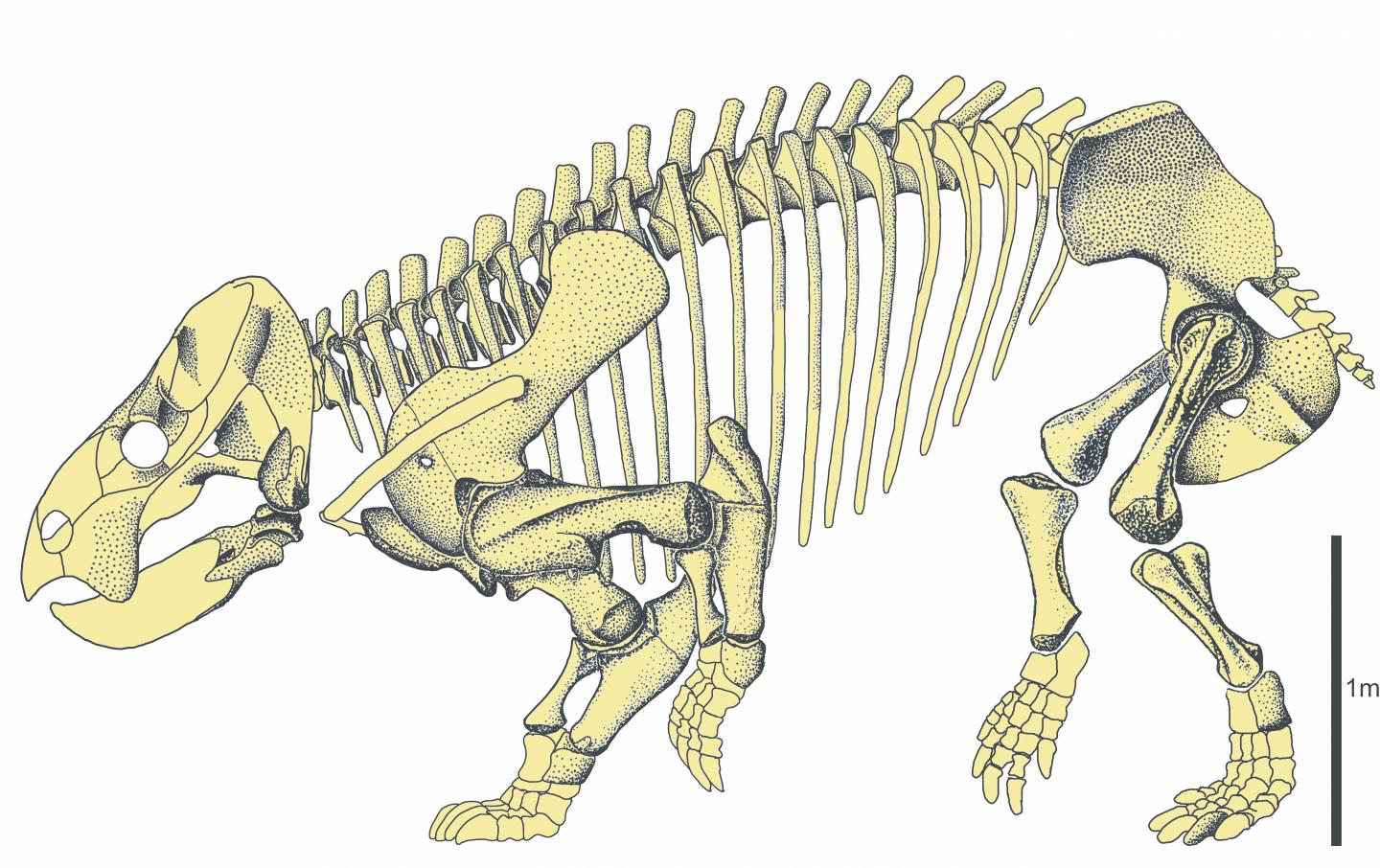
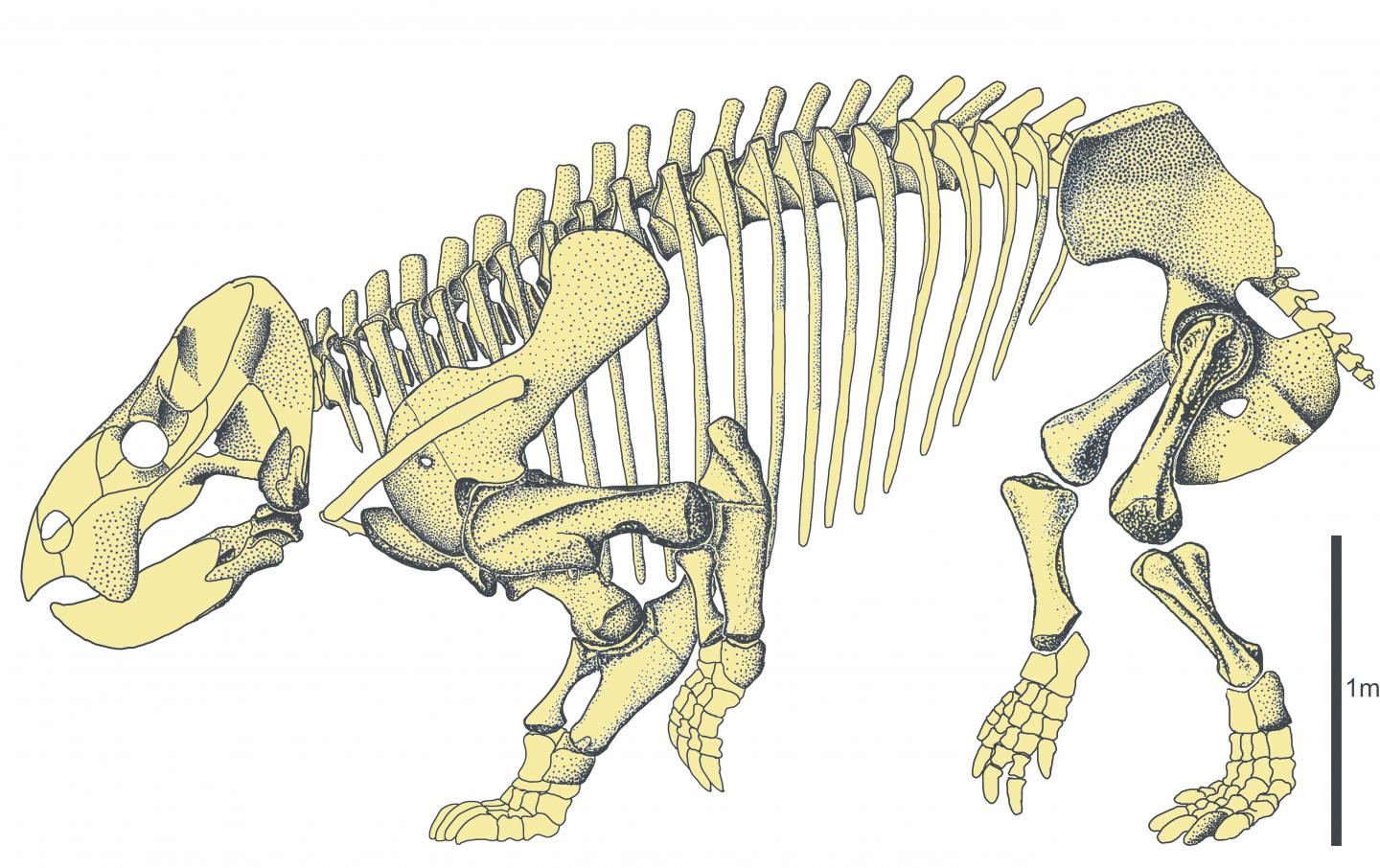
For the first time, researchers in the research programme Evolution and Development at Uppsala University in collaboration with researchers at the Polish Academy of Sciences (Warsaw), have discovered fossils from a new species of dicynodont in the Polish village of Lisowice. The species was named Lisowicia bojani after the village and a German comparative anatomist named Ludwig Heinrich Bojanus who worked in Vilnius and is known for making several important anatomical discoveries. The findings show that the Lisowicia was about the size of a modern-day elephant, about 4.5 metres long, 2.6 metres high and weighed approximately 9 tons, which is 40 percent larger than any previously identified dicynodont. Analysis of the limb bones showed that they had a fast growth, much like a mammal or a dinosaur. It lived during the Late Triassic, about 210-205 million years ago, about 10 million years later than previous findings of dicynodonts.
"The discovery of Lisowicia changes our ideas about the latest history of dicynodonts, mammal Triassic relatives. It also raises far more questions about what really make them and dinosaurs so large," says Dr Tomasz Sulej, Polish Academy of Sciences.
"Dicynodonts were amazingly successful animals in the Middle and Late Triassic. Lisowicia is the youngest dicynodont and the largest non-dinosaurian terrestrial tetrapod from the Triassic. It's natural to want to know how dicynodonts became so large. Lisowicia is hugely exciting because it blows holes in many of our classic ideas of Triassic 'mammal-like reptiles'," says Dr Grzegorz Niedzwiedzki, Uppsala University.
The first findings of fossils from Lisowice in Poland were made in 2005 by Robert Borz?cki and Piotr Menducki. Since then, more than 1,000 bones and bone fragments have been collected from the area, including fossils from Lisowicia. The area is thought to have been a river deposit during the Late Triassic period.
The discovery of Lisowicia provides the first evidence that mammal-like elephant sized dicynodonts were present at the same time as the more well-known long-necked sauropodomorph dinosaurs, contrary to previous belief. Sauropodomorphs include species like the Diplodocus or Brachiosaurus. It fills a gap in the fossil record of dicynodonts and it shows that some anatomical features of limbs thought to characterize large mammals or dinosaurs evolved also in the non-mammalian synapsid. Finally, these findings from Poland are the first substantial finds of dicynodonts from the Late Triassic in Europe.
"The discovery of such an important new species is a once in a lifetime discovery," says Dr Tomasz Sulej.
###
Media Contact
Dr Grzegorz Niedzwiedzki
[email protected]
@UU_University
http://www.uu.se
Related Journal Article
http://dx.doi.org/10.1126/science.aal4853