A nationwide clinical research platform has been established across major academic medical centres in Germany to track stroke patients through an adaptive, multi-centre longitudinal cohort framework. Documented in a protocol published in Neurological Research and Practice, the Stroke-CORE project, designated as the COhort for REsearch in Stroke, operates under the stroke-specific Specialty Network within the Network University Medicine. The initiative addresses a structural deficit in the national scientific landscape, where clinical stroke investigations have historically lacked a single harmonised infrastructure despite the presence of specialized acute care networks. Designed as a prospective observational architecture structured around a modular umbrella protocol, the investigation aims to enrol a representative population of patients experiencing acute ischaemic stroke or intracerebral haemorrhage, alongside paediatric stroke cases. Field enrolment commenced in August 2026 across twelve initial academic hospital sites, with operational recruitment scheduled to run through June 2030 to establish a comprehensive data and biospecimen repository.
The underlying epidemiological and economic context highlighted by the investigators emphasizes the significant societal weight of cerebrovascular conditions within Germany. Approximately 250,000 new stroke events occur across the country each year, leaving an estimated 1.8 million individuals currently living with the long-term sequelae of brain tissue infarction or bleeding. Alongside direct clinical consequences, stroke generates heavy financial strain on healthcare resources, with documented first-year medical expenditures ranging between €15,137 and €22,666 per individual for cerebral infarction, €23,886 per patient for intracerebral haemorrhage, and between €43,184 and €44,057 following subarachnoid haemorrhage depending on case severity. Furthermore, population-level accounting from 2023 estimated direct inpatient and outpatient care costs for cerebral infarction alone at €100 per inhabitant. Projected demographic shifts toward an older domestic population are expected to amplify these expenses, underscoring the stated need to consolidate research capabilities across the complete clinical continuum.
While significant therapeutic milestones such as endovascular thrombectomy have transformed acute ischaemic stroke interventions in recent years, established evidence-based management choices remain scarce across other critical dimensions of care. The protocol team identified pronounced evidence deficits concerning the therapeutic management of spontaneous intracerebral haemorrhage, the mitigation of post-stroke cognitive impairment, and the clinical management of post-stroke depression. In addition, existing randomized trials evaluating post-stroke secondary prevention and structured aftercare pathways have largely struggled to demonstrate definitive reductions in stroke recurrence rates or notable improvements in patient outcomes. Compounding these adult clinical challenges, paediatric stroke represents an uncommon yet devastating presentation frequently leading to permanent neurological impairments, with disease mechanisms and etiology remaining poorly understood. While Germany maintains a network of certified acute stroke units that routinely engage in individual clinical trials, the nation lacked an overarching coordinated research infrastructure comparable to dedicated platforms in the United States, France, or the United Kingdom.
To overcome these limitations, Stroke-CORE deploys an adaptive modular research platform organized into four distinct operational tiers that capture patient trajectories from hospital admission through long-term survivorship. Level 1 consists of basic modules collecting a core dataset at baseline, 90 days, and annually, with every enrolled participant assigned to an ischaemic stroke, intracerebral haemorrhage, or paediatric stroke module. Level 2 establishes expanded, pathway-specific modules with intensified documentation at hospital discharge, 90 days, an optional 180-day assessment, and yearly intervals. Level 3 introduces an additive biosample collection protocol integrated directly into routine clinical workflow, while Level 4 accommodates site-specific voluntary extensions that feature external funding and tailored participant consents. This modular umbrella setup permits research teams to introduce new analytical questions, additional data streams, and targeted sub-studies over time without necessitating structural amendments to the core master protocol.
Recruitment activities are initially situated across twelve German university medical centres possessing specialized stroke units, which collectively treat large volumes of acute cerebrovascular patients. Among these pioneering sites, seven centres focus exclusively on adult stroke admissions, three centres recruit both adult and paediatric stroke cohorts, and two dedicated pediatric institutions exclusively enrol children presenting with acute stroke events. The participating university hospitals and network partners together admit more than 50,000 stroke patients annually, providing an extensive clinical foundation for participant screening. Following the primary launch phase, the project protocol outlines a planned progressive expansion designed to integrate every German university hospital into the research infrastructure, while also extending participation pathways to non-university community hospitals supported by prospective case-based reimbursement mechanisms.
The study protocol outlines a rigorous target sample size calculation constructed to ensure sufficient statistical power for advanced subgroup modelling and risk prediction. The investigators anticipate enrolling approximately 12,750 individuals across the multi-centre network over an active recruitment window of 50 months, reflecting a projected intake of roughly 255 individuals per month across the consortium, or approximately 25 patients per site each month. Modeling incorporates an anticipated loss to follow-up and attrition rate of up to 20 percent based on previous longitudinal stroke cohort studies, yielding a projected final analytical cohort of approximately 10,200 fully evaluated patients. This expected participant volume provides the statistical capacity required to derive multivariable prediction models for relatively rare stroke subtypes exhibiting a 10 percent prevalence and low outcome frequencies, fulfilling methodological criteria requiring at least 100 outcome events. The sample size provides 80 percent statistical power at a two-sided alpha level of 0.05 to resolve absolute outcome differences of 5 to 10 percentage points between clinical subgroups with prevalence down to 5 percent.
Addressing the widespread underrepresentation of individuals with high acute symptom severity in prospective observational literature formed a central priority during protocol construction. In conventional prospective registries, severe neurological deficits, altered consciousness, and cognitive impairment frequently prevent patients from delivering personal informed consent at the time of hospital admission, generating systematic survival and functional selection bias. To preserve real-world clinical representativeness, Stroke-CORE uses an informed consent structure combining the Medical Informatics Initiative Broad Consent framework with project-specific documentation and legal proxy consent mechanisms. When acute deficits preclude self-determination, legal representatives or family members can provide surrogate authorization, after which research personnel pursue direct re-consent from the patient whenever cognitive recovery permits. Local screening coordinators maintain an anonymous, aggregated pre-screening log recording all admitted patients to track prospective eligibility, monitor consent dynamics, and identify institutional recruitment hurdles in real time.
Clinical information collected across participating hospitals is consolidated through standardized electronic case report forms within the centralized secuTrial database hosted by the NUKLEUS data management infrastructure. Recorded parameters encompass patient sociodemographics, underlying comorbidities, diagnostic workups, inpatient interventions, vascular risk profiles, and patient-reported outcome measures. The Level 1 data standard integrates variables recommended by the German Stroke Registers Study Group alongside core outcome indicators defined by the International Consortium for Health Outcomes Measurement Stroke dataset. Standardized assessment instruments include the modified Rankin Scale to evaluate degrees of physical disability and functional independence, accompanied by longitudinal surveillance of all-cause mortality, recurrent stroke episodes, secondary cardiovascular events, hospital readmissions, independent living status, and activities of daily living.
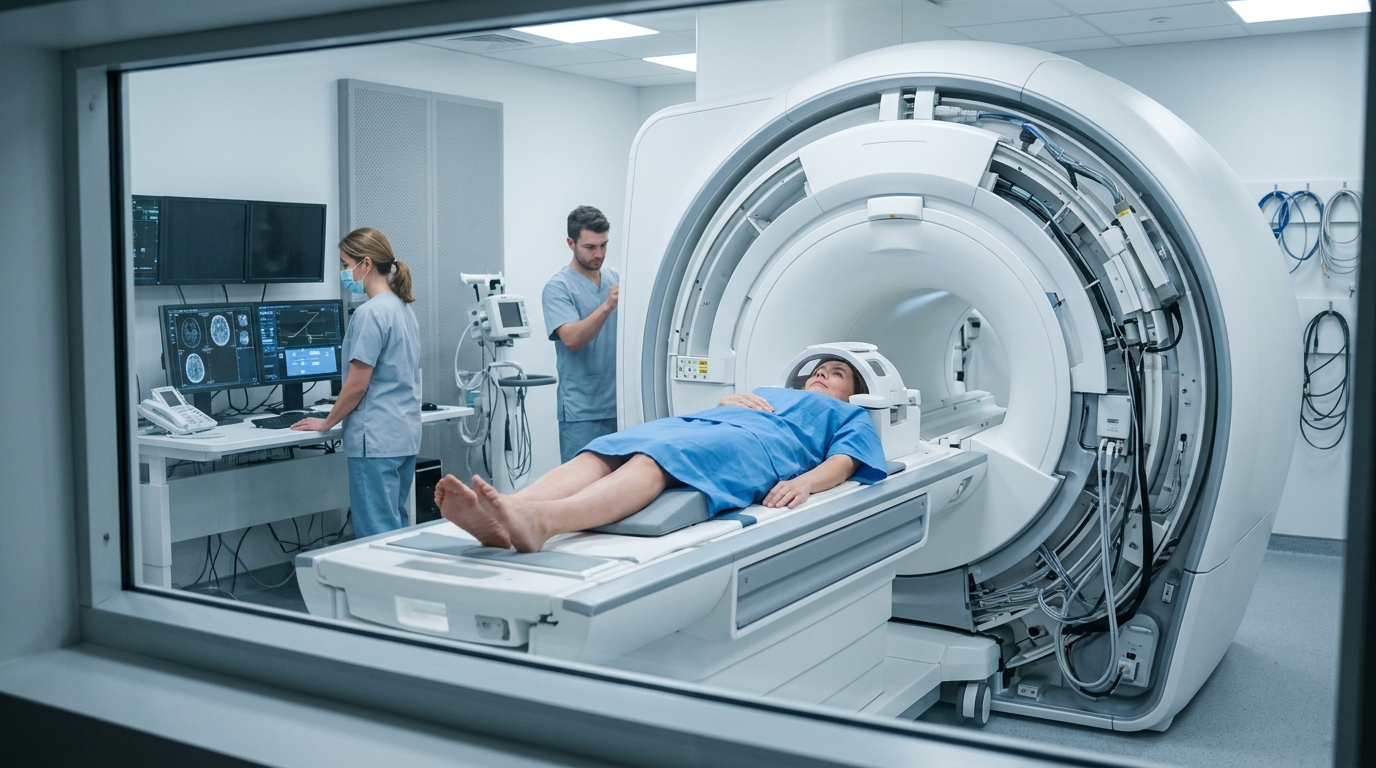
Neuroimaging protocols are systematically incorporated into the central repository through integration with the Radiological Research Network cloud infrastructure, known as RACOON CENTRAL. Routine clinical imaging acquisitions—including non-contrast computed tomography, computed tomography angiography, magnetic resonance imaging, and digital subtraction angiography—are uploaded using strictly pseudonymized project codes. To safeguard individual privacy against facial reconstruction risks, image volumes undergo automated processing on decentralized RACOON-NODES at the source hospitals, where identifying DICOM header metadata are scrubbed and facial surface features are digitally defaced prior to cloud transfer. Structured image evaluations and radiological reporting metrics are maintained within the Mint Central platform, establishing linkage between clinical registry data and pseudonymized DICOM files governed under the oversight of an independent Trusted Third Party and the Network University Medicine Use and Access Committee.
Biological specimen management across participating hospitals adheres to harmonized standard operating procedures formulated by the Biosample Core Unit of the Network University Medicine Methods- and Biosamples Hub. Clinical biospecimens collected during standard medical routines are processed, catalogued, and stored within decentralized institutional biobanks under uniform quality metrics. Compliance with handling protocols is reinforced through mandatory site training programs and recurring systematic biobank audits executed by central quality officers. Concurrently, data integrity inside the electronic registries is safeguarded through automated field validation, consistency algorithms, and continuous pipeline oversight. Sites receive automated feedback benchmarking institutional data completeness and recruitment pacing against anonymized performance distributions across the entire network, while study audits and primary epidemiological analyses are directed by the central Epidemiological Core Unit.
The study protocol outlines a transparent governance model that pre-authorizes specific structural and descriptive evaluations to bypass individual project-by-project application requirements. The coordinating scientific board is pre-cleared to conduct routine descriptive cohort analyses, assess longitudinal documentation completeness, publish baseline cohort profiles, and continuously visualize operational key performance indicators measuring site engagement. Furthermore, ongoing statistical monitoring of consent categories and the specific analytical questions embedded within standard modules proceed without separate Use and Access Committee petitions. Beyond primary observational reporting, the pre-screening framework provides health authorities with near real-time surveillance of stroke-related hospital admission patterns, demographic trends, and acute therapy utilization rates across the participating university network.
The authors acknowledge methodological limitations inherent in the initial implementation phase, most notably the restriction of early enrolment to university-affiliated academic medical centres. Although participating centres provide specialized regional stroke unit coverage, inherent institutional differences in regional patient populations, admission pathways, and clinical severity profiles may influence recruitment characteristics and introduce selection bias compared against general community care. To assess potential distortions, investigator teams plan continuous central benchmarking against historical real-world data from the German Stroke Registers Study Group. Stepwise expansion to municipal and non-university facilities during subsequent implementation stages, supported by planned funding sustainability through secured Network University Medicine support through 2030, aims to ensure that Stroke-CORE establishes a lasting national research foundation capable of accelerating trial design, biomarker discovery, and evidence-based patient care.
Subject of Research: National longitudinal cohort study protocol and modular research platform for stroke care in Germany
Article Title: Stroke-CORE: master study protocol of the national cohort of the specialty network stroke within the network university medicine in Germany
Article References: Wiegand, F. N., Alonso, A., Audebert, H. J., Barlinn, J., Bendszus, M., Brinkmann, F., Cheng, B., Dzietko, M., Feil, K., Flöel, A., Franzisket, C., Gerstl, L., Grefkes, C., Günther, K., Harringa, K., Jiru-Hillmann, S., Kanwisch, J.-L., Kerti, L., Köhrmann, M., … Thomalla, G. (2026). Stroke-CORE: master study protocol of the national cohort of the specialty network stroke within the network university medicine in Germany. Neurological Research and Practice, 8(1), Article 92. https://doi.org/10.1186/s42466-026-00547-8
Image Credits: AI Generated
DOI: 10.1186/s42466-026-00547-8
Keywords: Stroke-CORE, Network University Medicine, Specialty Network Stroke, ischaemic stroke, intracerebral haemorrhage, paediatric stroke, study protocol, prospective cohort study, umbrella protocol, biobanking, RACOON, NUKLEUS, secuTrial, ICHOM Stroke, German Stroke Registers Study Group, modified Rankin Scale, proxy consent, neuroimaging
News Source: Cassandra Pierce. (November 17, 2026). German Network Launches National Multi-Center Protocol for Longitudinal Stroke Research. Scienmag.