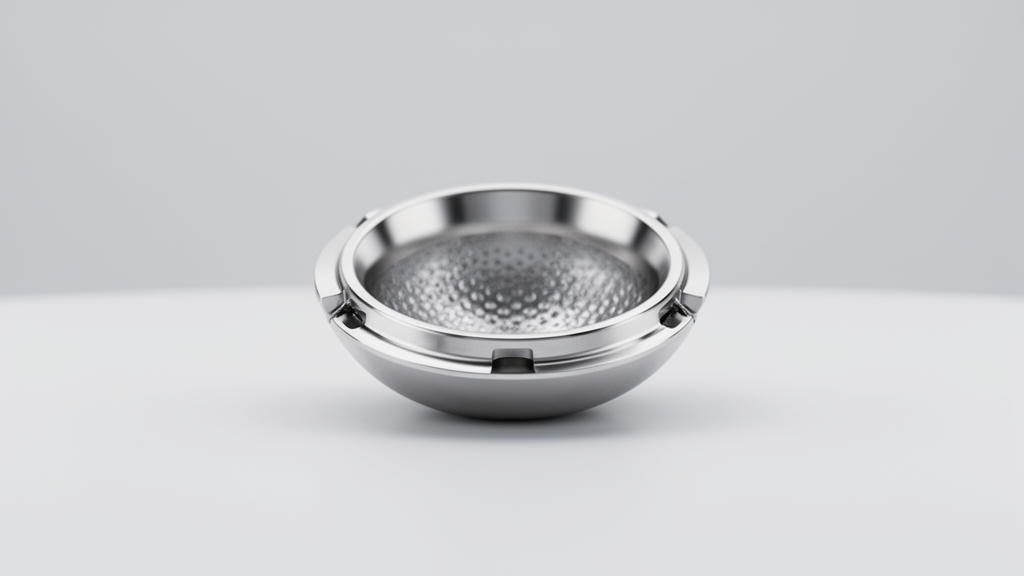
Total hip arthroplasty outcomes from the German Arthroplasty Registry demonstrate that the long-term durability of acetabular cup fixation is strongly governed by patient age, challenging the routine preference for cementless fixation across older populations. In a nationwide cohort study examining 330,910 primary total hip replacement procedures conducted between November 12, 2012, and March 31, 2024, researchers tracked cumulative revision rates across distinct cup designs over follow-up periods reaching up to 11.38 years. While cementless hemispherical press-fit cups delivered the lowest revision rates in patients younger than 75 years, cemented highly cross-linked polyethylene cups achieved equivalent midterm survivorship in individuals aged 75 years and older. These real-world findings indicate that elderly patients undergoing hip replacement can attain dependable implant longevity with cemented cup constructs, challenging uniform preferences for cementless cups across all age demographics.
Total hip arthroplasty reliably relieves joint pain and restores mobility, representing one of the most successful surgical operations of the twentieth century. Over past decades, surgical protocols have evolved considerably, establishing third-generation cementation techniques as an optimized technical standard. These protocols require pulsed bone lavage, femoral canal preparation with a distal restrictor, careful acetabular reaming focused on Charnley zone one, and automated vacuum mixing with cement pressurization to enhance mechanical interlock. Despite these standardized technical refinements, international orthopedic practices show striking disparities in fixation philosophy. In Sweden, approximately 59 percent of acetabular cups are implanted with cemented fixation, supported by registry evidence documenting cemented cup longevity. By contrast, German practice has overwhelmingly favored cementless designs, with cemented acetabular components accounting for less than 3 percent of primary total hip replacements nationwide.
This pronounced contrast between German clinical practice and Scandinavian registry findings led investigators to examine whether Germany’s widespread reliance on cementless acetabular fixation remains optimal across all age brackets. To evaluate this question across routine surgical settings, the research team analyzed longitudinal records from the German Arthroplasty Registry, an endoprosthetic database capturing approximately 70 percent of primary hip and knee arthroplasties performed nationwide. The registry links three comprehensive data sources: billing records from statutory health insurance providers, verified technical specifications from an implant manufacturer database, and electronic case report forms from participating hospitals. This linkage provides longitudinal tracking of surgical revisions and patient mortality over an overall median follow-up of 3.48 years, an interquartile range from 1.52 to 5.82 years, a mean follow-up of 3.79 years, and maximum follow-up extending to 11.38 years.
The total collective of 330,910 primary hip procedures was classified into five distinct categories based on cup geometry and fixation mechanics. Cementless hemispherical press-fit cups formed the dominant group with 281,344 cases, followed by 19,839 threaded cementless cups, 13,880 conventional cemented polyethylene cups, 6,979 cemented highly cross-linked polyethylene cups, and 8,868 dual-mobility constructs. When evaluating the total collective without stratifying by recipient age or femoral stem fixation, cementless hemispherical press-fit cups exhibited an eight-year cumulative revision rate of 4.3 percent, which was significantly lower than all competing designs. Cemented conventional polyethylene and cemented cross-linked polyethylene cups recorded eight-year unadjusted revision rates of 5.7 percent and 5.3 percent, respectively. Threaded cups had a revision rate of 5.7 percent, while dual-mobility cups reached 7.2 percent. However, unadjusted comparisons reflect substantial age-related selection differences across cohorts.
Demographic analysis revealed pronounced age imbalances across implant groups that introduce relevant selection bias into unadjusted revision estimates. Younger patients predominated heavily in the cementless press-fit cohort, where 67 percent were under 75 years of age and 84 percent were under 80 years. In contrast, cemented conventional polyethylene and cross-linked polyethylene cups were preferentially implanted in older individuals, with 77 percent of recipients aged 75 years or older and 52 percent aged 80 years or older. After age stratification, Kaplan–Meier analyses revealed clear divergent patterns. Among patients younger than 75 years, cementless hemispherical cups demonstrated the lowest eight-year revision rate at 4.2 percent, while fully cementless total hip replacements in this age group achieved 3.8 percent. Conversely, younger patients receiving cemented conventional or cross-linked polyethylene cups experienced higher revision rates of 7.7 percent for each material type.
To adjust for baseline differences among patient populations, the investigators performed multivariable Cox proportional hazards regression models. The regression models systematically controlled for biological sex, femoral stem fixation, age categorization, body mass index, annual hospital procedure volume, elective admission status, and comorbidity burden assessed through the Elixhauser comorbidity score. Among patients under 75 years old, multivariable regression confirmed that alternative cup designs carried a significantly higher revision risk compared to cementless hemispherical press-fit cups. Specifically, dual-mobility cups showed an adjusted hazard ratio of 1.68 with a 95 percent confidence interval of 1.45 to 1.95, while conventional cemented polyethylene cups exhibited an adjusted hazard ratio of 1.50 with a confidence interval of 1.28 to 1.74. Threaded cups had an adjusted hazard ratio of 1.26, and cemented cross-linked polyethylene cups demonstrated an adjusted hazard ratio of 1.51 with a confidence interval of 1.22 to 1.86.
In older patient groups, the clinical pattern shifted completely, with cemented cross-linked polyethylene cups achieving revision outcomes comparable to cementless press-fit designs. In patients aged 75 years and older, eight-year cumulative revision rates fell to 5.1 percent for cemented conventional polyethylene cups and 4.5 percent for cemented cross-linked polyethylene cups. When pairing a cemented cross-linked polyethylene cup with a cemented femoral stem in 4,704 patients aged 75 years or older, the eight-year revision rate reached 4.1 percent, matching hybrid hip arthroplasty. In multivariable Cox regression for patients aged 75 years or older, cemented cross-linked polyethylene cups showed no significant difference in revision risk compared to hemispherical cups, recording an adjusted hazard ratio of 0.98. Among 63,278 patients aged 80 years and older, cemented cups demonstrated the lowest eight-year revision rate at 4.5 percent, outperforming hemispherical press-fit cups at 5.4 percent.
Beyond cup fixation and age, the investigation identified implant characteristics and systemic health factors that significantly influenced revision-free survival in cemented polyethylene and cross-linked polyethylene cups. Femoral head diameter proved to be an important mechanical factor, with larger heads showing significantly lower eight-year revision rates: 4.8 percent for 36-millimeter heads, 5.5 percent for 32-millimeter heads, and 8.1 percent for 28-millimeter heads. Articulation materials also affected durability, as ceramic-on-polyethylene bearings achieved lower eight-year cumulative revision rates than metal-on-polyethylene couplings at 5.2 percent versus 6.4 percent. Patient-specific health status similarly correlated with revision outcomes. Patients with an American Society of Anesthesiologists score of three or higher experienced an eight-year revision rate of 6.2 percent, compared to 3.6 percent in those with scores below three. Additionally, patients with a body mass index of 30 or lower demonstrated a revision rate of 4.9 percent.
The authors noted that cemented acetabular fixation entails procedure-specific technical risks that surgeons must carefully consider during implant selection. Polymethylmethacrylate bone cement introduces the hazard of bone cement implantation syndrome, characterized by acute intraoperative hypoxia, hypotension, pulmonary embolism, and potential cardiovascular collapse. Prior literature indicates that bone cement implantation syndrome occurs more frequently in patients over 60 years old, those classified as American Society of Anesthesiologists class three or four, and individuals with cardiopulmonary comorbidities. Although the risk manifests predominantly during femoral stem insertion, adhering strictly to third-generation cementing techniques, including pulsatile bone lavage, substantially mitigates embolization risks. Cemented cups also carry the specific complication of intrapelvic cement extrusion through compromised medial acetabular walls, which can provoke delayed bladder perforation or nerve injuries. In contrast, cementless hemispherical press-fit cups present a different procedural hazard, dominated by intraoperative periprosthetic acetabular fractures during reaming or impaction.
Health economic modeling within the study highlighted substantial opportunities for healthcare savings through selective cup utilization in elderly surgical cohorts. In international device markets, cemented cross-linked polyethylene cups and required cement typically cost between 1,020 and 1,800 euros, compared to 1,800 to 4,040 euros for cementless press-fit cups with corresponding inlays. In Germany, a cemented cross-linked polyethylene cup with cement costs between 110 and 300 euros, whereas a cementless press-fit construct costs between 480 and 650 euros. Across the 11.38-year study window, German hospitals implanted 44,471 cementless hemispherical cups in patients aged 80 years and older. The authors estimated that utilizing cemented cross-linked polyethylene cups in this octogenarian cohort could have saved approximately 16 million euros in direct implant procurement costs. Even accounting for added operative theater costs from 15 minutes of additional surgical time, net health system savings would still reach roughly 3.8 million euros.
The authors acknowledged several methodological limitations inherent to observational registry research that contextualize these findings. Confounding by indication remains possible, as dual-mobility and threaded designs were likely utilized in complex cases involving severe bone loss or high dislocation risk. In addition, the registry captures approximately 70 percent of German arthroplasties and relies on hospital billing and electronic records, introducing risks of coding errors and lacking radiographic verification. Importantly, standard survival models did not account for mortality as a competing risk, which may have led to overestimation of revision rates in octogenarians. In conclusion, while cementless hemispherical press-fit cups remain optimal for patients younger than 75 years, cemented highly cross-linked polyethylene cups achieve equivalent revision risk in patients aged 75 years and older. Adopting age-tailored fixation strategies, combined with larger ceramic femoral heads in elderly patients, provides reliable prosthetic survivorship alongside meaningful economic savings.
Subject of Research: Acetabular cup fixation techniques and revision outcomes in total hip arthroplasty
Article Title: Cumulative revision rates in total hip arthroplasty depending on acetabular cup fixation: an analysis from the German arthroplasty registry
Article References: Zellner, A. A., Grimberg, A., Wu, Y., Babasiz, M., Fröschen, F. S., & Wirtz, D. C. (2026). Cumulative revision rates in total hip arthroplasty depending on acetabular cup fixation: an analysis from the German arthroplasty registry. Arthroplasty, 8(1), Article 58. https://doi.org/10.1186/s42836-026-00420-8
Image Credits: AI Generated
DOI: 10.1186/s42836-026-00420-8
Keywords: Total Hip Arthroplasty, Orthopedic Surgery, German Arthroplasty Registry, Acetabular Cup Fixation, Implant Longevity, Revision Surgery, Highly Cross-Linked Polyethylene, Geriatric Healthcare, Cumulative, revision, rates, total
News Source: Ophelia Keating. (November 9, 2026). German Arthroplasty Registry Reveals Age-Specific Revision Risks for Hip Replacement Cups. Scienmag.