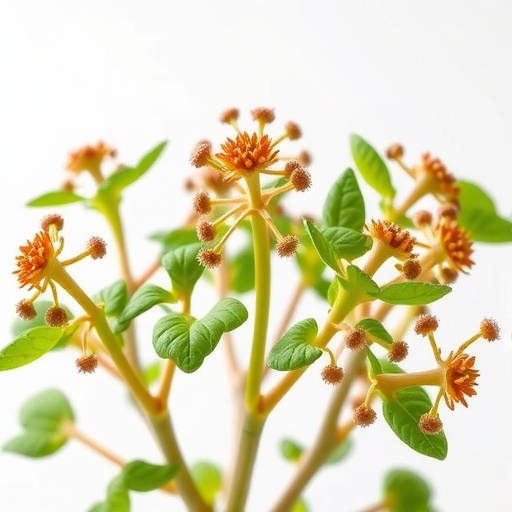
In the realm of aromatic medicinal plants, the intricate interplay between genetics and biochemical pathways has long remained shrouded in mystery, particularly regarding how these plants produce their signature volatile compounds. Now, pioneering research led by scientists from Beijing University of Chinese Medicine and several esteemed Chinese institutions has cracked this complex code for Xiangru (Mosla chinensis), a traditional herb prized for both its medicinal and culinary properties. Through an unprecedented integration of chromosome-level genomic data with metabolomic and molecular analyses, the study delineates the genetic architecture and regulatory networks that orchestrate the biosynthesis of monoterpenoids and the formation of glandular trichomes in this species.
Monoterpenoids such as thymol and carvacrol are renowned for their potent antimicrobial and anti-inflammatory effects and serve as the bioactive linchpins of many herbal remedies. These small, volatile molecules are synthesized within specialized epidermal structures known as glandular trichomes, which act as biofactories, concentrating and storing these fragrant compounds on leaf and flower surfaces. Despite their therapeutic significance, the genetic underpinnings of monoterpenoid biosynthesis and its coordination with trichome morphogenesis have remained elusive in most medicinal plants due to the paucity of high-resolution genomic resources. This gap has hindered efforts to systematically improve herbal quality and standardize medicinal properties.
Addressing this knowledge void, the study presents the first chromosome-scale assemblies for the genomes of wild Mosla chinensis and its cultivated variety, M. chinensis ‘Jiangxiangru’, alongside a closely related species. These genomic blueprints unveiled extensive structural variations and gene copy number differences critical for the diversification of aroma profiles. By coupling these genomic insights with comprehensive metabolomic profiling, the researchers established a direct correlation between elevated monoterpenoid content—specifically thymol and carvacrol—and a higher density of glandular trichomes observed in wild accessions relative to cultivated lines. This integrative strategy laid the foundation for dissecting the molecular basis of medicinal quality traits.
Delving deeper, the team identified and functionally characterized five terpene synthase (TPS) genes responsible for catalyzing the formation of distinct monoterpene scaffolds fundamental to the aroma landscape of Xiangru. Among these, one TPS gene was pinpointed as the producer of γ-terpinene, a crucial metabolic precursor that feeds into downstream biosynthetic routes yielding the dominant medicinal compounds. These findings underscore the central enzymatic nodes that dictate chemical diversity and open avenues for precise genetic manipulation.
Crucial to the herb’s characteristic aroma is the intimate genetic coupling between monoterpenoid biosynthesis and glandular trichome development. Transcriptomic analyses, bolstered by gene co-expression network mapping and molecular assays, revealed that particular transcription factors orchestrate the simultaneous activation of both secondary metabolite pathways and epidermal differentiation programs. This coordinated regulatory mechanism provides a unified molecular framework explaining the phenotypic contrasts in aroma intensity and trichome abundance observed between wild and domesticated lines.
Functional knockdown experiments further substantiated the pivotal role of these transcriptional regulators: silencing key genes led to steep declines in monoterpenoid accumulation and trichome formation, confirming their indispensable function in shaping the phytochemical and anatomical features linked to medicinal efficacy. This discovery elevates our understanding from descriptive metabolite profiling to a mechanistic grasp of quality trait regulation, enabling targeted breeding strategies.
The implications of these revelations extend far beyond Xiangru itself, as they offer a generalizable blueprint for interrogating complex trait architectures in aromatic and medicinal plants. By illuminating how genome evolution affects biosynthetic capacity and morphological specialization, the research paves the way for genomics-assisted enhancement of herbal varieties, optimizing both therapeutic potency and yield without resorting to labor-intensive chemical screens.
Moreover, the newly established genomic datasets serve as invaluable references for authenticating plant material and safeguarding against adulteration in herbal markets—an increasingly urgent concern amid expanding global demand. This molecular authentication capacity reinforces quality control protocols and strengthens consumer trust in traditional medicines.
Reflecting on the broader significance, the senior authors highlight that medicinal quality is an emergent property not merely of chemical composition but also plant structure mediated by genetic regulatory networks. This paradigm shift from chemistry-centered perspectives toward integrated genomics and phenotype analysis heralds a new era of precision herbal medicine development, blending traditional wisdom with cutting-edge science.
This study also underscores the evolutionary dimension, revealing how gene duplication and structural genome rearrangements have fostered metabolic innovation and morphological diversification. Such insights deepen our comprehension of plant adaptation and domestication processes, enriching both basic biology and applied breeding endeavors.
In summary, this landmark research exemplifies the power of holistic, multi-omics approaches to decode the botanical intricacies underlying medicinal plant quality. By integrating high-resolution genome assemblies, metabolome landscapes, transcriptomic data, and functional validation, the work answers longstanding questions and equips breeders and herbalists with precise molecular targets to cultivate superior Xiangru varieties and other medicinal herbs. The resulting genomic and biochemical framework promises to transform the future of traditional medicine and aromatic plant biotechnology.
Subject of Research: Medicinal plant genomics, monoterpenoid biosynthesis, glandular trichome development
Article Title: Integrative chromosome-level genomics and metabolomics uncover regulatory networks linking monoterpenoid biosynthesis and glandular trichome formation in Mosla chinensis
News Publication Date: October 1, 2025
Web References:
Horticulture Research Journal
Article DOI: 10.1093/hr/uhaf263
References:
DOI: 10.1093/hr/uhaf263
Image Credits: Horticulture Research
Keywords
Monoterpenoids, Thymol, Carvacrol, Glandular Trichomes, Mosla chinensis, Terpene Synthase Genes, Genome Evolution, Metabolomics, Transcriptomics, Molecular Breeding, Herbal Medicine Quality, Aromatic Plants
Tags: antimicrobial compounds in traditional herbschromosome-level genomic data in herbsgenetic basis of herbal aromagenomics of aromatic medicinal plantsglandular trichome formation geneticsimproving herbal quality through geneticsintegration of genomics and metabolomicsmetabolomic analysis of medicinal plantsmolecular regulation of volatile compoundsmonoterpenoid biosynthesis pathwaysthymol and carvacrol productionXiangru herb genetic architecture