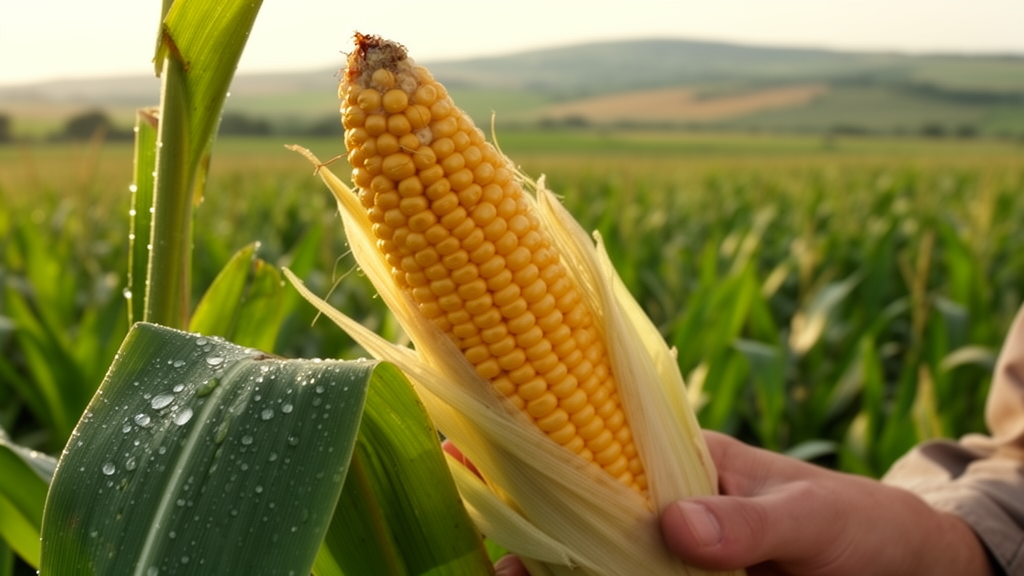
Researchers have integrated genome-wide association studies and genomic prediction to identify specific genetic markers that enhance the accuracy of predicting kernel drying dynamics in maize. By mapping quantitative trait nucleotides associated with kernel moisture content and kernel drying rate, the study provides new tools for accelerating the development of hybrids suitable for subtropical rainfed environments. This research addresses the challenges of moisture management in maize cultivation, where excessive moisture content at harvest often necessitates additional post-harvest processing and delays harvesting operations.
In subtropical regions, the ability to predict and improve kernel dry-down is a critical breeding objective. Although researchers have previously identified individual genomic regions associated with moisture content and drying rates, the integration of these trait-associated loci into existing genomic prediction models has remained limited. To bridge this gap, the study utilized a diverse panel of 320 maize inbred lines to evaluate the genetic basis of these traits across six distinct environments.
The study design involved rigorous phenotypic assessment, with kernel moisture content measured at 40, 47, and 57 days after 50% silking. The observations confirmed that kernel moisture levels declined progressively throughout this sampling period. The maize lines exhibited high broad-sense heritability for moisture levels, while the kernel drying rate varied between 0.61% and 1.24% across the tested environments, reflecting a significant degree of phenotypic diversity available for selection.
The research team employed genome-wide association study models to identify candidate loci, identifying 40 quantitative trait nucleotides associated with kernel moisture content and 10 associated with the kernel drying rate. Notably, several associations were consistent across different environments and models, receiving further support through comparisons with quantitative trait locus mapping in four separate doubled haploid populations. These findings underscore the existence of stable genetic components governing the drying process.
A central finding of the research concerns the application of these markers in genomic prediction frameworks. By incorporating the GWAS-derived markers as fixed effects within the prediction models, the researchers observed increased accuracy in predicting the kernel drying rate compared to conventional models that treat all markers as random effects. This improvement was particularly evident during independent validation across different breeding populations, suggesting a robust predictive capability.
These results indicate that integrating trait-associated loci with genome-wide marker data can effectively complement conventional genomic prediction strategies. By leveraging these identified genomic regions, breeders may more accurately select for faster kernel dry-down, potentially reducing post-harvest costs and facilitating more efficient mechanized harvesting.
Subject of Research: Maize genetics and genomic prediction of kernel drying dynamics.
Article Title: Integrating GWAS and genomic prediction for mapping and validation of kernel moisture and drying dynamics in subtropical rainfed maize (Zea mays L.)
Article References: Banakara, S., Biradar, S., Lohithaswa, H. C., Patil, K. G., Hemareddy, H. B., Mallkarjuna, M. G., & Gowda, V. R. P. (2026). Integrating GWAS and genomic prediction for mapping and validation of kernel moisture and drying dynamics in subtropical rainfed maize (Zea mays L.). BMC Plant Biology. https://doi.org/10.1186/s12870-026-10231-3
Image Credits: AI Generated
DOI: 10.1186/s12870-026-10231-3
Keywords: Maize, Zea mays, Kernel Moisture Content, Genomic Prediction, GWAS, QTL Mapping, Plant Breeding, Rainfed Agriculture, Subtropical Agriculture, Plant Science, Genetics, Kernel Drying Rate, Hybrid Breeding, Quantitative Traits, Agricultural Technology, Crop Improvement, Phenotyping, Marker-Assisted Selection
News Source: Alan Morgan. (November 18, 2026). Genomic Markers Improve Prediction of Kernel Drying Dynamics in Rainfed Maize. Scienmag.