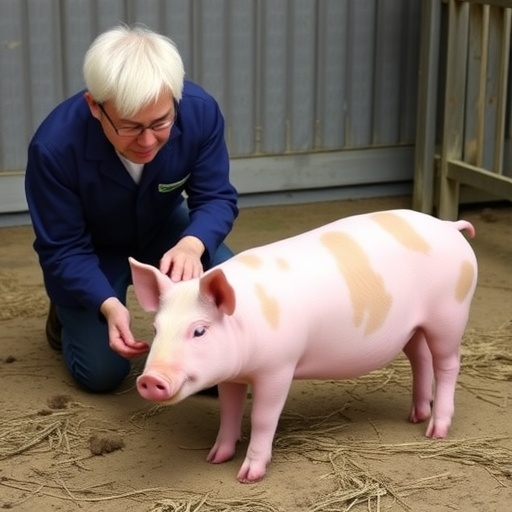
In a groundbreaking study that promises to impact the field of animal genetics, researchers have employed whole-genome re-sequencing to unlock the mysteries surrounding the growth traits of Qinchuan black pigs. The study, led by a skilled team of geneticists, including Cao, Yuan, and Li, delves deep into hybridization analysis within the pedigree of this prized livestock breed. The findings not only enhance our understanding of genetic variations that contribute to desirable growth attributes but also lay the groundwork for future research aimed at improving livestock productivity through genomics.
The Qinchuan black pig, a breed native to China, is renowned for its exceptional meat quality and growth performance. These pigs have been a staple in the agricultural landscape, with their lineage tracing back hundreds of years. Through the advances in genomic technologies, researchers are now able to investigate the genetic underpinnings that contribute to the growth and health of these animals. By focusing on whole-genome re-sequencing, the authors of the study were able to capture a comprehensive view of the genetic variability within the breed.
Investigation into the genomes of Qinchuan black pigs revealed an intricate tapestry of genetic information, highlighting the complexities of inheritance and trait expression. The study demonstrated that specific genomic regions harbor variants significantly associated with growth traits, paving the way for targeted breeding strategies. Such strategies can not only enhance meat production but can also contribute to the overall sustainability of pig farming practices. By utilizing genomic data, breeders can make informed decisions that support both productivity and animal welfare.
The hybridization analysis revealed significant insights into the breeding history and pedigree arrangement of the Qinchuan black pigs. By analyzing the genetic relationships among different breeding lines, researchers could determine how historical breeding practices have influenced current genetic traits. This knowledge is vital for breeding programs aiming to optimize growth rates while maintaining the unique characteristics of the breed. An understanding of lineage not only helps in maintaining genetic diversity but also in reducing the risk of inbreeding, which can adversely affect animal health.
The integration of genomic characterization with traditional breeding techniques presents an exciting avenue for enhancing livestock quality. As farmers face increasing pressure to produce higher yields with fewer resources, the application of genomic data through re-sequencing is becoming increasingly critical. The implications of this research extend beyond just the Qinchuan black pig. The methodologies applied in this study can be adapted to various livestock breeds, enhancing their growth traits and productivity.
The application of whole-genome re-sequencing represents a shift towards data-driven decision-making in animal breeding. As researchers compile more genetic data, the potential for precision breeding becomes a reality. This accelerated approach allows for a quicker identification of favorable traits, ultimately leading to a more efficient breeding process. Such advancements are crucial in ensuring food security in the face of growing global populations and changing environmental conditions.
Moreover, the identification of genetic markers associated with growth traits holds profound implications for the future of animal husbandry. By harnessing these markers, breeders can establish more effective selection criteria, optimizing genetic gains over generations. Furthermore, this precision in breeding not only enhances productivity but can also lead to improved animal health and welfare by reducing undesirable traits associated with rapid growth.
The social and economic potential of improving livestock through genetic research cannot be overstated. Enhanced growth traits can lead to increased efficiency in meat production, resulting in economic benefits for farmers and consumers alike. The findings from this study thus have substantial implications for enhancing the profitability of the Qinchuan black pig industry and potentially other livestock industries around the world.
Public perception of animal agriculture is gradually shifting towards a greater emphasis on sustainability and ethical practices. By applying genetic advancements, farmers can not only improve productivity but also align their practices with consumer demand for high-quality, sustainably sourced animal products. The research highlights the role that genetic profiling can play in achieving these dual objectives of enhancing productivity while prioritizing animal welfare.
As the world becomes more interconnected, the importance of genetic research in global agriculture cannot be underestimated. The lessons learned from the Qinchuan black pig study may serve as a model for international collaborative efforts aimed at addressing the challenges faced by the global livestock sector. By sharing genomic resources and research methodologies, countries can work together to enhance food security, improve animal health, and promote sustainable farming practices.
In conclusion, the pioneering research led by Cao, Yuan, and Li on the genetic basis of growth traits in Qinchuan black pigs marks a significant advancement in animal genomics. The potential applications of this research extend well beyond enhancing the growth of a single breed; they promise to revolutionize livestock breeding practices worldwide. By leveraging detailed genomic insights, the agricultural community stands on the precipice of a new era in sustainable meat production. These advancements will not only ensure a more efficient approach to farming but also a more harmonious relationship between agriculture and ethical standards for animal treatment.
As the study continues to gain traction in scientific circles, it will be crucial for the broader agricultural community to engage with these findings actively. The roadmap laid out by this research points to a future in which genomic techniques are integrated into standard farming practices, propelling the entire livestock sector towards a more productive and sustainable framework.
The exploration of genetic traits through cutting-edge genomic techniques would not have been possible without the advancements in technology that allow for such intricate analyses. As researchers continue to uncover the genetic secrets of various breeds, the agricultural industry must remain adaptable and innovative, ensuring that the potential gains are realized and implemented effectively in farming practices.
This remarkable foray into the genetics of Qinchuan black pigs showcases the immense possibilities that arise when science meets agriculture. With a firm foundation built upon rigorous research, the future of livestock breeding appears promisingly enhanced, setting the stage for breakthroughs that will not only benefit farmers but also nourish a growing global population.
Subject of Research: Genetic basis of growth traits in Qinchuan black pigs through whole-genome re-sequencing
Article Title: The hybridization analysis of pedigree: whole-genome re-sequencing reveals genomics characterization and genetic basis of growth trait of Qinchuan black pigs
Article References:
Cao, M., Yuan, T., Li, D. et al. The hybridization analysis of pedigree: whole-genome re-sequencing reveals genomics characterization and genetic basis of growth trait of Qinchuan black pigs.
BMC Genomics (2026). https://doi.org/10.1186/s12864-025-12439-3
Image Credits: AI Generated
DOI: 10.1186/s12864-025-12439-3
Keywords: Qinchuan black pigs, whole-genome re-sequencing, genetic traits, hybridization analysis, livestock breeding, genomics, animal welfare, sustainable agriculture.
Tags: advancements in animal genomics researchagricultural significance of Qinchuan black pigsenhancing livestock traits through genetic studyexceptional meat quality of Qinchuan pigsgenetic underpinnings of growth and healthgenetic variations in Qinchuan black pigsgenomic analysis of Qinchuan pigsgrowth traits in livestock geneticshybridization analysis in animal breedingimproving livestock productivity through genomicspedigree analysis in livestock breedswhole-genome re-sequencing techniques