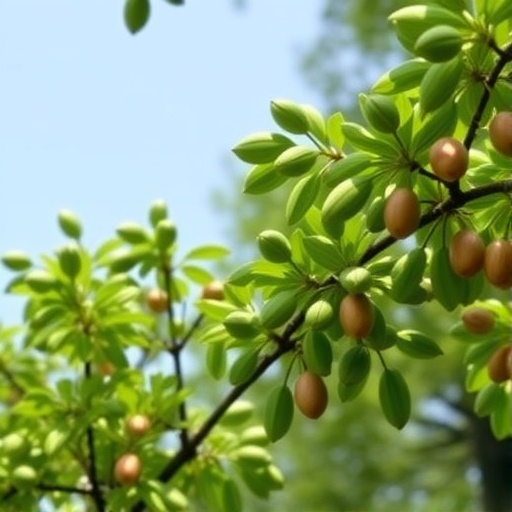
For over a century, the iconic American chestnut tree has been embroiled in a saga of loss and yearning for rejuvenation. Once dominant in the extensive forests stretching from Maine to Mississippi, this magnificent tree was revered not only for its rapid growth, rot-resistant timber, and its critical role as a food source for wildlife, but also for its deep cultural significance in American history. The narrative took a drastic turn in the early 1900s when the devastating chestnut blight, a fungal pathogen hailing from Asia, infiltrated eastern forests. The ensuing pathology wrought havoc on American chestnut populations, culminating in the near-total annihilation of billions of trees and rendering the species functionally extinct in its natural habitat.
The narrative is, however, not merely one of loss. This is a story about courage and resilience, rekindled by modern science. Researchers at Virginia Tech, in collaboration with their esteemed partners, have forged ahead with groundbreaking studies that utilize genomic tools as a beacon of hope. Their remarkable work has shown that contemporary genomic techniques can significantly expedite efforts to restore the American chestnut. This uncharted avenue not only illuminates the path to survival for this venerable species but also demonstrates the potency of genetic insight in overcoming biological challenges.
Central to this revolutionary research is the principle of genomic selection, which hinges on the analysis of genetic patterns and disease resistance within trees. The innovative team comprising Virginia Tech researchers has embarked on a meticulous examination of thousands of chestnut trees that have already undergone rigorous breeding and field testing spearheaded by The American Chestnut Foundation. Through advanced genome sequencing, they have unearthed genetic markers that could serve as predictors of blight resistance, providing revolutionary insights that promise to transform restoration practices.
The researchers have made substantial progress in identifying hybrid trees that exhibit a substantial portion of American chestnut ancestry—about 75 percent—while also embedding blight-resistant traits inherited from their Asian relatives. The implications of their findings are profound. By employing genomic selection, breeders can now anticipate how young seedlings will perform against chestnut blight long before these trees mature, effectively compressing the breeding cycle that traditionally awaits the trees’ growth to ascertain their viability.
A pivotal aspect of this research entails drawing connections between DNA data and real-world outcomes. The Virginia Tech team emphasizes that traditional methods reliant on infecting trees with pathogens and observing survivors have proven labor-intensive and slow. In contrast, modern molecular techniques allow for rapid identification of promising seedlings, providing a more efficient pathway toward restoration. Jason Holliday, a prominent figure in Virginia Tech’s Department of Forest Resources and Environmental Conservation, articulates this paradigm shift by expressing excitement over the newfound potential to make informed decisions early in the breeding process.
Moreover, the study sheds light on the existence of rare surviving American chestnuts that have withstood decades of disease. These resilient trees provide invaluable insights into the genetic underpinnings of resistance within the species. A collective of researchers, including associates from the HudsonAlpha Institute for Biotechnology, Oak Ridge National Laboratory, and the U.S. Forest Service, delved into examining these specimens. Their findings indicate that, while a genetic legacy of modest disease resistance exists among some of these trees, it is limited and inconsistent. Therefore, the restoration narrative continues to pivot towards genomic methodologies as the driving force for a more effective resurgence of the species.
Notably, the Virginia Tech research team also embarked on the ambitious task of sequencing some of the most complete genomes of the chestnut, inclusive of reference genomes for both American and Chinese chestnuts. This genetic spotlight has illuminated the intricate nature of blight resistance, revealing that it does not hinge on a singular gene but rather involves a web of multiple genes functioning in concert across the genome. This complexity elucidates the challenges historically faced in breeding efforts using traditional methodologies, thereby underscoring the transformative potential of genomic selection in not only saving but revitalizing the American chestnut.
As the researchers forge ahead, they hold a collective vision: to achieve a viable population of American chestnuts capable of thriving in today’s forests, mirroring the ecological role they once held. By integrating teamwork, advanced genomic technologies, and a profound commitment to ecological restoration, they have laid a robust scientific foundation to scale up restoration efforts effectively. Virginia Tech’s dedicated researchers express hope that significant progress can be made within a generation, reigniting the presence of the American chestnut in the wild.
In this context, the implications of genomic selection extend beyond the technical realm of plant genetics. They encapsulate a broader narrative centered on habitat restoration, biodiversity, and commitment to reversing the ecological damages wrought by introduced diseases. This revitalization push is not merely a technical endeavor; it embodies a philosophical return to coexistence with nature, redefining the possibilities of restoration ecology through the powerful lens of genetic understanding.
As the scientific community stands at a juncture of innovation and tradition, the story of the American chestnut emerges as a testimony to resilience, interwoven with pioneering genetic strategies that mount a compelling challenge against extinction. Through rigorous research, collaboration, and pioneering genomic tools, the dream of restoring an iconic species is being realized, providing hope not only for the majestic American chestnut but for countless other beleaguered species grappling with the impact of environmental change.
In this renaissance of restoration, Virginia Tech researchers remain fervently dedicated to bridging the gap between loss and recovery. Their groundbreaking work is a clarion call to conservationists and scientists alike, underlining the urgent need for a harmonious blending of traditional knowledge with cutting-edge science to usher in a new era of hope for the forests and species that inhabit them.
With the knowledge gleaned from this research, the vision of thriving forests populated by disease-resistant American chestnut trees becomes an attainable goal, fostering a vibrant connection between past and future. The narrative of the American chestnut is no longer solely a relic of what was lost; it is a living testament to what can be reclaimed through science, determination, and community effort.
Through concerted, collaborative endeavors, the American chestnut may one day reclaim its rightful place within the tapestry of Eastern U.S. forests, embodying not only ecological restoration but also a profound cultural revival, reminding us of the beauty found in the interconnections between humanity and nature.
Subject of Research: Restoration of the American chestnut through genomic selection and breeding techniques.
Article Title: Virginia Tech Researchers Unveil Genomic Tools to Revive the American Chestnut
News Publication Date: February 12, 2026
Web References:
References:
Image Credits:
Keywords
Genomics, American Chestnut, Chestnut Blight Resistance, Conservation Biology, Genome Sequencing, Genomic Selection, Restoration Ecology, Plant Breeding, Environmental Science, Biodiversity Conservation.
Tags: American chestnut restoration effortschestnut blight impactconservation of endangered tree speciescultural significance of American chestnutecological role of chestnut treesfungal pathogens affecting treesgenetic engineering in tree restorationgenomic advancements in forestryhistorical decline of American chestnutmodern science in conservationresilience of tree species in ecosystemsVirginia Tech research on chestnuts