• HOME
  • NEWS
  • EXPLORE
    • CAREER
      • Companies
      • Jobs
    • EVENTS
    • iGEM
      • News
      • Team
    • PHOTOS
    • VIDEO
    • WIKI
  • BLOG
  • COMMUNITY
    • FACEBOOK
    • INSTAGRAM
    • TWITTER
Monday, August 17, 2026
BIOENGINEER.ORG
No Result
View All Result
  • Login
  • HOME
  • NEWS
  • EXPLORE
    • CAREER
      • Companies
      • Jobs
        • Lecturer
        • PhD Studentship
        • Postdoc
        • Research Assistant
    • EVENTS
    • iGEM
      • News
      • Team
    • PHOTOS
    • VIDEO
    • WIKI
  • BLOG
  • COMMUNITY
    • FACEBOOK
    • INSTAGRAM
    • TWITTER
  • HOME
  • NEWS
  • EXPLORE
    • CAREER
      • Companies
      • Jobs
        • Lecturer
        • PhD Studentship
        • Postdoc
        • Research Assistant
    • EVENTS
    • iGEM
      • News
      • Team
    • PHOTOS
    • VIDEO
    • WIKI
  • BLOG
  • COMMUNITY
    • FACEBOOK
    • INSTAGRAM
    • TWITTER
No Result
View All Result
Bioengineer.org
No Result
View All Result
Home NEWS Science News Biology

Genetic tagging may help conserve the world’s wildlife

Bioengineer by Bioengineer
March 26, 2019
in Biology
Reading Time: 2 mins read
0
IMAGE
Share on FacebookShare on TwitterShare on LinkedinShare on RedditShare on Telegram

Research by UAlberta ecologists suggests studying DNA signatures is a ‘one-stop-shop’ for wildlife conservation
IMAGE

Credit: Clayton Lamb

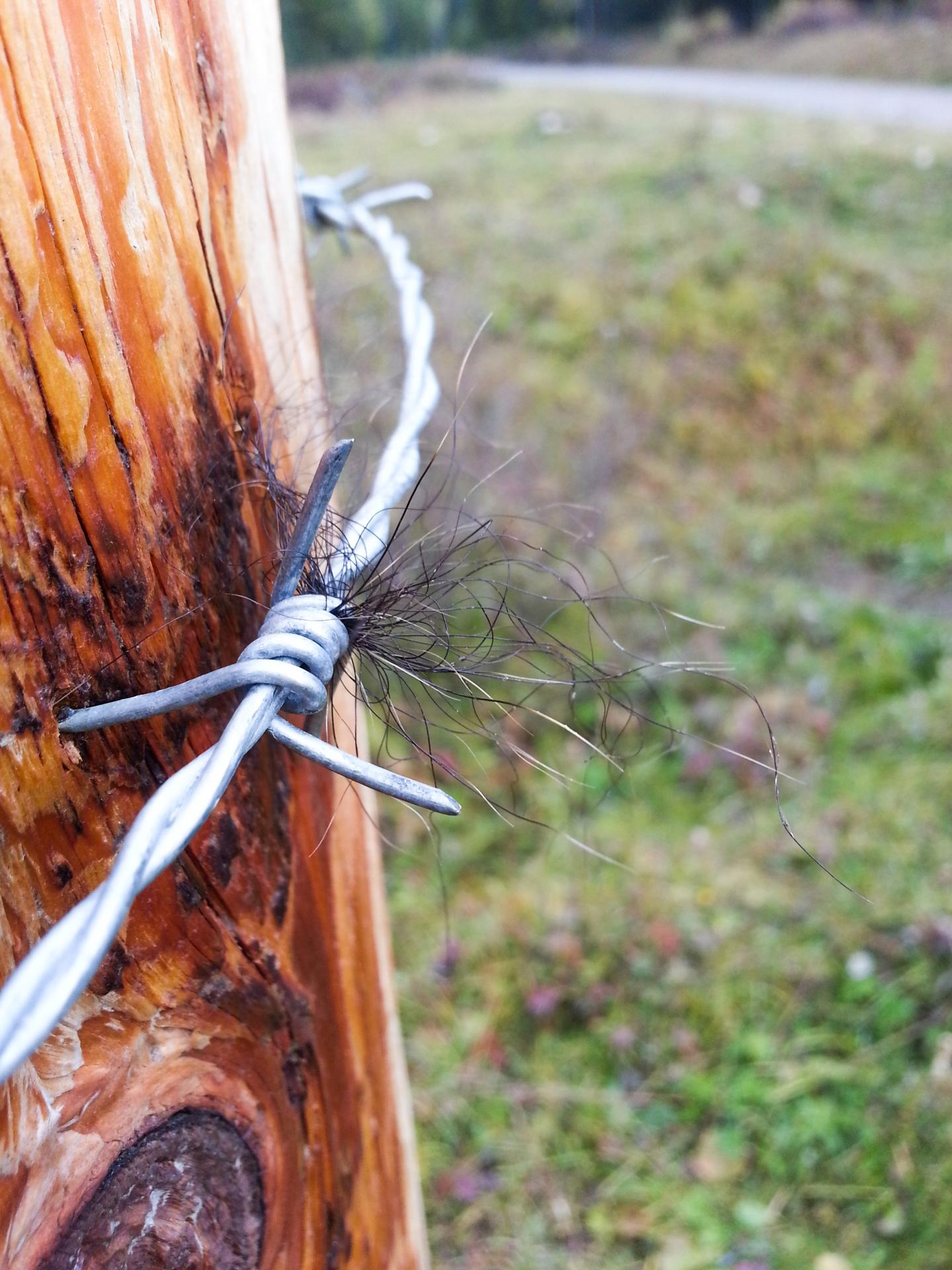
Tracking animals using DNA signatures are ideally suited to answer the pressing questions required to conserve the world’s wildlife, providing benefits over invasive methods such as ear tags and collars, according to a new study by University of Alberta biologists.

Genetic tagging, or the identification and tracking of individual animals using DNA, is a non-invasive method of conducting research that uses samples from shed hair, feathers, feces, or saliva.

“This method provides a toolkit that can answer many of the pressing questions in ecology and conservation and provides a ‘one-stop-shop’ for getting these answers,” explained Clayton Lamb, PhD candidate and Vanier scholar in the Department of Biological Sciences and lead author on the study. “Other methods would generally need to be combined to acquire similar insight. Genetic tagging approaches are complementary to traditional approaches and add a powerful tool to the ecologists’ toolkit.”

In addition to being non-invasive–in fact, there’s no need to handle individual animals at all–there are many benefits to using genetic tagging over other methods. Genetic tagging can cover more ground and is scalable, allowing scientists to examine overall population density or the composition of a single community. It also provides the ability to recognize individual animals with great precision, allowing scientists to research animals that are otherwise difficult to study.

Access to DNA sequencing technology has grown increasingly affordable since the 2000s, thereby increasing access and usability for ecologists and biologists around the globe. And it’s a good thing too, as our world continues to change.

“As human pressures on the globe increase, scientists are tasked with identifying drivers of decline and mobilizing this evidence to promote mitigation,” said Lamb. “Genetic tagging offers a powerful approach to parameterize such relationships across massive spatial extents, for difficult to sample species, and in a cost-effective and socially-acceptable manner.”

###

The paper, “Genetic tagging in the Anthropocene: scaling ecology from alleles to ecosystems,” was published in Ecological Applications (doi: 10.1002/eap.1876).

Media Contact
Katie Willis
[email protected]

Original Source

https://www.ualberta.ca/science/science-news/2019/march/genetic-tagging-conservation

Related Journal Article

http://dx.doi.org/10.1002/eap.1876

Tags: BiologyEcology/EnvironmentGeneticsPollution/RemediationPopulation Biology
Share12Tweet8Share2ShareShareShare2

Related Posts

Strubbelig–NHL3 Receptor Complex Helps Arabidopsis Respond to Cellulose Deficiency

Strubbelig–NHL3 Receptor Complex Helps Arabidopsis Respond to Cellulose Deficiency

August 15, 2026
Bombyx mori Satellitome Analysis Reveals Evolutionary Stability, Dispersed Chromosomal Organization, Transposon Origins

Bombyx mori Satellitome Analysis Reveals Evolutionary Stability, Dispersed Chromosomal Organization, Transposon Origins

August 15, 2026

Synthetic pyrenoid reconstruction reveals EPYC1-driven carbon concentration mechanisms and evolution

August 15, 2026

Endophytic Flavobacterium boosts root hairs and drought tolerance through ERF–CEP5 signaling

August 15, 2026
Please login to join discussion

POPULAR NEWS

  • Digital Twins Accelerate Oxide Transistor Optimization, Overcoming Performance–Reliability Trade-offs

    29 shares
    Share 12 Tweet 7
  • Pilot Study Examines Personal Care Use, Social Media Engagement Among NJ Students

    29 shares
    Share 12 Tweet 7
  • KAIST develops semiconductor neuron that harnesses noise to selectively process signals

    29 shares
    Share 12 Tweet 7
  • Imagining natural and extra robotic thumbs together strengthens kinesthetic sensorimotor networks

    29 shares
    Share 12 Tweet 7

About

We bring you the latest biotechnology news from best research centers and universities around the world. Check our website.

Follow us

Recent News

Digital Twins Accelerate Oxide Transistor Optimization, Overcoming Performance–Reliability Trade-offs

Pilot Study Examines Personal Care Use, Social Media Engagement Among NJ Students

KAIST develops semiconductor neuron that harnesses noise to selectively process signals

Subscribe to Blog via Email

Enter your email address to subscribe to this blog and receive notifications of new posts by email.

Join 85 other subscribers
  • Contact Us

Bioengineer.org © Copyright 2023 All Rights Reserved.

Welcome Back!

Login to your account below

Forgotten Password?

Retrieve your password

Please enter your username or email address to reset your password.

Log In
No Result
View All Result
  • Homepages
    • Home Page 1
    • Home Page 2
  • News
  • National
  • Business
  • Health
  • Lifestyle
  • Science

Bioengineer.org © Copyright 2023 All Rights Reserved.