• HOME
  • NEWS
  • EXPLORE
    • CAREER
      • Companies
      • Jobs
    • EVENTS
    • iGEM
      • News
      • Team
    • PHOTOS
    • VIDEO
    • WIKI
  • BLOG
  • COMMUNITY
    • FACEBOOK
    • INSTAGRAM
    • TWITTER
Saturday, April 11, 2026
BIOENGINEER.ORG
No Result
View All Result
  • Login
  • HOME
  • NEWS
  • EXPLORE
    • CAREER
      • Companies
      • Jobs
        • Lecturer
        • PhD Studentship
        • Postdoc
        • Research Assistant
    • EVENTS
    • iGEM
      • News
      • Team
    • PHOTOS
    • VIDEO
    • WIKI
  • BLOG
  • COMMUNITY
    • FACEBOOK
    • INSTAGRAM
    • TWITTER
  • HOME
  • NEWS
  • EXPLORE
    • CAREER
      • Companies
      • Jobs
        • Lecturer
        • PhD Studentship
        • Postdoc
        • Research Assistant
    • EVENTS
    • iGEM
      • News
      • Team
    • PHOTOS
    • VIDEO
    • WIKI
  • BLOG
  • COMMUNITY
    • FACEBOOK
    • INSTAGRAM
    • TWITTER
No Result
View All Result
Bioengineer.org
No Result
View All Result
Home NEWS Science News Chemistry

Genes of high temperature superconductivity expressed in 3D materials

Bioengineer by Bioengineer
May 13, 2020
in Chemistry
Reading Time: 2 mins read
0
IMAGE
Share on FacebookShare on TwitterShare on LinkedinShare on RedditShare on Telegram

IMAGE

Credit: ©Science China Press

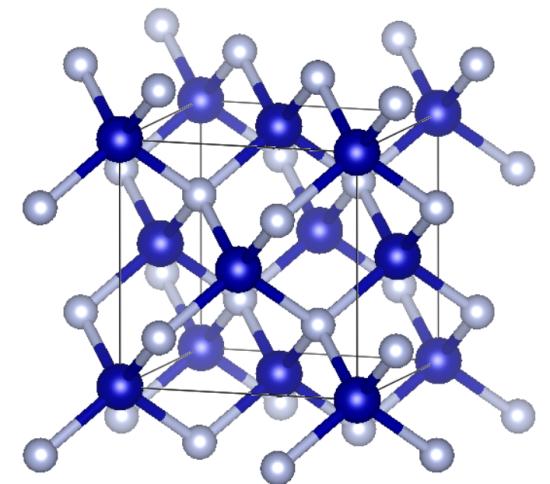
The problems of high temperature superconductor (HTSC) are important for the physics community and even the whole science area. Ever since its discovery, many researchers have conducted various studies, still lacking of widely accepted solutions. Recently, Prof. Jiangping Hu from Institute of Physics, Chinese of Science, proposed the “gene” theory of high temperature superconductivity based on the electronic properties of existing quasi-two dimensional HTSCs, and used it to search for new families of HTSCs. According to this theory, their group further explored the conditions of expressing of the “gene” in high symmetric three-dimensional structure and predicted cobalt compounds in the zinc-blende structure as new families of HTSC.

This work is titled as Unconventional high temperature superconductivity in cubic zinc-blende transition metal compounds, recently published in SCIENCE CHINA Physics, Mechanics & Astronomy. The researchers used the group theory, electronic band and slave-boson mean-field method to analysis the symmetries of electron motion and to predict the properties of superconductivity. This is a d-wave superconducting state spontaneously breaking time reversal symmetry and maintaining nodes in diagonal directions.

To be specific, the structure considered in this work is the zinc-blende structure as shown in Figure 1. Under this structure, the local symmetries are the same to the global symmetries, which keeps the degeneracy of the t2g orbitals from the three-dimensional representation of Td group. When the electronic configuration is close to d7, those three orbitals are isolated near the Fermi surface, with strong hopping and antiferromagnetic super-exchange in all the directions, triggering the expression of HTSC “gene”. The pairing wave under this environment is d+id, breaking time reversal symmetry. This pairing wave vanishes at the bulk diagonal direction in the Brillouin zone, as the direct analogy of quasi-two-dimensional superconductivity in cuprate. By adopting band structure and mean-field calculation, the electron doped zinc-blende cobalt-oxygen-nitrogen compounds may realize such physics.

This result further enriched the prediction of families of HTSCs according to the “gene” theory. If verified by the following experiments, the “gene” theory would be justified and more HTSCs materials would be found.

###

More information:

Q. Zhang, K. Jiang, Y. H. Gu, and J. P. Hu, Unconventional high temperature superconductivity in cubic zinc-blende transition metal compounds, Sci. China-Phys. Mech. Astron. 63, 277411 (2020), https://doi.org/10.1007/s11433-019-1495-3

http://engine.scichina.com/publisher/scp/journal/SCPMA/63/7/10.1007/s11433-019-1495-3?slug=fulltext

Media Contact
Hu, Jiangping
[email protected]

Related Journal Article

http://dx.doi.org/10.1007/s11433-019-1495-3

Tags: Chemistry/Physics/Materials Sciences
Share12Tweet8Share2ShareShareShare2

Related Posts

Local Universe Expansion Rate More Precise Than Ever — Yet Still Mysteriously Inconsistent

Local Universe Expansion Rate More Precise Than Ever — Yet Still Mysteriously Inconsistent

April 11, 2026
Breakthrough in Mainz: New Dual-Frequency Paul Trap Achieves Milestone Toward Antihydrogen Creation

Breakthrough in Mainz: New Dual-Frequency Paul Trap Achieves Milestone Toward Antihydrogen Creation

April 10, 2026

Ultra-Low Efficiency Roll-Off and Over 20% Efficiency Achieved in High Color Purity Blue Perovskite QLEDs

April 10, 2026

Bumblebee Bacterium Enables Vitamin B2 Production in Soya Drinks

April 10, 2026
Please login to join discussion

POPULAR NEWS

  • Boosting Breast Cancer Risk Prediction with Genetics

    47 shares
    Share 19 Tweet 12
  • Popular Anti-Aging Compound Linked to Damage in Corpus Callosum, Study Finds

    44 shares
    Share 18 Tweet 11
  • Imagine a Social Media Feed That Challenges Your Views Instead of Reinforcing Them

    1012 shares
    Share 400 Tweet 250
  • Revolutionary Theory Transforms Quantum Perspective on the Big Bang

    41 shares
    Share 16 Tweet 10

About

We bring you the latest biotechnology news from best research centers and universities around the world. Check our website.

Follow us

Recent News

Tumor-Targeted Nanoparticles Boost Glioblastoma Immunotherapy

Biomaterial 3D Cancer Models Tackle Clinical Challenges

Boosting Liver Regrowth via Suv39h1 and HMGB2

Subscribe to Blog via Email

Enter your email address to subscribe to this blog and receive notifications of new posts by email.

Join 78 other subscribers
  • Contact Us

Bioengineer.org © Copyright 2023 All Rights Reserved.

Welcome Back!

Login to your account below

Forgotten Password?

Retrieve your password

Please enter your username or email address to reset your password.

Log In
No Result
View All Result
  • Homepages
    • Home Page 1
    • Home Page 2
  • News
  • National
  • Business
  • Health
  • Lifestyle
  • Science

Bioengineer.org © Copyright 2023 All Rights Reserved.