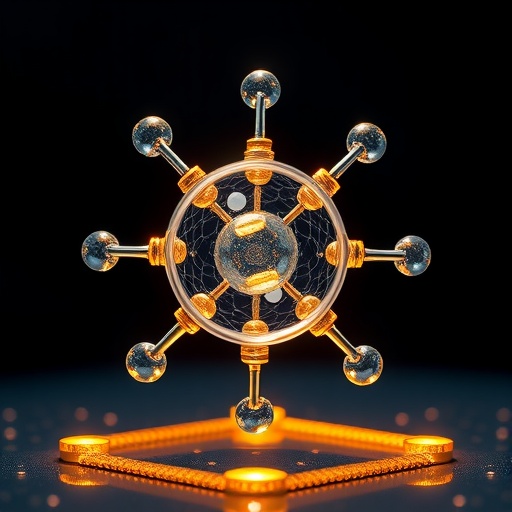
In a groundbreaking advancement poised to accelerate the commercialization of green hydrogen technology, researchers at the Korea Institute of Science and Technology (KIST) have unveiled a next-generation catalyst that promises to revolutionize water electrolysis systems. This cutting-edge catalyst integrates atomic-level precision with a novel electrode design, enabling a single material to simultaneously facilitate both the hydrogen evolution reaction (HER) and oxygen evolution reaction (OER) with remarkable efficiency and stability. Such innovation marks a significant step forward in producing low-cost, high-performance catalysts essential for sustainable hydrogen production.
Green hydrogen, produced by splitting water molecules into hydrogen and oxygen via electrolysis powered by renewable energy sources, stands as a crucial vector in the global fight against climate change. However, current hydrogen production technologies face persistent challenges, particularly related to the reliance on costly precious metals and complex electrode architectures. Traditional systems conventionally require separate catalysts optimized independently for HER and OER, leading to increased material costs and engineering complexity. Additionally, the use of polymer binders to affix catalysts to electrodes often undermines electrical conductivity and long-term durability, limiting the practicality of these systems for continuous operation.
Addressing these significant drawbacks, the KIST team led by Dr. Na Jongbeom and Dr. Kim Jong Min has pioneered a technique that harnesses the exceptional catalytic capabilities of single-atom iridium dispersed uniformly on a manganese-nickel layered double hydroxide (LDH) matrix enhanced with phytic acid. This molecular anchoring agent enables atomic-scale precision in the immobilization of iridium atoms, effectively maximizing the active surface area while drastically reducing precious metal usage to less than 1.5% compared to conventional catalysts. This approach transcends traditional bulk metal catalysts by resembling an even distribution of fine sand grains rather than singular large chunks, vastly improving catalytic efficiency.
Critically, these isolated iridium atoms serve as highly active centers for the hydrogen evolution reaction. Their interaction with the Mn-Ni phytate support not only promotes efficient hydrogen production but simultaneously optimizes the oxygen evolution reaction occurring predominantly at the nickel-based sites. This bifunctional catalytic behavior is a remarkable feat, demonstrating balanced reactivity conducive to both half-reactions of water splitting within a single material system. The synergy between single-atom iridium and the transition metal support fundamentally challenges and advances existing catalyst design paradigms.
Beyond catalyst composition, the research tackles electrode architecture innovation. The team developed a binder-free electrode fabrication method by growing the catalytic material directly on the electrode substrate. This eliminates the need for polymer binders, thereby enhancing electrical conductivity and mitigating catalyst detachment during prolonged operation. Such a structural evolution is vital for ensuring durability under real-world operating conditions, affording stable performance over extensive periods without significant degradation.
Performance evaluations reveal that the ‘all-in-one’ single-atom catalyst maintains exemplary activity for both HER and OER in an anion exchange membrane (AEM) water electrolysis system, sustaining continuous operation beyond 300 hours. This level of stability under demanding electrochemical conditions underscores the robustness of the catalyst architecture and its potential for practical deployment. Furthermore, the reduced iridium content not only diminishes manufacturing costs but also aligns with sustainability goals by conserving scarce precious metal resources.
This novel catalyst design embodies a convergence of atomic-level material engineering and electrochemical innovation, exemplifying the transformative potential of single-atom catalysis in energy applications. By integrating precise control over catalytic sites with strategic electrode design, the KIST team has created a platform technology that could redefine the economics and efficiency of green hydrogen production. Their work paves the way for streamlined, cost-effective electrolysis devices capable of operating with enhanced durability and reduced material demands.
Dr. Na Jongbeom emphasized the significance of this breakthrough, stating that achieving bifunctional catalytic activity on a single catalyst while simultaneously cutting precious metal usage addresses fundamental challenges in hydrogen production technology. This advancement not only promises to accelerate adoption but also provides a scalable solution supporting the broader expansion of renewable hydrogen energy infrastructures. The potential environmental and economic impact is profound, as low-cost and stable electrolyzers are critical for widespread clean hydrogen generation.
The research, published in the prestigious journal Advanced Energy Materials, represents the culmination of intensive collaborative efforts supported by Korea’s Ministry of Science and ICT and international research partnerships. Its findings contribute foundational knowledge to the field of electrocatalysis, offering insights into the design principles for high-performance, durable, and economically viable water splitting catalysts. By bridging fundamental science with practical engineering, this technology holds promise for transformative applications in sustainable energy systems worldwide.
Looking ahead, the implementation of this atomic-precision catalyst technology in commercial water electrolysis units could significantly reduce the cost barriers currently limiting green hydrogen production scale-up. The integration of bifunctional catalytic sites and binder-free electrodes marks a paradigm shift, enabling simpler manufacturing processes and superior device performance. As global efforts intensify toward carbon neutrality, such advances in electrochemical hydrogen generation are critical for achieving resilient and clean energy supply chains.
The KIST breakthrough underscores the vital role of interdisciplinary materials science and chemical engineering in addressing complex energy challenges. By meticulously tailoring atomic configurations and electrode designs, researchers are opening new frontiers in catalyst functionality and system durability. Continued development and optimization based on these principles will likely yield even more efficient and robust catalysts, propelling green hydrogen technologies toward mainstream adoption and global impact.
Subject of Research: Water electrolysis catalysis, single-atom catalysts, hydrogen evolution reaction (HER), oxygen evolution reaction (OER), green hydrogen production
Article Title: Tailored Design of Iridium Single Atoms on Mn―Ni-Phytate with Robust Bifunctionality for Enhanced Anion Exchange Membrane Water Electrolysis
News Publication Date: January 14, 2026
Web References: http://dx.doi.org/10.1002/aenm.202506645
References: Published in Advanced Energy Materials (IF: 26.0)
Image Credits: Korea Institute of Science and Technology
Keywords
Green hydrogen, water electrolysis, single-atom catalyst, iridium, manganese-nickel layered double hydroxide, bifunctional catalyst, hydrogen evolution reaction, oxygen evolution reaction, anion exchange membrane, binder-free electrode, atomic-level precision, sustainable energy technology
Tags: advanced electrode designcarbon neutrality technologiescommercialization of green hydrogengreen hydrogen production catalysthydrogen evolution reaction catalystlow-cost hydrogen productionoxygen evolution reaction catalystrenewable energy electrolysissimultaneous hydrogen and oxygen generationsingle-atom water electrolysis catalyststable water splitting catalystssustainable hydrogen fuel