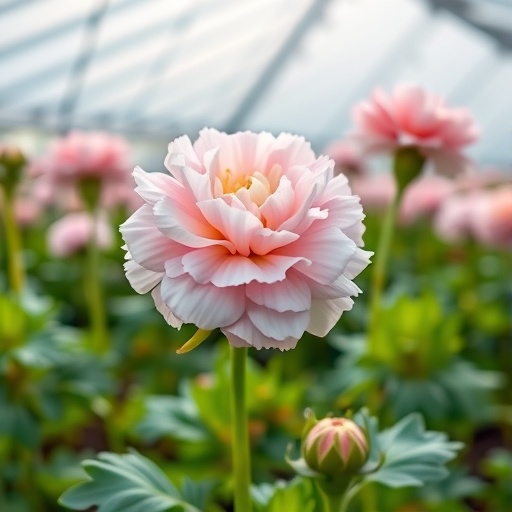
In the field of horticulture, the pursuit of enhancing plant growth and post-harvest longevity has escalated in importance, especially for commercially significant species like the carnation, scientifically known as Dianthus caryophyllus. Recent findings by Ahmed and Ismail shed light on an intriguing approach to improve growth and nutrient uptake: the application of gamma irradiation in conjunction with specific cultivation systems. This innovative research has garnered attention due to its potential to revolutionize standard cultivation practices.
Carnations are renowned not only for their aesthetic appeal but also for their relatively short vase life, which can adversely impact their marketability. The research led by Ahmed and Ismail investigates how gamma irradiation can serve as a catalyst in extending this coveted vase life, thereby enhancing the overall quality of the blooms. This is particularly relevant in an era where consumer preferences lean towards flowers that retain freshness for extended periods. By utilizing gamma rays, which are a form of high-energy electromagnetic radiation, the study aims to understand the cellular and physiological effects on carnation plants.
The study meticulously explores the impact of gamma irradiation on various growth parameters. Through a series of controlled experiments, the researchers exposed carnation plants to varying doses of gamma rays and monitored their growth in different cultivation systems. The results indicated that specific doses of gamma irradiation could stimulate growth, promoting taller stems and larger blooms compared to non-irradiated counterparts. This finding suggests that irradiation could potentially be harnessed as a means of bio-manipulation to enhance floral attributes.
Moreover, one of the most fascinating aspects of this research lies in its exploration of nutrient uptake. It is well documented that the nutritional profile of a plant is integral to its overall health and quality. The research findings revealed that gamma irradiation not only enhanced qualitative growth traits but also improved the efficiency of nutrient absorption. By optimizing the use of essential nutrients, the carnation plants demonstrated a notable increase in vigor, which appears to contribute to both their aesthetic beauty and vase life.
Vase life is a critical aspect of cut flower marketing, dictating consumer satisfaction and demand. The research findings highlight a correlation between increased nutrient uptake and extended vase life. The improved hydration and turgor pressure in irradiated plants resulted in delayed senescence, meaning that the flowers remained fresh and appealing for significantly longer periods. This outcome provides a crucial advantage for floriculturists looking to meet the preferences of modern consumers, who demand flowers that not only look vibrant upon purchase but also maintain their beauty over time.
In evaluating the effects of cultivation systems, the study examines traditional soil-based methods in contrast to hydroponic and other advanced systems. The results indicated that while gamma irradiation has universal benefits, its effects can be amplified in optimized cultivation environments such as hydroponics. This finding challenges traditional growing practices and presents an exciting opportunity for growers to adopt more scientific approaches that maximize plant potential.
Furthermore, the research underscores the importance of understanding the biochemical pathways activated during irradiation. The exposure to gamma rays triggers a complex set of responses within the plant cells, enhancing metabolic activities that are pivotal for growth. This molecular perspective not only provides insights into how irradiation benefits plant physiology but also opens up discussions on the safe application of such treatments in commercial settings.
In addressing the potential concerns surrounding gamma irradiation, the authors of this study advocate for rigorous safety standards and guidelines. They emphasize that while the technique can yield remarkable benefits, it is crucial to ensure that the doses applied are within the safety thresholds established to protect plant health and human consumption. This stance aims to bolster consumer confidence and facilitate the acceptance of gamma-treated flowers in the marketplace.
As floriculture aims to adapt to the challenges of climate change and resource limitations, the need for innovative solutions becomes increasingly pertinent. The findings from this research could serve as a catalyst for further exploration into sustainable agronomic practices that balance productivity with environmental stewardship. Through the lens of gamma irradiation, the study paves the way for new methodologies that may transform how carnation and other ornamental plants are cultivated.
In light of these findings, the implications for future research are vast. The potential to explore further combinations of irradiation with other growth-promoting technologies, such as plant growth regulators or biostimulants, presents an enticing avenue for innovation. Future studies could expand on the breadth of species examined, offering insights into whether these findings can be replicated across a wider range of ornamental plants.
The publication of this research not only contributes significantly to the existing literature but also lays a foundation for industry collaborations. Growers, researchers, and policymakers may find common ground in leveraging these insights to drive advancements in the floral industry. Engaging with esteemed journals and conferences, the authors hope to disseminate their findings widely, sparking discussions and inspiring new initiatives within the field of plant science.
As we continue to unravel the complex relationships between plant physiology and innovative cultivation practices, the potential for gamma irradiation as a transformative tool in the floral industry remains an exhilarating prospect. This research not only challenges conventional methods but also inspires a new generation of horticulturists to look beyond traditional boundaries in the pursuit of enhanced plant quality and sustainability.
In conclusion, the work by Ahmed and Ismail opens up exciting pathways for horticultural advancement. By addressing both the growth challenges of carnations and their market viability, the exploration of gamma irradiation serves as a testament to the power of scientific inquiry in shaping the future of floriculture.
Subject of Research: Effects of gamma irradiation and cultivation system on the growth, nutrient uptake, and vase life of carnation (Dianthus caryophyllus)
Article Title: Effects of gamma irradiation and cultivation system on the growth, nutrient uptake, and vase life of carnation (Dianthus caryophyllus) L.
Article References:
Ahmed, M.F., Ismail, H.M. Effects of gamma ırradiation and cultivation system on the growth, nutrient uptake, and vase life of carnation (Dianthus caryophyllus L.).
Discov. Plants 2, 318 (2025). https://doi.org/10.1007/s44372-025-00375-1
Image Credits: AI Generated
DOI: https://doi.org/10.1007/s44372-025-00375-1
Keywords: gamma irradiation, carnation, growth enhancement, nutrient uptake, vase life, horticulture, cultivation systems.
Tags: cellular effects of gamma radiation on plantscommercial significance of carnation cultivationcontrolled experiments in plant researchDianthus caryophyllus cultivation techniquesenhancing post-harvest longevity in flowersflower marketability and consumer preferencesgamma irradiation effects on carnation growthhigh-energy electromagnetic radiation in agriculturehorticulture advancements through gamma raysimproving vase life of carnationsinnovative horticultural practicesnutrient uptake enhancement in flowers