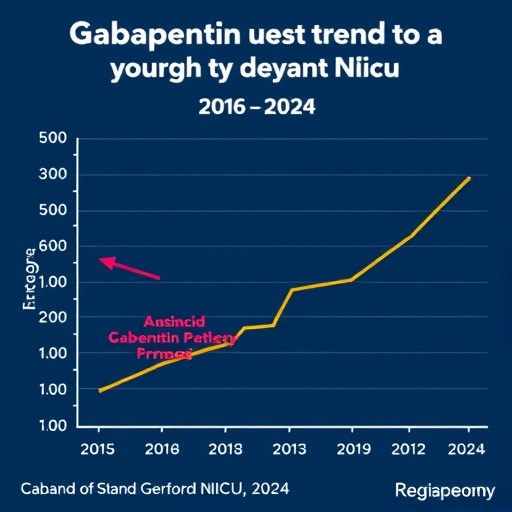
In a groundbreaking new study published in the Journal of Perinatology this April, researchers have provided an unprecedented examination of the evolving landscape of gabapentin use within a neonatal intensive care unit (NICU) over the past eight years. This single-center, longitudinal investigation spanning from 2016 to 2024 offers a meticulous analysis of prescription patterns, clinical rationales, and therapeutic outcomes associated with gabapentin administration in critically ill neonates. The study’s findings resonate deeply within the neonatal care community, hinting at broader shifts in pain management and neuroprotective strategies during the earliest and most vulnerable stages of human development.
Gabapentin, a gamma-aminobutyric acid (GABA) analogue originally designed for adult neurological disorders such as epilepsy and neuropathic pain, has gradually found its place in neonatal medicine. However, its off-label use in NICUs has remained contentious due to scarce large-scale data on efficacy and safety in this delicate population. The study led by Roberts, Foote, and Schneider meticulously documents how this medication’s application evolved in a high-acuity tertiary NICU, reflecting broader shifts in clinical practice influenced by emerging evidence and growing concerns about traditional analgesic regimens.
The crux of the study lies in its retrospective analysis of electronic health records from over 1,200 neonates admitted between 2016 and 2024. The authors systematically evaluated gabapentin prescribing trends, dosing strategies, and associated clinical indications, which predominantly included neuropathic pain management, seizure disorders, and adjunctive therapy for complex neurological conditions. The gradual increase in gabapentin use over time was notable, suggesting increasing clinician comfort as well as a growing body of peer-reviewed literature supporting its neonatal applications.
Central to the authors’ inquiry was the interrogation of pharmacokinetic and pharmacodynamic adjustments essential in neonatal populations. Unlike adults, neonates present unique challenges due to immature hepatic enzyme systems and renal clearance mechanisms that dramatically alter drug metabolism and half-life. The research provides a detailed breakdown of dose modifications over the years, demonstrating clinicians’ iterative learning process and careful titration aimed at maximizing therapeutic benefit while minimizing adverse effects.
Intriguingly, the study also maps out correlations between gabapentin treatment courses and clinical outcomes such as pain scores, seizure frequency, and length of NICU stay. The data illuminates a nuanced picture: neonates receiving gabapentin generally exhibited stabilized pain profiles and reduced need for opioids, whose side effect profile in neonates can be severe. While causality cannot be definitively established in this retrospective design, these associations galvanize interest in gabapentin’s role as a potentially safer alternative or adjunct to traditional opioids in neonatal pain management protocols.
The authors expand their discussion to the neurodevelopmental implications of early gabapentin exposure. Emerging preclinical evidence suggests that gabapentin’s modulation of calcium channel activity may confer neuroprotective benefits by reducing excitotoxicity and inflammation within immature brain tissue. The paper advocates for cautious optimism, emphasizing the critical need for future prospective trials designed to elucidate long-term neurodevelopmental outcomes in neonates exposed to gabapentin during intensive care.
Another salient point addressed is the heterogeneity in prescribing practices observed among neonatologists within the single center, highlighting the absence of consensus guidelines. This variability underscores an urgent need for standardized protocols informed by robust clinical trials. The researchers propose that their findings could serve as a foundational data repository to inform future multicenter investigations and guideline development, potentially reshaping the landscape of neonatal pharmacotherapy.
The report also incorporates a critical examination of potential adverse effects linked to gabapentin use in neonates, including sedation, feeding intolerance, and potential neurobehavioral alterations. Although the study documents a low incidence of serious adverse events, the authors appropriately caution that underreporting and the nuanced presentation of side effects in neonates necessitate vigilant monitoring and post-market pharmacovigilance systems.
Moreover, the study delves into the ethical considerations inherent in administering a neuromodulatory agent with incomplete pediatric licensing to a vulnerable patient population. The authors discuss the balance between compassionate use in the face of refractory pain or neurological disorders and the rigorous demands of evidence-based medicine, advocating for transparent communication among clinicians, families, and regulatory bodies.
Importantly, the research contextualizes these medical findings within broader healthcare trends, such as heightened awareness around neonatal pain management and the opioid epidemic’s ripple effects extending even into NICU settings. Gabapentin’s increasing adoption can be seen as part of a paradigm shift toward multimodal analgesia geared toward minimizing opioid exposure while addressing complex neonatal neural pathophysiology.
The authors underscore the technological advances that enabled such a comprehensive study, including sophisticated electronic medical record systems capable of longitudinal data capture and integration with pharmacological databases. Such technological frameworks are indispensable for real-time monitoring and continuous quality improvement in neonatal pharmacotherapy, suggesting a future where data-driven insights can rapidly inform bedside decisions.
Concluding with a vision for the future, Roberts and colleagues call for prospective randomized controlled trials, international collaborations, and multidisciplinary research efforts integrating neonatology, pharmacology, neurodevelopmental science, and bioethics. This integrative approach, they argue, is vital to fully unlock gabapentin’s therapeutic potential while safeguarding against unintended outcomes.
In summary, the 2026 publication charts a compelling trajectory of gabapentin’s increasing utilization in neonatal intensive care, framed by rigorous data analysis and thoughtful discussion of clinical, pharmacological, and ethical dimensions. This pivotal work promises to catalyze informed debates, spark new research directions, and ultimately enhance the standard of care for our most fragile patients, embodying a landmark advance in neonatal medicine.
Subject of Research:
Article Title:
Article References: Roberts, A.G., Foote, H., Schneider, S. et al. Trends in gabapentin use in a single-center neonatal intensive care unit from 2016–2024. J Perinatol (2026). https://doi.org/10.1038/s41372-026-02673-2
Image Credits: AI Generated
DOI: 07 April 2026
Tags: challenges of analgesic use in neonateselectronic health record analysis in NICUevolving clinical practices in neonatal caregabapentin for neonatal neuropathic paingabapentin safety and efficacy in newbornsgabapentin use in neonatal intensive care unitslongitudinal study on neonatal gabapentin prescriptionsneuroprotective strategies for critically ill neonatesoff-label gabapentin use in neonatespain management in NICUtrends in neonatal pharmacotherapy 2016-2024