


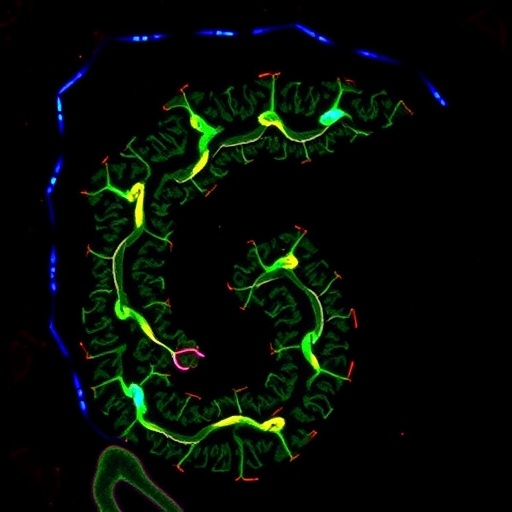
In a groundbreaking study published in Nature Communications, researchers have unveiled the pivotal role of G9a-mediated H3K9 dimethylation (H3K9me2) in orchestrating the regeneration of the intestinal epithelium. This discovery sheds new light on the intricate epigenetic mechanisms controlling tissue renewal in one of the body’s most rapidly renewing organs. The study not only elucidates how G9a, a histone methyltransferase, regulates the regenerative process but also highlights its silencing effect on critical cell cycle-related genes, thus ensuring proper epithelial homeostasis and recovery after injury.
The intestinal epithelium is a highly dynamic tissue characterized by continuous turnover driven by rapidly proliferating stem and progenitor cells. Maintaining the delicate balance between proliferation and differentiation is essential to prevent pathological conditions such as cancer or chronic inflammatory disorders. Epigenetic regulation – heritable changes in gene expression without alterations in the DNA sequence – has emerged as a fundamental mechanism in controlling cellular identity and function. Among these epigenetic marks, H3K9me2, catalyzed by the enzyme G9a, is generally associated with transcriptional repression, but its specific role in intestinal regeneration remained unclear until now.
Chen, Shi, Zhou, and colleagues approached this problem by integrating sophisticated molecular biology techniques, genome-wide epigenomic profiling, and in vivo models of intestinal injury and repair. Their work demonstrates that G9a deposits the repressive H3K9me2 mark on a subset of cell cycle-related genes, effectively silencing these loci during key phases of epithelial regeneration. This negative regulation is crucial for coordinating cell cycle progression, preventing aberrant proliferation, and enabling timely differentiation of epithelial cells.
One of the most striking findings is the temporal and spatial specificity of G9a’s activity. The enzyme dynamically modulates H3K9me2 levels in intestinal stem cells (ISCs) and progenitors following tissue damage, fine-tuning gene expression programs to meet regenerative demands. This adaptability contrasts with the traditionally static view of epigenetic repression, suggesting that G9a and its mediated histone modifications operate as sensitive molecular switches during regeneration.
Further mechanistic insights reveal that G9a-mediated repression of cell cycle genes acts as a brake on excessive proliferation, thereby maintaining the regenerative niche’s integrity and avoiding hyperplasia or tumorigenesis. The authors provide compelling evidence that loss of G9a results in derepression of these targets, leading to unchecked cell division, impaired differentiation, and ultimately defective tissue architecture. This highlights a previously unappreciated safeguard role of epigenetic silencing in adult tissue regeneration.
The study also explores the interplay between G9a-H3K9me2 and other epigenetic regulators, hinting at a coordinated network that collectively governs intestinal homeostasis. Cross-talk between histone methylation, DNA methylation, and chromatin remodeling appears to culminate in finely tuned gene expression landscapes essential for the delicate regenerative process. Such insights open new avenues for targeted therapies aimed at epigenetic modulation to treat intestinal disorders.
Critically, the research identifies key downstream targets of G9a, including well-characterized cell cycle regulators such as cyclins and cyclin-dependent kinase inhibitors. By mapping these gene networks, the researchers uncover how precise transcriptional silencing integrates with cellular proliferation signals. This comprehensive understanding offers a blueprint for manipulating epithelial renewal for therapeutic benefit, especially in conditions where regeneration is compromised.
The implications of these findings extend beyond the intestine, inviting speculation that similar epigenetic mechanisms may operate in other rapidly regenerating tissues or stem cell niches. As H3K9 methylation is a conserved mark across cell types, G9a’s role in balancing proliferation and differentiation might be a universal paradigm in tissue homeostasis and repair. Further research could elucidate such parallels, improving strategies for regenerative medicine.
In addition to basic biological insights, the study’s innovative methodology deserves mention. The authors employed state-of-the-art chromatin immunoprecipitation followed by sequencing (ChIP-seq) to profile H3K9me2 modifications, paired with RNA sequencing to correlate epigenetic changes with transcriptional outputs. Coupling these data with functional assays in genetically engineered mouse models strengthened the causal link between G9a activity and intestinal regeneration.
Moreover, the dynamic epigenetic landscape described suggests potential biomarkers for intestinal health and disease states. Alterations in G9a expression or H3K9me2 patterns could serve as early indicators of regeneration defects or predisposition to neoplastic transformation. This diagnostic angle holds promise for clinical translation, allowing earlier intervention in intestinal pathologies.
Intriguingly, the study also touches on therapeutic prospects of modulating G9a activity. Pharmacological inhibitors of G9a are already under investigation for various cancers; however, this work implies that fine-tuning rather than complete inhibition may be necessary to support regeneration without promoting malignancy. Designing selective epigenetic modulators with temporal precision represents a formidable but exciting challenge.
Collectively, this research redefines the paradigm of intestinal regeneration by positioning epigenetic repression as a key regulatory axis. The nuanced role of G9a and H3K9me2 in harmonizing the cell cycle and differentiation programs underscores the complexity of tissue maintenance and the potential for epigenetic therapies. As the population ages and gastrointestinal diseases increase, understanding such molecular underpinnings is of immense biomedical importance.
In conclusion, Chen, Shi, Zhou, and colleagues have provided a seminal piece of evidence that bridges epigenetic modifications with functional regenerative biology in the intestine. Their characterization of G9a-mediated H3K9me2 opens new frontiers for research and therapeutic innovation, marking a significant advance in our grasp of tissue regeneration mechanisms. This discovery promises to influence future studies and clinical approaches, harnessing the language of chromatin to promote tissue health and recovery.
Subject of Research: Epigenetic regulation of intestinal epithelial regeneration via G9a-mediated histone H3K9 dimethylation and the silencing of cell cycle-related genes.
Article Title: G9a-mediated H3K9me2 orchestrates intestinal epithelial regeneration through epigenetic silencing of cell cycle-related genes.
Article References:
Chen, J., Shi, X., Zhou, X. et al. G9a-mediated H3K9me2 orchestrates intestinal epithelial regeneration through epigenetic silencing of cell cycle-related genes. Nat Commun (2026). https://doi.org/10.1038/s41467-026-68626-7
Image Credits: AI Generated
Tags: cell cycle gene regulationchronic inflammatory disorders in intestinesepigenetic regulation of gene expressionepigenetic silencing mechanismsG9a histone methyltransferaseH3K9 dimethylation roleintestinal epithelium regenerationintestinal injury recoverymaintaining epithelial homeostasisstem and progenitor cell dynamicstissue renewal in intestinestranscriptional repression in epigenetics



