• HOME
  • NEWS
  • EXPLORE
    • CAREER
      • Companies
      • Jobs
    • EVENTS
    • iGEM
      • News
      • Team
    • PHOTOS
    • VIDEO
    • WIKI
  • BLOG
  • COMMUNITY
    • FACEBOOK
    • INSTAGRAM
    • TWITTER
Saturday, February 7, 2026
BIOENGINEER.ORG
No Result
View All Result
  • Login
  • HOME
  • NEWS
  • EXPLORE
    • CAREER
      • Companies
      • Jobs
        • Lecturer
        • PhD Studentship
        • Postdoc
        • Research Assistant
    • EVENTS
    • iGEM
      • News
      • Team
    • PHOTOS
    • VIDEO
    • WIKI
  • BLOG
  • COMMUNITY
    • FACEBOOK
    • INSTAGRAM
    • TWITTER
  • HOME
  • NEWS
  • EXPLORE
    • CAREER
      • Companies
      • Jobs
        • Lecturer
        • PhD Studentship
        • Postdoc
        • Research Assistant
    • EVENTS
    • iGEM
      • News
      • Team
    • PHOTOS
    • VIDEO
    • WIKI
  • BLOG
  • COMMUNITY
    • FACEBOOK
    • INSTAGRAM
    • TWITTER
No Result
View All Result
Bioengineer.org
No Result
View All Result
Home NEWS Science News

Future PM2.5 air pollution over China

Bioengineer by Bioengineer
November 23, 2016
in Science News
Reading Time: 2 mins read
0
Share on FacebookShare on TwitterShare on LinkedinShare on RedditShare on Telegram
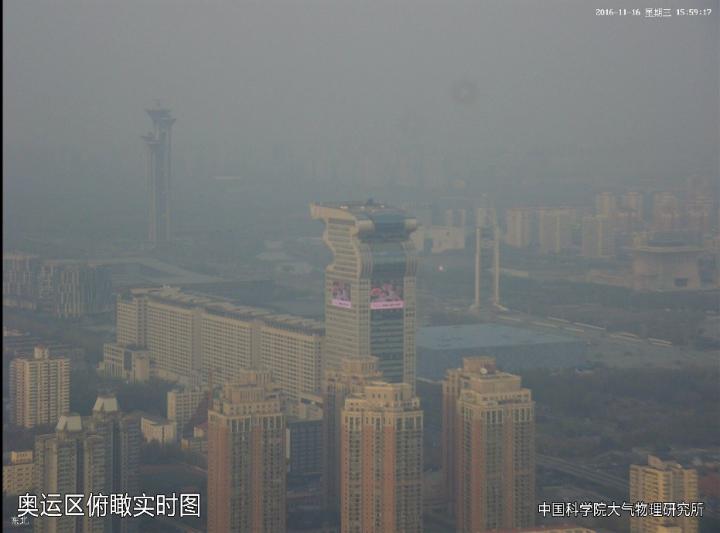
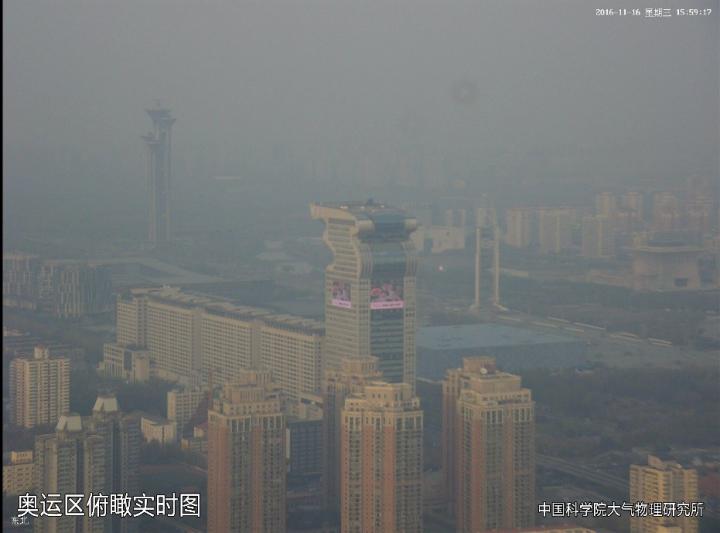
IMAGE

Credit: Institute of Atmospheric Physics, Chinese Academy Sciences

With rapid industrialization and urbanization over the past decades, China has experienced widespread air pollution induced by fine particulate matter with a diameter of 2.5 μm or less (PM2.5). To protect human health and meet the newly implemented annual PM2.5 target (less than 35 μg m-3), great efforts are needed to reduce emissions effectively. It is, therefore, essential to understand how future PM2.5 concentrations are affected by changes in anthropogenic emissions.

By using a global chemical transport and future emission scenarios (the representative concentration pathways, RCPs), researchers from Institute of Atmospheric Physics and their co-authors, projected that by 2030 wintertime (summertime) PM2.5 concentrations averaged over Beijing-Tianjin-Hebei, Yangtze River Delta, Pearl River Delta, and Sichuan Basin will be 49-56 (31-40), 40-50 (23-29), 22-27 (8-11), and 56-68 (19-24) μg m-3, respectively, with the ranges of PM2.5 concentrations obtained on the basis of the four RCPs.

"In consideration of annual PM2.5 target, controlling PM2.5 pollution in Beijing-Tianjin-Hebei and Sichuan Basin will be challenging." said Hong Liao, who is the corresponding author of the research published in Journal of Geophysical Research: Atmospheres. "In these two regions, it will take at least two decades to achieve the annual PM2.5 target under the RCP2.6, RCP4.5, and RCP8.5 scenarios, and PM2.5 concentrations will keep increasing under RCP6.0."

In the meantime of improving air quality, policymakers are suggested considering the impacts on climate induced by decreases in aerosol concentrations, as experienced in the US and Europe. The IPCC has estimated that the global mean surface temperature exhibited a warming of 0.85°C (0.65-1.06°C) from 1880 to 2012, and the associated radiative forcings by greenhouse gases and aerosols were +2.83 and +0.90 W m-2, respectively. "Thus, the predicted positive aerosol direct radiative forcing of 0.7-1.9 W m-2 over eastern China (20°-45°N, 100°-125°E) in 2050 relative to 2000 under all RCPs except for RCP6.0 have important implications for regional climate." said Liao.

"There is a long way to go to mitigate future PM2.5 pollution in China based on the emission scenarios." Concluded Liao. "At the same time, the consequent warming from reduced aerosols is also significant and inevitable."

The study has been published in Journal of Geophysical Research: Atmospheres.

###

Media Contact

Zheng Lin
[email protected]

http://english.iap.cas.cn/

############

Story Source: Materials provided by Scienmag

Share12Tweet8Share2ShareShareShare2

Related Posts

Decoding Prostate Cancer Origins via snFLARE-seq, mxFRIZNGRND

February 7, 2026

Digital Health Perspectives from Baltic Sea Experts

February 7, 2026

Florida Cane Toad: Complex Spread and Selective Evolution

February 7, 2026

Exploring Decision-Making in Dementia Caregivers’ Mobility

February 7, 2026
Please login to join discussion

POPULAR NEWS

  • Robotic Ureteral Reconstruction: A Novel Approach

    Robotic Ureteral Reconstruction: A Novel Approach

    82 shares
    Share 33 Tweet 21
  • Digital Privacy: Health Data Control in Incarceration

    63 shares
    Share 25 Tweet 16
  • Study Reveals Lipid Accumulation in ME/CFS Cells

    57 shares
    Share 23 Tweet 14
  • Breakthrough in RNA Research Accelerates Medical Innovations Timeline

    53 shares
    Share 21 Tweet 13

About

We bring you the latest biotechnology news from best research centers and universities around the world. Check our website.

Follow us

Recent News

Decoding Prostate Cancer Origins via snFLARE-seq, mxFRIZNGRND

Digital Health Perspectives from Baltic Sea Experts

Florida Cane Toad: Complex Spread and Selective Evolution

Subscribe to Blog via Email

Enter your email address to subscribe to this blog and receive notifications of new posts by email.

Join 73 other subscribers
  • Contact Us

Bioengineer.org © Copyright 2023 All Rights Reserved.

Welcome Back!

Login to your account below

Forgotten Password?

Retrieve your password

Please enter your username or email address to reset your password.

Log In
No Result
View All Result
  • Homepages
    • Home Page 1
    • Home Page 2
  • News
  • National
  • Business
  • Health
  • Lifestyle
  • Science

Bioengineer.org © Copyright 2023 All Rights Reserved.