In a significant advancement within geriatric medicine, a comprehensive retrospective cohort study has shed light on the critical interplay of orthogeriatric co-management concerning fragility fractures. The research, which meticulously examined patient mortality rates and functional outcomes across various fracture types within a one-year period, has been prominently highlighted in an article by Pankratz et al., and recently published in BMC Geriatrics. The investigation brings to the forefront the urgent need for integrated care strategies as the aging population continues to grow, resulting in an alarming rise in fragility fractures.
Fragility fractures, often a consequence of diminished bone density and strength, pose substantial health risks for the elderly. The fragility associated with these fractures can lead to prolonged hospital stays, increased morbidity, and a heightened risk of mortality. In light of these challenges, the authors underscore the necessity for a specialized approach to manage these fractures. Traditional orthopedic practices alone may not suffice; therefore, integrating geriatric assessments and interventions could profoundly influence patient outcomes.
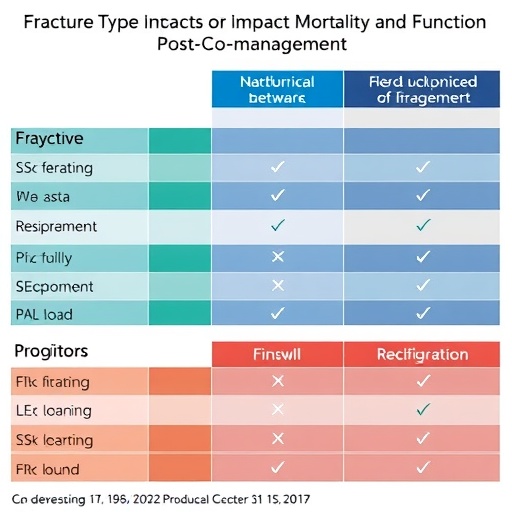
The study focused on an extensive dataset derived from patients treated for fragility fractures in a multicentric healthcare system. It spanned various injury types, including hip, wrist, and vertebral fractures, examining the diverse impacts of these injuries. By analyzing one-year mortality rates and functional recovery, the research team aimed to elucidate the disparities in outcomes based on fracture type and management strategies. The findings revealed a concerning correlation between the lack of geriatric co-management and increased mortality, emphasizing the significance of implementing multidisciplinary care frameworks.
One remarkable aspect of the study was the robust analysis of how co-management between orthopedic surgeons and geriatricians can dramatically enhance patient recovery trajectories. Patients who received care from both specialties not only exhibited reduced mortality risks but also showed marked improvements in functional capabilities. This highlights the value of collaborative practices in medicine, emphasizing that historically siloed departments can achieve better results through unified efforts.
Moreover, the research delved into the social determinants of health that often define patient outcomes in this demographic. Factors such as access to post-operative rehabilitation, social support systems, and overall health literacy were explored. The study found that older adults with comprehensive support systems had a significantly lower mortality rate compared to those who lacked vital resources. Thus, addressing these determinants is integral to improving overall patient health, particularly among frail, elderly individuals.
The implications of this research are profound, pointing not only to the clinical benefits of co-management but also to policy-level changes that could reform current practices in elder care. Institutions are urged to adopt more integrative approaches that include collaborative care models, which encompass physiatrists, nutritionists, and rehabilitation specialists, alongside orthopedic and geriatric experts. This could pave the way for individualized treatment plans that cater to the unique needs of each patient, ultimately boosting recovery outcomes and enhancing life quality.
Furthermore, this study opens up avenues for further research into how different intervention strategies can be tailored based on fracture types and individual patient profiles. Future studies could explore long-term outcomes of patients who receive tailored interventions versus standardized care, thereby enriching the evidence base for best practice guidelines in geriatric orthopedics.
The ongoing discourse surrounding the management of fragility fractures also intersects with public health priorities. As osteoporosis and related fractures continue to become more prevalent, healthcare systems are pressed to rethink their approaches. This research serves as a clarion call to medical practitioners, researchers, and policymakers to align efforts toward improving the care of the elderly, with particular focus on developing comprehensive management strategies that reduce mortality and enhance recovery.
Indeed, with advancements in medical science and the growing recognition of the importance of interdisciplinary care, there’s a distinctive opportunity to revolutionize the treatment landscape for geriatric patients suffering from fragility fractures. The integration of geriatric principles into orthopedic care is not merely an option, but a necessity as we strive to foster a healthier aging population.
The landscape of geriatric care is shifting, and studies like the one conducted by Pankratz et al. play a crucial role in illuminating the path toward improvement. Highlighting the disadvantages of fragmented care serves as a powerful argument for the change needed in clinical practice. Ultimately, as the healthcare community grapples with the complexities of aging populations, fostering collaborative practices could become a cornerstone of effective, patient-centered care for older adults.
In summary, the findings from this retrospective cohort study shine a spotlight on the necessity for a shift in how fragility fractures are managed among older adults. The compelling insights regarding reduced mortality and improved functional outcomes through orthogeriatric co-management represent a significant step forward in enhancing geriatric care. As we look to the future, the synthesis of various medical disciplines can play a vital role in redefining treatment paradigms that serve this vulnerable population and lead to better quality of life for millions of elderly individuals.
The medical community stands at a pivotal moment, with the clarion call for change resonating louder than ever. Practitioners and healthcare leaders are encouraged to heed the evidence presented in this study, embracing a model of care that is not just reactive but proactively designed to enhance the resilience and recovery of older patients confronting the harsh realities of fragility fractures. It’s now up to us to transform these insights into action, ensuring that every older adult receives the comprehensive care they deserve.
In closing, the evolution of geriatric healthcare relies on innovative thinking and collaboration. The fusion of orthopedic and geriatric expertise symbolizes a promising frontier that can lead to healthier, more fulfilled lives for our elders. Let this research be a springboard for future endeavors, transformed practices, and a renewed commitment to geriatric health optimization.
Subject of Research: Orthogeriatric co-management of fragility fractures.
Article Title: Orthogeriatric co-management of fragility fractures: a retrospective cohort study on one-year mortality and functional outcomes across fracture types.
Article References:
Pankratz, C., Risch, A., Oxen, J. et al. Orthogeriatric co-management of fragility fractures: a retrospective cohort study on one-year mortality and functional outcomes across fracture types.
BMC Geriatr (2025). https://doi.org/10.1186/s12877-025-06913-6
Image Credits: AI Generated
DOI: 10.1186/s12877-025-06913-6
Keywords: Orthogeriatric care, fragility fractures, mortality rates, functional outcomes, elderly care, interdisciplinary approach, geriatric health care, collaborative practices, retrospective cohort study.
Tags: aging population healthcarebone density and strengthfragility fractures managementfunctional outcomes in elderlygeriatric medicinehealthcare system datasethip wrist vertebral fracturesintegrated care strategiesmorbidity and mortality in elderlyorthogeriatric co-managementpatient mortality ratesspecialized fracture management approaches