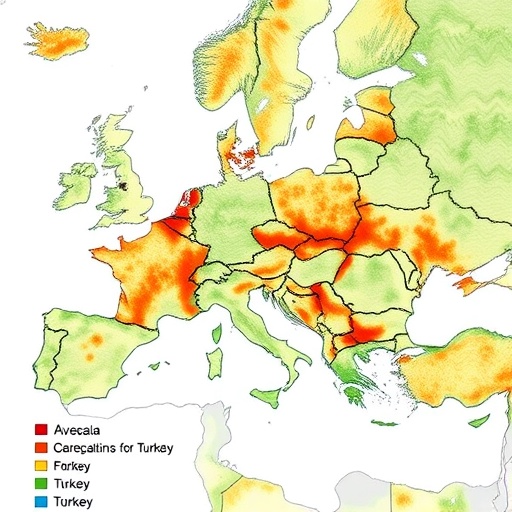
As the effects of climate change become increasingly apparent, the struggle to predict its consequences on biodiversity intensifies. Scientists are turning to advanced modeling techniques to anticipate shifts in the geographic distribution of various plant species. In this light, a recent study conducted by İ. Koç sheds light on the potential future distribution of the Eastern Beech, known scientifically as Fagus orientalis, in Türkiye amid ongoing climate change. This investigation utilizes an ensemble modeling approach to generate projections that could be pivotal for conservation and forestry management.
The study focuses on Fagus orientalis, a species not only significant for its ecological role but also for the economic value it brings to the Turkish landscape. This species thrives in various habitats across Türkiye, predominantly in the northern regions where it contributes to forest ecosystems’ stability. However, as climate patterns evolve, understanding how these changes may impact such keystone species becomes paramount. The research highlights the importance of proactive measures to address potential adverse outcomes influenced by changing climatic conditions.
To forecast the species’ distribution, Koç employs a sophisticated ensemble modeling approach. This technique aggregates predictions from different models, thereby increasing the accuracy of the results. Equipped with extensive ecological datasets and climatic variables, the models provided insights into where Fagus orientalis could flourish or diminish in the face of altering environmental conditions. This method proves essential, as single-model predictions often miss the complexities of ecological interactions and environmental uncertainties.
The ensemble model integrates multiple scenarios of climate change, allowing researchers to simulate various temperature and precipitation patterns. By mapping potential future climates, the study identifies regions that may either serve as refuges or face severe threats from ecological shifts. This comprehensive approach is designed to predict not just the survival of Fagus orientalis but also its ability to expand or contract its range under diverse climatic conditions.
Results indicate that certain areas in Türkiye may become increasingly suitable for Eastern Beech as temperatures rise, particularly in higher-altitude regions. Conversely, lower-altitude habitats may become inhospitable due to rising temperatures and altered rainfall patterns. The study illustrates the dichotomy in potential outcomes, underscoring the necessity for targeted conservation strategies to preserve this important species in the context of dynamic environmental challenges.
This research holds significant implications for forest management practices across Türkiye. By pinpointing areas that are likely to experience population growth or decline, policymakers can prioritize conservation efforts and allocate resources more effectively. Additionally, the study emphasizes the role of Fagus orientalis in maintaining ecological balance, thus presenting a compelling case for its protection against the backdrop of expanding agricultural and urban development.
Koç’s findings also resonate on a broader scale, contributing to global discussions surrounding plant species adaptation to climate change. The model’s applicability extends beyond Türkiye, providing a framework for similar studies in diverse geographical areas grappling with climate-related transformations. The implications of this research can guide international efforts in biodiversity conservation, stressing the importance of maintaining ecological networks worldwide.
Furthermore, the ensemble modeling approach suggests that adaptability could be a critical trait for many species facing climate stressors. While Fagus orientalis may illustrate certain vulnerabilities, the resilience possessed by some populations could serve as a beacon of hope. The study invites further research into identifying genetic variations within species that may enhance their capacity to endure changing environments. Such investigations could yield significant insights into conservation biology and ecological resilience.
As countries strategize their responses to climate change, understanding plant distribution dynamics becomes indispensable. The knowledge garnered from the study equips environmental scientists with the tools needed to devise effective conservation strategies. This proactive stance is essential, as it allows ecosystems to adapt more organically to forthcoming changes, thereby securing the biodiversity that supports human existence.
In conclusion, Koç’s study is a vital contribution to the ongoing discourse surrounding climate change and biodiversity. By providing nuanced insights into the potential future of Fagus orientalis in Türkiye, it fuels crucial conversations about conservation, ecological balance, and the need for adaptive strategies amidst an ever-changing climate. Policymakers, conservationists, and scientists alike must heed these findings as they navigate the complexities of environmental management in our rapidly evolving world.
As the clock ticks, the urgency of addressing climate impacts on biodiversity cannot be overlooked. This study not only highlights the fragility of ecosystems but also fortifies the call for collaborative efforts to mitigate the looming threats. The fate of Fagus orientalis, emblematic of the overarching battle against climate change, serves as a reminder of our shared responsibility to safeguard nature for future generations.
With its innovative approach and clear implications, this research stands to inspire action and stimulate further inquiries into the adaptive capacities of tree species and other flora. The intricate web of life is at stake, and studies like Koç’s illuminate pathways forward in the quest to ensure that our natural heritage flourishes amid the challenges posed by modernity.
Future research endeavors should strive to build on this foundational work, expanding the scope to include interactions between species and their habitats. Comprehensive biodiversity assessments can be invaluable in this regard, paving the way for informed strategies that foster resilience in the face of environmental uncertainty. As we gain more knowledge, the imperative to act becomes ever clearer.
By studying the geographic distribution of Fagus orientalis and other vital species, we can glean insights that inform conservation efforts globally. The necessity of bridging scientific understanding with practical action emerges as a consummate theme. This interconnectedness is vital, as is the awareness that the environmental choices made today will resonate for generations to come.
In this way, Koç’s work transcends its localized context, urging the global community to harmonize its relationship with nature. Ultimately, the results signify not only the fate of one species but reflect our collective challenges and responsibilities as stewards of the Earth.
Subject of Research: Predicting the geographic distribution of Fagus orientalis under climate change in Türkiye.
Article Title: Predicting the potential geographic distribution of Fagus orientalis Lipsky under climate change using an ensemble model approach in Türkiye.
Article References:
Koç, İ. Predicting the potential geographic distribution of Fagus orientalis Lipsky under climate change using an ensemble model approach in Türkiye.
Sci Nat 112, 93 (2025). https://doi.org/10.1007/s00114-025-02051-6
Image Credits: AI Generated
DOI: 10.1007/s00114-025-02051-6
Keywords: Climate change, biodiversity, Fagus orientalis, geographic distribution, ensemble modeling, conservation.
Tags: advanced ecological modeling methodsclimate adaptation for plant speciesclimate change and habitat shiftsclimate change impact on biodiversityEastern Beech conservation strategiesecological role of beech treeseconomic value of Fagus orientalisensemble modeling techniques in ecologyFagus orientalis distribution modelingforecasting plant species distributionTurkey forest ecosystem dynamicsTurkish biodiversity conservation efforts