

• HOME
  • NEWS
  • EXPLORE
    • CAREER
      • Companies
      • Jobs
    • EVENTS
    • iGEM
      • News
      • Team
    • PHOTOS
    • VIDEO
    • WIKI
  • BLOG
  • COMMUNITY
    • FACEBOOK
    • INSTAGRAM
    • TWITTER
Thursday, April 2, 2026
BIOENGINEER.ORG
No Result
View All Result
  • Login
  • HOME
  • NEWS
  • EXPLORE
    • CAREER
      • Companies
      • Jobs
        • Lecturer
        • PhD Studentship
        • Postdoc
        • Research Assistant
    • EVENTS
    • iGEM
      • News
      • Team
    • PHOTOS
    • VIDEO
    • WIKI
  • BLOG
  • COMMUNITY
    • FACEBOOK
    • INSTAGRAM
    • TWITTER
  • HOME
  • NEWS
  • EXPLORE
    • CAREER
      • Companies
      • Jobs
        • Lecturer
        • PhD Studentship
        • Postdoc
        • Research Assistant
    • EVENTS
    • iGEM
      • News
      • Team
    • PHOTOS
    • VIDEO
    • WIKI
  • BLOG
  • COMMUNITY
    • FACEBOOK
    • INSTAGRAM
    • TWITTER
No Result
View All Result
Bioengineer.org
No Result
View All Result
Home NEWS Science News Biology

Football helmet smartfoam signals potential concussions in real time

Bioengineer by Bioengineer
September 21, 2017
in Biology
Reading Time: 2 mins read
0
Share on FacebookShare on TwitterShare on LinkedinShare on RedditShare on Telegram
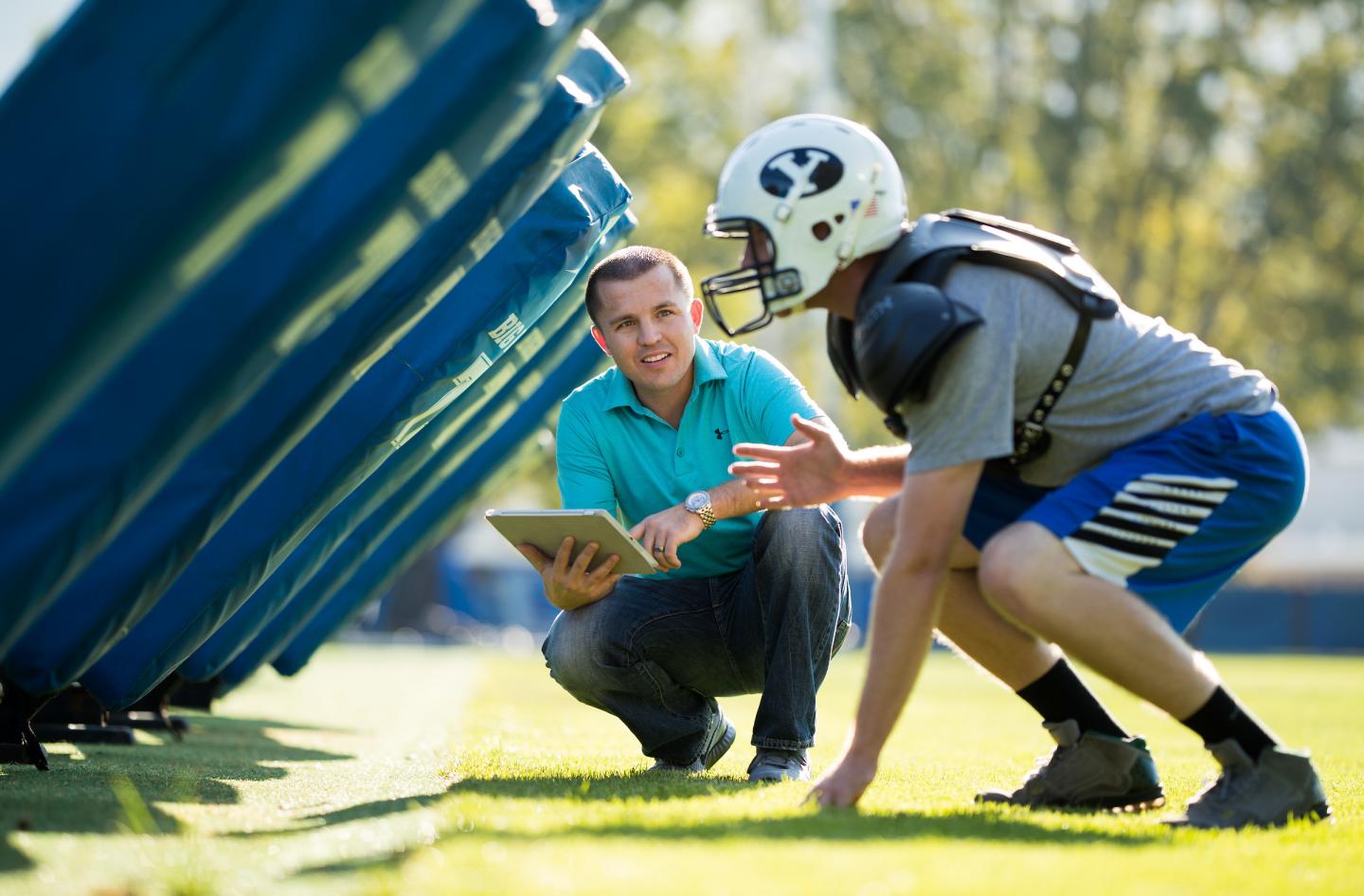
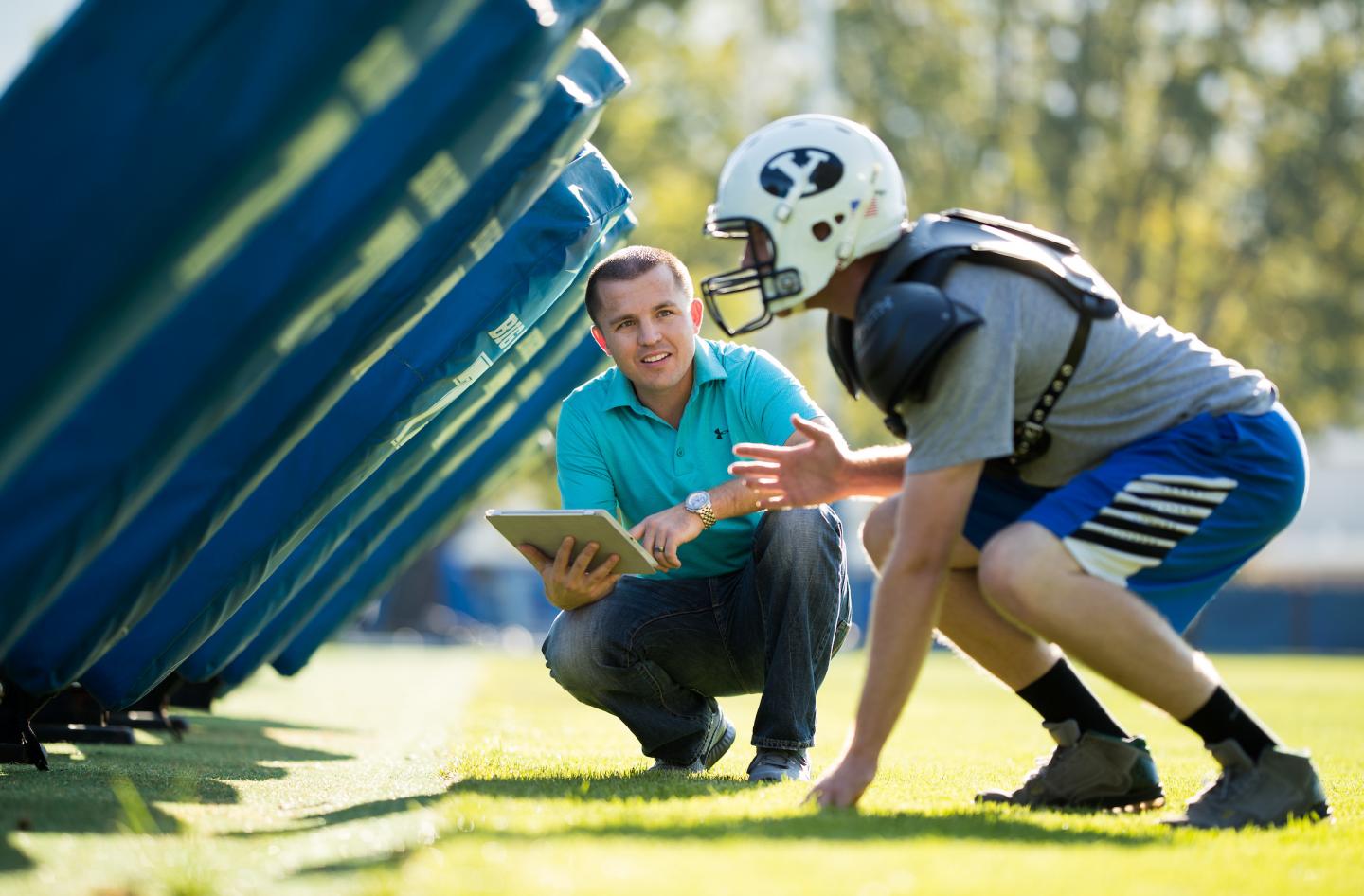
IMAGE

Credit: BYU Photo

Most football fans have seen players get hit so hard they can barely walk back to the sideline. All too often, those players are back on the field just a few plays later, despite suffering what appears to be a head injury. While football-related concussions have been top of mind in recent years, people have struggled to create technology to accurately measure them in real time.

Enter BYU mechanical engineering Ph.D. student, Jake Merrell, and a team of researchers across three BYU departments. Merrell and others have developed and tested a nano composite smartfoam that can be placed inside a football helmet (and pads) to more accurately test the impact and power of hits.

The foam measures the impact of a hit via electrical signals. The data is collected in real time and sent wirelessly to the tablet or device of a coach or trainer on the sidelines. A coach can know within seconds how hard a player has been hit and whether or not they should be concerned about a concussion.

"The standard measurement systems on the market today directly measure the acceleration, but just measuring the acceleration is not enough and can even be erroneous," Merrell said. "Our XOnano smartfoam sensors measure much more than just acceleration, which we see as a vital key to better diagnose head injuries."

The foam, which replaces the standard helmet foam, measures a composite of acceleration, impact energy and impact velocity to determine impact severity and location of impact, all with 90 percent accuracy, according to research published by Merrell in the Annals of Biomedical Engineering. To date, no one — not even the NFL — has been able to successfully measure the impact energy and velocity of a collision, which are two data points necessary to accurately measure whether a player is at risk of a concussion or not.

Here's how the BYU smartfoam works: When the foam is compressed, nickel nano-particles rub against the foam, creating static electric charge, similar to when you rub a balloon against your hair. That charge is then collected through a conductive electrode in the foam, measured by a microcomputer, and transmitted to a computer or smart device. A hard hit spikes the voltage, while small impacts result in a reduced spike in voltage.

Merrell is excited for the future of his smart foam technology as companies incorporate it into their products. Merrell and Xenith created shoulder pads with the impact sensing technology, and a company producing taekwondo vests has also started using the smartfoam to score fights and train athletes.

Merrell worked with researchers in the mechanical engineering, exercise science and statistics departments at BYU on the nano composite foam. Mechanical engineering professors David Fullwood and Anton Bowden, exercise science professor Matthew Seeley, and statistics professor William Christensen were all coauthors on the study.

###

Media Contact

Todd Hollingshead
[email protected]
801-422-8373
@byu

http://www.byu.edu

Original Source

https://news.byu.edu/news/byu-developed-helmet-smartfoam-knows-how-hard-youve-been-hit-if-you-have-concussion http://dx.doi.org/10.1007/s10439-017-1910-9


Share13Tweet8Share2ShareShareShare2

Related Posts

UBC Okanagan Study Reveals How Trees Visually Signal Their Spring Rehydration

UBC Okanagan Study Reveals How Trees Visually Signal Their Spring Rehydration

April 1, 2026
Rising Temperatures from Climate Change Associated with Reduced Newborn Size

Rising Temperatures from Climate Change Associated with Reduced Newborn Size

April 1, 2026

New Study Reveals Respiratory Evolution as Key Driver of Body Size Variation in Early Terrestrial Vertebrates

April 1, 2026

Survey Reveals Many Dog Owners Overlook Subtle Pain Signs Like Nighttime Restlessness and Clinginess

April 1, 2026
Please login to join discussion

POPULAR NEWS

  • blank

    Revolutionary AI Model Enhances Precision in Detecting Food Contamination

    96 shares
    Share 38 Tweet 24
  • Imagine a Social Media Feed That Challenges Your Views Instead of Reinforcing Them

    1007 shares
    Share 398 Tweet 249
  • Promising Outcomes from First Clinical Trials of Gene Regulation in Epilepsy

    51 shares
    Share 20 Tweet 13
  • Popular Anti-Aging Compound Linked to Damage in Corpus Callosum, Study Finds

    44 shares
    Share 18 Tweet 11

About

We bring you the latest biotechnology news from best research centers and universities around the world. Check our website.

Follow us

Recent News

From Algae Waste to High-Performance Filters: Innovative Biochar Membranes Boost Wastewater Purification

Study Finds Hydrochar Enhances Soil Carbon Storage and Structure More Effectively Than Biochar

Five-Year Study Uncovers Smarter Biochar Approach to Slash Methane Emissions in Rice Paddies

Subscribe to Blog via Email

Success! An email was just sent to confirm your subscription. Please find the email now and click 'Confirm' to start subscribing.

Join 78 other subscribers
  • Contact Us

Bioengineer.org © Copyright 2023 All Rights Reserved.

Welcome Back!

Login to your account below

Forgotten Password?

Retrieve your password

Please enter your username or email address to reset your password.

Log In
No Result
View All Result
  • Homepages
    • Home Page 1
    • Home Page 2
  • News
  • National
  • Business
  • Health
  • Lifestyle
  • Science

Bioengineer.org © Copyright 2023 All Rights Reserved.
