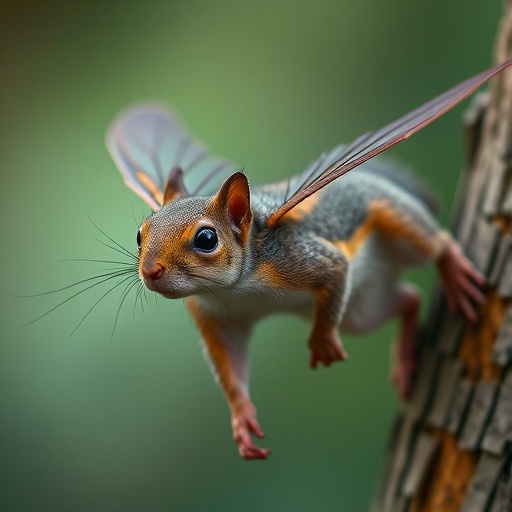
Amid the intricate tapestry of Earth’s biodiversity, cranial morphology serves as a crucial indicator of evolutionary adaptations among various species. In a groundbreaking study, researchers Á. Quesada, M. Hernández Fernández, and I. Menéndez delve into the fascinating world of flying squirrels, exploring the intricate relationships between their diet, cranial shape, and size disparities across distinct ecological biomes. Their meticulously crafted research has brought to light significant insights, capable of reshaping our understanding of how these remarkable mammals have evolved in response to their environments.
The research emphasizes the significance of cranial morphology, positing that the structure and shape of the skull can greatly influence dietary habits and ecological niches. Flying squirrels, belonging to the family Sciuridae, exhibit unique adaptations that allow them to glide through the treetops, feeding on a variety of food sources ranging from fruits and nuts to insects. The study posits that the cranial features of these squirrels have adapted to optimize their feeding strategies, unveiling a complex interplay between anatomical structure and ecological demands.
In exploring the impact of geographical biomes on cranial morphology, the authors conducted a comparative analysis of flying squirrels residing in tropical and temperate regions. The research reveals that flying squirrels in tropical biomes tend to exhibit smaller body sizes and more elongated skulls compared to their temperate counterparts. This morphological disparity highlights the role of habitat availability and resource competition in shaping evolutionary trajectories. By examining these variations, the study translates ecological pressures into tangible anatomical changes.
One of the study’s key findings is the correlation between dietary preferences and skull shape. The researchers identified that tropical flying squirrels, which primarily feed on fruits, possess specific cranial adaptations that enhance their ability to process softer foods. In contrast, temperate flying squirrels, which have a more diverse diet including hard-shelled nuts, display cranial features that allow for greater masticatory efficiency. This divergence in adaptations emphasizes not only the influence of diet on form but also underscores the need for species to adjust their feeding behaviors to align with their anatomical capabilities.
Beyond dietary influences, the research also touches on the role of environmental factors in shaping cranial morphology. The study considers the impact of climate on food resource availability, noting that fluctuations in seasonal weather patterns can drive changes in food accessibility, subsequently influencing evolutionary developments. This nuanced examination highlights that cranial morphology is not solely a product of historical lineage but also a response to shifting ecological conditions.
The researchers employed a multidimensional approach, utilizing advanced imaging techniques and statistical analyses to assess variations in cranial morphology. By meticulously measuring and comparing skulls from different regions, they were able to derive meaningful conclusions about evolutionary patterns. This methodological rigor adds to the robustness of the findings, enabling researchers to make informed predictions about the future trajectories of flying squirrel populations as environmental pressures evolve.
A noteworthy aspect of this research is its implications for conservation efforts. As climate change and habitat destruction threaten biodiversity globally, understanding the specific adaptations of species such as flying squirrels becomes increasingly vital. The findings underscore the importance of preserving diverse habitats that can support various ecological niches, ultimately ensuring the survival of different flying squirrel populations. By protecting these environments, we can nurture not just species diversity but also the intricate connections among dietary habits, anatomical structure, and ecological stability.
Moreover, the study has wider implications for our understanding of mammalian evolution as a whole. It serves as a reminder of how organisms adapt to the challenges posed by their surroundings through subtle yet significant morphological changes. The insights gleaned from flying squirrels can potentially inform studies on other tree-dwelling mammals, creating a broader understanding of how evolutionary pressures manifest across species.
In an era where research is increasingly globalized, this study brings together scientists from different regions to collaborate on shared ecological challenges. The interdisciplinary nature of the research not only enhances its depth but facilitates knowledge exchange, paving the way for future studies in cranial morphology and adaptations. The collaboration also highlights the importance of a holistic approach in studying biodiversity, advocating for integrated methodologies that consider ecological, evolutionary, and genetic factors.
The results of this research are pivotal, prompting a re-examination of existing classifications and understandings of flying squirrels. As various species face unique challenges shaped by their environments, scientists are encouraged to consider cranial adaptations as crucial indicators of health and ecological balance. This research exemplifies how detailed morphological studies can provide invaluable insights into the evolutionary dynamics of species, aiding in informed conservation strategies.
In conclusion, the study authored by Quesada, Hernández Fernández, and Menéndez represents a significant contribution to the field of zoology, expanding our comprehension of flying squirrels and their cranial adaptations across different biomes. The intricate relationship between diet, skull shape, and ecological factors reveals the complex nature of evolution and adaptation. As we navigate an era of unprecedented environmental change, such research will prove instrumental in guiding conservation efforts and safeguarding the future of diverse species.
In light of these findings, it is evident that the exploration of cranial morphology in flying squirrels extends far beyond mere anatomical observations. It encapsulates a narrative of resilience, adaptation, and the enduring connection between organisms and their environments. As we look toward the future, it becomes imperative to carry these insights into conservation strategies that champion biodiversity and seek to mitigate the impacts of climate change on our planet’s rich tapestry of life.
Subject of Research: Cranial morphology in flying squirrels
Article Title: Cranial morphology in flying squirrels: diet, shape, and size disparity across tropical and temperate biomes
Article References:
Quesada, Á., Hernández Fernández, M. & Menéndez, I. Cranial morphology in flying squirrels: diet, shape, and size disparity across tropical and temperate biomes.
Front Zool 22, 5 (2025). https://doi.org/10.1186/s12983-025-00556-4
Image Credits: AI Generated
DOI: 10.1186/s12983-025-00556-4
Keywords: flying squirrels, cranial morphology, evolutionary biology, diet, ecological adaptation, conservation.
Tags: anatomical adaptations in mammalsbiodiversity and evolutionbiomes and animal adaptationscomparative analysis of speciescranial structure and feeding strategiesdietary habits of flying squirrelsecological adaptations of mammalsecological impact on morphologyevolutionary biology of rodentsflying squirrel cranial morphologySciuridae family characteristicstropical vs temperate ecosystems