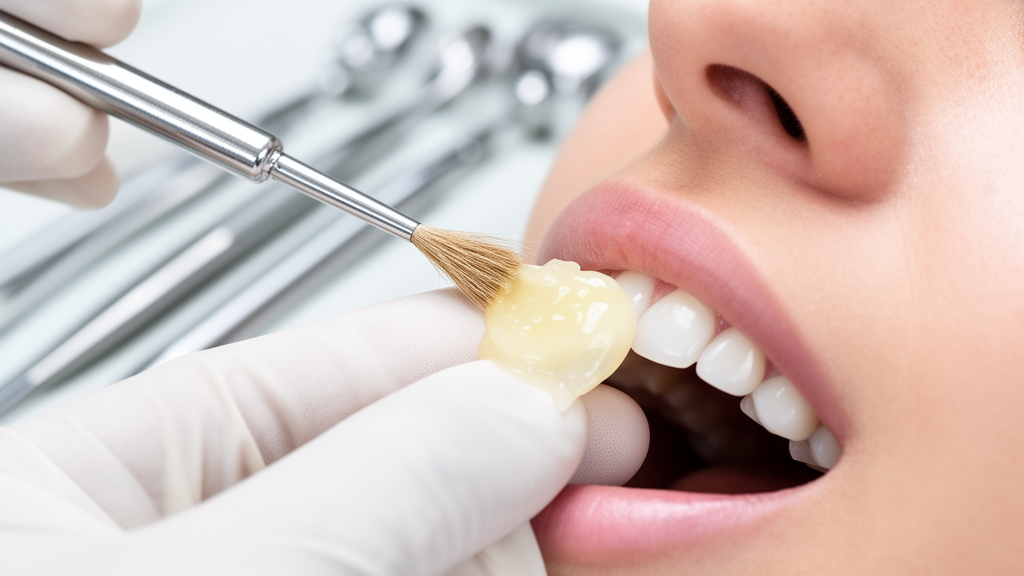
A comprehensive narrative review published in Frontiers in Oral Health confirms that fluoride varnish remains a central, evidence-based intervention for preventing dental caries and managing non-operative lesions across the life course. The study, led by researchers from the University of Hong Kong and Sun Yat-sen University, synthesizes current evidence on the composition, mechanisms, clinical efficacy, and safety of this widely used preventive agent. By updating the understanding of fluoride varnish in contemporary dentistry, the review highlights its role in shifting caries management from a restorative model toward minimal intervention and preservation of tooth structure.
The review identifies fluoride varnish as a non-invasive, risk-based measure suitable for diverse populations, including high-risk children, older adults, patients with xerostomia, and those undergoing orthodontic treatment. The authors note that while dental caries is recognized as a multifactorial, biofilm-mediated disease, topical fluoride remains a critical component of non-operative prevention. The intervention supports remineralization and inhibits demineralization, offering a practical alternative to more invasive operative care for early-stage lesions.
Conventional fluoride varnishes are typically resin-based and contain 5% sodium fluoride, equivalent to 22,600 ppm fluoride ions. This high concentration is designed to prolong fluoride contact with enamel and dentine. However, the review notes that newer non-resin-based formulations, such as water-based or gel-like systems, contain lower concentrations, approximately 2.1% to 2.5% sodium fluoride, or 9,500 to 11,300 ppm fluoride. These newer products aim to improve patient comfort, transparency, and surface wetting, particularly for patients with sensitivity to traditional resin components like colophony.
Despite these formulation differences, the review concludes that current evidence does not clearly demonstrate the superiority of newer formulations over conventional high-fluoride varnishes. While additives such as casein phosphopeptide-amorphous calcium phosphate (CPP-ACP) or tricalcium phosphate (TCP) are proposed to enhance remineralization by providing calcium and phosphate, clinical trials have not consistently shown additional caries prevention benefits compared to standard sodium fluoride varnishes. The authors emphasize that biological plausibility and laboratory findings should not be equated with proven clinical superiority.
The mechanism of action for fluoride varnish involves several dynamic processes at the plaque-tooth interface. Fluoride inhibits demineralization by reducing enamel solubility during acid attacks and enhances remineralization by promoting mineral precipitation during pH recovery. Additionally, topical application forms calcium fluoride-like deposits on tooth surfaces, which act as pH-responsive reservoirs. These deposits release fluoride ions during cariogenic challenges, providing a sustained source of bioavailable fluoride that helps inhibit further mineral loss and supports repair of early lesions.
Clinical effectiveness is supported by Cochrane systematic reviews of randomized controlled trials, which demonstrate a clinically meaningful reduction in caries increment. A key review including over 12,000 participants reported a pooled prevented fraction of 43% for permanent teeth and 37% for primary teeth. These findings underscore the substantial caries-inhibiting effect of fluoride varnish, particularly in pediatric populations. The evidence suggests that fluoride varnish is an established professional intervention that complements daily fluoride exposure from toothpaste and other preventive measures.
Application protocols are typically risk-based rather than universal. Guidelines generally recommend applying fluoride varnish two to four times per year for individuals at increased caries risk. More frequent applications may be appropriate for patients with active disease, exposed root surfaces, or orthodontic appliances. In contrast, routine application may provide limited additional benefit for low-risk individuals who already receive adequate fluoride from daily toothpaste and fluoridated water. The review stresses that clinical decisions should be tailored to local recommendations, patient risk status, and specific product labeling.
Safety data indicate that fluoride varnish is generally well-tolerated, with adverse effects being rare and usually mild. A national database analysis identified only 65 adverse events over a 10-year period, corresponding to an incidence of approximately 0.1 cases per million applications. Most reported events involved mild local reactions such as swelling, irritation, or rash. Hypersensitivity reactions, primarily related to colophony or rosin, are possible but infrequent. The review notes that while dental fluorosis is a concern with excessive fluoride exposure, evidence linking fluoride varnish alone to fluorosis remains inconclusive, and the risk is primarily associated with cumulative intake from multiple sources.
From a public health perspective, fluoride varnish is well-suited for community and school-based prevention programs due to its simplicity and minimal equipment requirements. The U.S. Preventive Services Task Force recommends its application to primary teeth in children younger than five years. Integration into primary care and school settings can help reduce inequalities in preventive care, particularly for underserved populations. However, implementation remains inconsistent, highlighting the need for system-level support and policy alignment to achieve population-level impact.
The review acknowledges several limitations in the current evidence base, including variability in effectiveness across different populations and settings. Most clinical evidence is derived from controlled trials, which may not fully reflect real-world implementation conditions. Evidence is also limited for specific high-risk adult populations, such as those with polypharmacy or institutionalized older adults. The authors call for adequately powered pragmatic randomized trials with standardized outcomes to better determine effectiveness in diverse clinical and community settings.
Future research should prioritize independent comparisons of novel formulations, robust safety surveillance, and implementation studies that link efficacy to scalable public health impact. The review concludes that while confidence is strongest for reducing caries in pediatric settings, further rigorous clinical research is needed to optimize the use of fluoride varnish in high-risk adult groups and to clarify the optimal frequency for low-risk individuals. This ongoing synthesis reinforces the role of fluoride varnish as a practical, scalable, and effective intervention in modern caries management.
The authors searched PubMed, Scopus, and the Web of Science Core Collection for English-language publications from 1 January 2016 through 30 June 2026. The search combined terms for fluoride varnish with caries, remineralization, demineralization, white-spot lesions, root caries, prevention, lesion arrest, safety, formulations, guidelines, and implementation. Two independent reviewers evaluated eligible records, including laboratory investigations, clinical trials, systematic reviews, meta-analyses, and guidelines, while excluding case reports, conference abstracts, and promotional materials. Disagreements were resolved through discussion or third-reviewer consultation. The synthesis remained qualitative because no standardized critical-appraisal tool was used, no new risk-of-bias ratings were assigned, and laboratory findings were not treated as clinical evidence.
From a chemical standpoint, traditional varnishes combine three core elements: a resin matrix, an organic solvent, and active remineralizing agents. The resin phase typically incorporates shellac, mastic, or rosin, which forms a durable film that limits dissolution in oral fluids while promoting enamel adhesion. The solvent, usually ethanol, evaporates swiftly after placement to facilitate film setting and initiate fluoride ion release. A standard formulation such as Duraphat supplies 5% sodium fluoride, corresponding to 50 milligrams of sodium fluoride per milliliter or 22,600 parts per million of fluoride ion in a brown-yellow suspension. Newer product designs alter these structural matrices; for example, FluoriMax uses a modified shellac matrix with 2.5% sodium fluoride delivering 11,300 parts per million of fluoride, while Clinpro Clear utilizes a rosin-free, water-based polymer system delivering 2.1% sodium fluoride, or 9,500 parts per million of fluoride, as a transparent, non-hardening layer.
At the microbial and structural levels, the review outlines secondary biological actions and physical constraints of remineralization. When present at sufficient concentrations within dental plaque, fluoride inhibits bacterial carbohydrate metabolism by suppressing glycolytic enzymes like enolase and disrupting proton transport and intracellular pH balance in acidogenic bacteria. However, this antimicrobial action is considered secondary to mineral interactions. Furthermore, the authors emphasize that fluoride alone does not supply the calcium and phosphate needed to replace lost crystalline structure. In subsurface enamel lesions, mineral recovery depends on the inward diffusion of calcium and phosphate ions through an intact surface layer into the porous lesion body. Preferential deposition of mineral near the surface can block deeper ion penetration, illustrating why surface hardening in laboratory tests does not necessarily reflect complete lesion remineralization.
Comparative clinical data also clarify how fluoride varnish performs against alternative therapies. Low-certainty Cochrane evidence indicates that silver diamine fluoride provides little or no difference in preventing new primary-tooth caries compared to fluoride varnish; while silver diamine fluoride arrests active lesions, varnish provides prevention without causing dark staining. When compared against fissure sealants, meta-analyses and Cochrane reviews identified no statistically significant difference in caries incidence or increment, though this represents very low-certainty evidence rather than proven equivalence. In trials testing formulation additives, casein phosphopeptide-amorphous calcium phosphate varnish did not outperform conventional 5% sodium fluoride varnish for early childhood caries or root caries arrest. Similarly, functionalized tricalcium phosphate varnishes showed no incremental preventive benefit in preschool or orthodontic cohorts, while post-orthodontic trials demonstrated that fluoride varnish reduced white spot lesion prevalence compared to placebo, whereas standalone xylitol varnish showed no preventive effect.
Procedural safety requires precise dosing and attention to contraindications. Reported application amounts for conventional 5% sodium fluoride varnishes are 0.10 milliliters for infants and 0.25 milliliters for children older than one year. Clinicians must screen for contraindications, including ulcerative gingivitis, stomatitis, severe asthma, and contact allergies to colophony or excipients like milk-derived proteins. These safeguards align with global guidelines. The World Health Organization recommends population-wide application twice annually for primary and permanent teeth, while the American Association for Dental, Oral, and Craniofacial Research recommends application every three to six months based on risk, and Australian guidance supports application up to four times annually for individuals at elevated caries risk.
Subject of Research: Efficacy, mechanisms, and public health applications of fluoride varnish in caries prevention
Article Title: Fluoride varnish in contemporary caries prevention and non-operative management: a narrative review
Article References: Cheng, A. Y., Xu, G. Y., Sun, I. G., Zheng, F. M., Chen, J., & Chu, C. H. (2026). Fluoride varnish in contemporary caries prevention and non-operative management: a narrative review. Frontiers in Oral Health, 7, 1989747. https://doi.org/10.3389/froh.2026.1989747
Image Credits: AI Generated
DOI: 10.3389/froh.2026.1989747
Keywords: fluoride varnish, dental caries, caries prevention, remineralization, sodium fluoride, non-operative management, public health dentistry, risk-based care, tooth decay, oral health, clinical efficacy, prevention strategies, pediatric dentistry, root caries, fluoride reservoirs
News Source: Ophelia Keating. (November 16, 2026). Fluoride Varnish Reduces Tooth Decay by 43% in Permanent Teeth. Scienmag.