• HOME
  • NEWS
  • EXPLORE
    • CAREER
      • Companies
      • Jobs
    • EVENTS
    • iGEM
      • News
      • Team
    • PHOTOS
    • VIDEO
    • WIKI
  • BLOG
  • COMMUNITY
    • FACEBOOK
    • INSTAGRAM
    • TWITTER
Saturday, November 7, 2026
BIOENGINEER.ORG
No Result
View All Result
  • Login
  • HOME
  • NEWS
  • EXPLORE
    • CAREER
      • Companies
      • Jobs
        • Lecturer
        • PhD Studentship
        • Postdoc
        • Research Assistant
    • EVENTS
    • iGEM
      • News
      • Team
    • PHOTOS
    • VIDEO
    • WIKI
  • BLOG
  • COMMUNITY
    • FACEBOOK
    • INSTAGRAM
    • TWITTER
No Result
View All Result
Bioengineer.org
No Result
View All Result
Home NEWS Science News Biology

Fluorescence Fluctuation Protocol Maps Subcellular Dynamics Without Particle Tracking

by
November 7, 2026
in Biology
Reading Time: 2 mins read
0
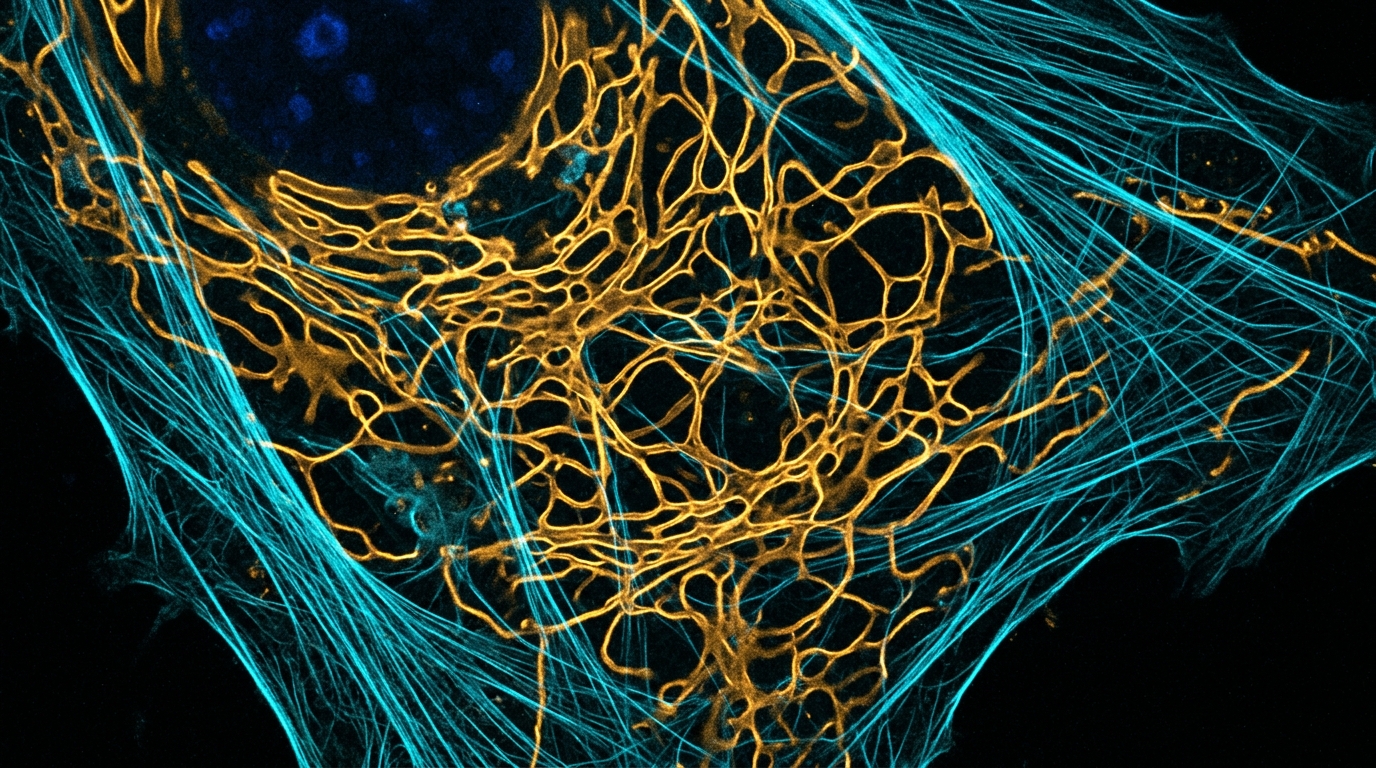
Fluorescence Fluctuation Protocol Maps Subcellular Dynamics Without Particle Tracking

Fluorescence Fluctuation Protocol Maps Subcellular Dynamics Without Particle Tracking

Share on FacebookShare on TwitterShare on LinkedinShare on RedditShare on Telegram

A protocol published in Nature Protocols details image-derived mean squared displacement (iMSD) analysis, a fluctuation-based technique designed to quantify the average spatiotemporal dynamics of subcellular structures in living cells. The method evaluates the motion of structures such as proteins, organelles, and nanoparticles directly from standard time-lapse image stacks.

Unlike conventional single-particle tracking, which depends on discrete object localization and trajectory reconstruction, iMSD computes the spatiotemporal autocorrelation function of fluorescence intensity fluctuations across image series. This fluctuation-based framework circumvents the traditional limitations of single-particle tracking in environments marked by high particle density or low signal-to-noise ratios, providing a robust ensemble average without requiring trajectory linking.

The procedural workflow encompasses the optimization of image acquisition parameters, the mathematical computation of the spatiotemporal correlation function, and the Gaussian fitting of the resulting correlation peak variance to generate the iMSD curve. From this fitting process, the method extracts diffusion coefficients, anomalous exponents, and confinement dimensions simultaneously. These measurements enable researchers to distinguish among Brownian, superdiffusive, and confined motion regimes across temporal scales, while uniquely supplying data regarding the average size of the moving objects.

The temporal dynamic range of the technique depends directly on the imaging modality used during data collection. Standard confocal scanning resolves millisecond-scale dynamics characteristic of organelles and membrane proteins, whereas line-scanning or camera-based configurations are required to record rapid cytosolic diffusion. The protocol includes assessments testing iMSD performance across varied imaging conditions and comparisons against established analytical techniques for molecular dynamics.

Demonstrated applications of the method include combining raster image correlation spectroscopy with iMSD (RICS-iMSD) to reveal nanoscale free diffusion and large-scale hindrance in the cytoplasm. The approach also establishes quantitative fingerprints to dissect different molecular diffusion modes at the plasma membrane, demonstrates that lysosome dynamics are scale-dependent, and evaluates the intracellular trafficking of nanoparticles to characterize the effects of surface functionalization.

The complete protocol requires approximately 4 to 6 hours of active hands-on time, divided between image acquisition and computational data processing. Successful execution demands basic operational experience in fluorescence microscopy as well as fundamental data processing skills.

Subject of Research: Fluorescence microscopy protocol for image-derived mean squared displacement analysis

Article Title: Tracking-free mean square displacement analysis of molecular dynamics

Article References: Ferri, G., Digiacomo, L., Digman, M. A., Gratton, E., Caracciolo, G., Beltram, F., & Cardarelli, F. (2026). Tracking-free mean square displacement analysis of molecular dynamics. Nature Protocols. https://doi.org/10.1038/s41596-026-01464-5

Image Credits: AI Generated

DOI: 10.1038/s41596-026-01464-5

Keywords: image-derived mean squared displacement, fluorescence microscopy, molecular dynamics, single-particle tracking, subcellular dynamics, confocal microscopy, nanoparticles, fluorescence correlation spectroscopy, Tracking-free, mean, square, displacement

News Source: Scienmag.
Tags: confocal microscopydisplacementfluorescence correlation spectroscopyfluorescence microscopyimage-derived mean squared displacementmeanmolecular dynamicsnanoparticlessingle-particle trackingsquaresubcellular dynamicsTracking-free
Share12Tweet7Share2ShareShareShare1

Related Posts

Machine Learning Prioritizes Pancreatic Noncoding Variants Affecting HNF4A Binding Motifs

Machine Learning Prioritizes Pancreatic Noncoding Variants Affecting HNF4A Binding Motifs

November 7, 2026
Paternal Vitamin D Deficiency Impairs Offspring Fetal Lung Development in Mice

Paternal Vitamin D Deficiency Impairs Offspring Fetal Lung Development in Mice

November 7, 2026

Nano-Formulated Naringin Protects Male Rats Against Mancozeb Pesticide Reproductive Damage

November 7, 2026

Grounded pothos plants with downward electromagnetic fields cut influenza A viral RNA in water model

November 7, 2026

POPULAR NEWS

  • Coastal Eurasian Otters Shift Between Marine and Freshwater Prey Along Black Sea

    Coastal Eurasian Otters Shift Between Marine and Freshwater Prey Along Black Sea

    29 shares
    Share 12 Tweet 7
  • English Premier League Study Evaluates Passes Allowed Per Defensive Action Metric

    29 shares
    Share 12 Tweet 7
  • Research report: Tabernaemontana cameroonensis nom. nov., a new name for Domkeocarpa pendula Markgr. following reassessment of the Tabernaemontana ventricosa Hochst. ex A.DC. complex ( Gentianales , Apocynaceae )

    29 shares
    Share 12 Tweet 7
  • Beech Bark Beetle Fungal Communities Vary by Local Patch, Not Region

    29 shares
    Share 12 Tweet 7

About

We bring you the latest biotechnology news from best research centers and universities around the world. Check our website.

Follow us

Recent News

Adjuvant ALK Inhibitors Reshape Care After Resection in ALK-Positive Lung Cancer

New metric weighs prediction models across every clinical decision threshold

Lorlatinib Prolongs Progression-Free Survival in ALK-Positive Lung Squamous Carcinoma

Subscribe to Blog via Email

Enter your email address to subscribe to this blog and receive notifications of new posts by email.

Join 86 other subscribers
  • Contact Us

Bioengineer.org © Copyright 2023 All Rights Reserved.

Welcome Back!

Login to your account below

Forgotten Password?

Retrieve your password

Please enter your username or email address to reset your password.

Log In
No Result
View All Result
  • Homepages
    • Home Page 1
    • Home Page 2
  • News
  • National
  • Business
  • Health
  • Lifestyle
  • Science

Bioengineer.org © Copyright 2023 All Rights Reserved.