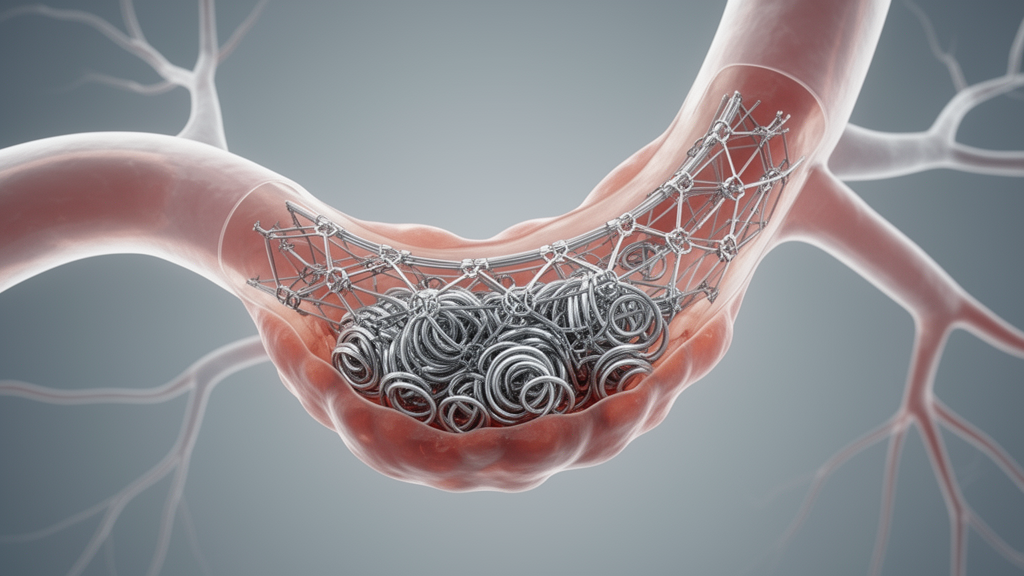
A multicenter retrospective study published in Frontiers in Neurology reports that a combined endovascular strategy using a Pipeline Embolization Device (PED) and adjunctive coiling achieved high rates of aneurysm occlusion and favorable neurological outcomes in patients with ruptured blood blister-like aneurysms (BBAs). The study, conducted across three comprehensive stroke centers in China between January 2018 and December 2023, focused specifically on 28 consecutive patients with mild-to-moderate neurological deficits, defined as Hunt-Hess grades I through III. The primary objective was to evaluate the safety and efficacy of this hybrid technique, which integrates the immediate protective effects of coil embolization with the long-term flow diversion capabilities of the PED.
Blood blister-like aneurysms are rare and inherently unstable lesions of the internal carotid artery, accounting for 0.3 to 1.7% of all intracranial aneurysms. Unlike typical saccular aneurysms, BBAs arise from the dorsal, non-branching arterial wall and lack a true neck, making them particularly prone to rupture and rebleeding. This fragility presents a significant clinical challenge, as the absence of a distinct neck complicates standard coiling techniques and increases the risk of procedural complications. The study aimed to address the limited evidence regarding PED-assisted coiling in this specific patient population, where previous studies have often mixed severity levels, obscuring treatment responses in those with milder presentations.
The research team employed a deliberate loose-scaffolding strategy for coil embolization, a technique distinct from conventional dense packing. Rather than aiming for a high packing density or immediate complete occlusion, coils were placed to create a partial intrasaccular framework. This approach intended to reduce immediate inflow velocity and promote thrombus formation while avoiding the mass effect and procedural risks associated with dense compaction in fragile aneurysm walls. On average, only 2.3 coils were deployed per case, with a median coil length of 10.0 cm. The decision to stop coiling was based on real-time intraoperative angiographic assessment, focusing on visible reduction in contrast inflow and the establishment of a stable scaffold without coil protrusion into the parent vessel.
Technical success was achieved in 100% of the 28 cases, with the PED oversized by 10 to 15% relative to the parent artery diameter to ensure stable anchoring and accommodate potential vasospasm-related caliber changes. Immediate complete angiographic occlusion, defined as modified Raymond-Roy class I, was observed in 67.9% of patients (19 out of 28) following the procedure. Parent artery patency was preserved in all cases, and no visible major branch vessel occlusion was detected on immediate postoperative imaging. The study noted that while the technique has limited resolution for small perforators, asymptomatic perforator occlusion could not be entirely excluded, a limitation inherent to the imaging methods used.
Follow-up imaging demonstrated a progressive improvement in occlusion rates, consistent with the mechanism of flow diversion-mediated endothelialization. At three months, complete occlusion was achieved in 91.3% of patients with available imaging follow-up. By 12 months, this rate increased to 95.5% (21 out of 22) among those who underwent digital subtraction angiography. Notably, all seven patients who had residual neck filling on immediate postoperative angiography and completed follow-up subsequently achieved complete occlusion. This trajectory suggests that the flow diverter facilitates long-term aneurysm healing even when immediate complete occlusion is not attained, highlighting the complementary roles of the coils and the device.
Clinical outcomes were generally favorable, with a modified Rankin Scale (mRS) score of 0 to 2 recorded in 92.9% of patients (26 out of 28) at the last follow-up. The mean mRS score improved from 2.11 at admission to 1.75 at discharge, indicating a trend toward neurological recovery. However, perioperative complications occurred in 39.3% of patients (11 out of 28), predominantly neurological in nature. Symptomatic vasospasm was the most common complication, affecting 21.4% of patients (6 out of 28), followed by cerebral infarction in 14.3% (4 out of 28). The perioperative mortality rate was 3.6%, with one patient dying from diffuse cerebral edema, likely related to delayed cerebral ischemia.
The study design included specific inclusion and exclusion criteria to ensure a homogeneous cohort. Patients were required to have confirmed subarachnoid hemorrhage on non-contrast CT and a BBA identified as the bleeding source on three-dimensional digital subtraction angiography. Exclusion criteria included Hunt-Hess grades IV to V, the need for preoperative external ventricular drainage or intubation, and prior endovascular treatment. This selection process introduced a potential bias, as the favorable outcomes may partly reflect the exclusion of the most severely ill patients. The authors acknowledged that the results are hypothesis-generating and that the absence of a control group precludes definitive conclusions regarding the comparative effectiveness of the combined approach versus stand-alone flow diversion or surgical clipping.
Antiplatelet management varied between institutions, with two regimens permitted. In 78.6% of cases, a tirofiban bridging strategy was used, where no preoperative oral antiplatelet loading was given, and tirofiban was initiated after device deployment. In the remaining 21.4%, conventional oral loading with aspirin and clopidogrel or ticagrelor was administered prior to the procedure. The non-randomized allocation of these regimens represents a potential source of confounding, limiting the ability to compare the effects of different antiplatelet protocols directly. Long-term therapy was standardized across all centers, with clopidogrel or ticagrelor for six months and aspirin for at least 12 months.
The authors discussed several mechanistic reasons why mild-to-moderate grade patients may be more suitable for flow-diverter-based therapy. These include attenuated vasospasm, which creates a more stable hemodynamic environment for device apposition, and the ability to maintain uninterrupted dual antiplatelet therapy. In severe-grade patients, intense vasospasm and hemodynamic instability can compromise stent stability and increase the risk of thrombotic or hemorrhagic complications. The study observed that symptomatic vasospasm in this cohort was uniformly mild-to-moderate and caused neurological deterioration in only one patient, supporting the hypothesis that hemodynamic stability enhances long-term device security.
Limitations of the study include its retrospective, single-arm design and modest sample size of 28 patients, which precludes multivariable adjustment and formal subgroup analyses. The 12-month angiographic follow-up rate was 78.6%, introducing potential attrition bias; the overall cohort occlusion rate of 75.0% is considered a more conservative and clinically relevant figure than the 95.5% rate among those with available imaging. Additionally, the diagnosis of BBA relied on angiographic criteria without histopathological confirmation, and inter-observer variability cannot be excluded. The authors emphasized that these findings should be interpreted with caution and that prospective multicenter studies with standardized protocols and comparator arms are warranted to validate these preliminary observations.
The study contributes to the growing body of evidence on endovascular management of ruptured BBAs, a condition with high morbidity and mortality. While stand-alone flow diversion has been established as a viable treatment, the addition of adjunctive coiling may offer advantages in immediate hemostasis. The loose-scaffolding strategy described in this study provides a practical framework for operators seeking to balance the risks of dense packing with the benefits of flow diversion. Future research should focus on comparative data between combined and stand-alone strategies, as well as the long-term durability of occlusion and the optimal antiplatelet regimens for this patient population.
In conclusion, PED-assisted coil embolization with a loose-scaffolding strategy is technically feasible and associated with high rates of complete occlusion and favorable neurological outcomes in selected patients with mild-to-moderate neurological deficits. The progressive improvement in occlusion over time underscores the role of flow diversion in aneurysm healing. However, the retrospective nature of the study and the lack of a control group limit the generalizability of the findings. Prospective comparative studies are needed to determine the relative risk-benefit profiles of different endovascular strategies for ruptured blood blister-like aneurysms.
Subject of Research: Endovascular treatment outcomes for ruptured blood blister-like aneurysms using Pipeline Embolization Device and coiling
Article Title: Pipeline embolization device with adjunctive coiling for ruptured blood blister-like aneurysms: a multicenter study focusing on Hunt-Hess grade I–III patients
Article References: Wang, P., Liu, J., Yuan, H., Xu, F., Tang, W., Li, Q., & Chen, L. (2026). Pipeline embolization device with adjunctive coiling for ruptured blood blister-like aneurysms: a multicenter study focusing on Hunt-Hess grade I–III patients. Frontiers in Neurology, 17, Article 1976238. https://doi.org/10.3389/fneur.2026.1976238
Image Credits: AI Generated
DOI: 10.3389/fneur.2026.1976238
Keywords: blood blister-like aneurysm, Pipeline Embolization Device, endovascular coiling, subarachnoid hemorrhage, Hunt-Hess grade, flow diversion, internal carotid artery, angiographic occlusion, modified Rankin Scale, vasospasm, retrospective study, neurointerventional surgery, aneurysm rupture, antiplatelet therapy, clinical outcomes
News Source: Ophelia Keating. (November 15, 2026). Flow Diverter Plus Coiling Yields High Occlusion in Ruptured Aneurysms. Scienmag.