• HOME
  • NEWS
  • EXPLORE
    • CAREER
      • Companies
      • Jobs
    • EVENTS
    • iGEM
      • News
      • Team
    • PHOTOS
    • VIDEO
    • WIKI
  • BLOG
  • COMMUNITY
    • FACEBOOK
    • INSTAGRAM
    • TWITTER
Wednesday, April 1, 2026
BIOENGINEER.ORG
No Result
View All Result
  • Login
  • HOME
  • NEWS
  • EXPLORE
    • CAREER
      • Companies
      • Jobs
        • Lecturer
        • PhD Studentship
        • Postdoc
        • Research Assistant
    • EVENTS
    • iGEM
      • News
      • Team
    • PHOTOS
    • VIDEO
    • WIKI
  • BLOG
  • COMMUNITY
    • FACEBOOK
    • INSTAGRAM
    • TWITTER
  • HOME
  • NEWS
  • EXPLORE
    • CAREER
      • Companies
      • Jobs
        • Lecturer
        • PhD Studentship
        • Postdoc
        • Research Assistant
    • EVENTS
    • iGEM
      • News
      • Team
    • PHOTOS
    • VIDEO
    • WIKI
  • BLOG
  • COMMUNITY
    • FACEBOOK
    • INSTAGRAM
    • TWITTER
No Result
View All Result
Bioengineer.org
No Result
View All Result
Home NEWS Science News Biology

Flat-faced dogs may seem more helpless and infant-like to owners

Bioengineer by Bioengineer
September 25, 2023
in Biology
Reading Time: 2 mins read
0
The difference between two brachycephalic and one mesocephalic dog breeds’ problem‑solving performance
Share on FacebookShare on TwitterShare on LinkedinShare on RedditShare on Telegram

Flat-faced or brachycephalic dogs breeds such as English and French bulldogs may be likely to display ‘helpless’ traits by looking at humans more often than a longer- muzzled dog breed during a food retrieval task, suggests a small study published in Scientific Reports.
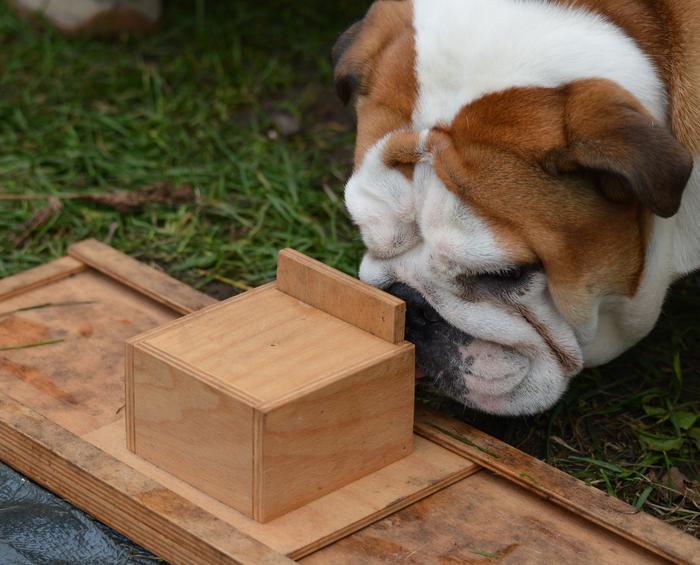
The difference between two brachycephalic and one mesocephalic dog breeds’ problem‑solving performance

Credit: Photos made by ErzsébetMőbiusz (courtesy of Molnár Marianna)

Flat-faced or brachycephalic dogs breeds such as English and French bulldogs may be likely to display ‘helpless’ traits by looking at humans more often than a longer- muzzled dog breed during a food retrieval task, suggests a small study published in Scientific Reports.

The increased engagement with humans and lower levels of task success may make people consider these breeds as ‘infant-like’, which may partially explain their continuing popularity as pets despite noted health problems, according to the authors. Dorottya Ujfalussy, member of the MTA-ELTE “Momentum” Companion Animal Research Group and colleagues assessed how the behaviour of 15 English bulldogs and 15 French bulldogs compared to that of 13 Hungarian Mudis (a herding dog with a mid-length muzzle) during a task in which the dogs had to try and open three boxes to retrieve a piece of food.

The boxes involved different opening techniques, varied in difficulty (with Box A being the most challenging), and were presented to the dogs in a random order. All dogs observed the experimenter place a piece of Viener sausage in the box and were then given two minutes to attempt to open the box. During this time, the experimenter and the dog’s owner stood behind the dog out of direct sight.

Both English and French bulldogs were successful at opening the box 93 percent less often than Mudis.

Successful Mudis were also quicker than successful bulldogs; by the time one minute had elapsed approximately 90 percent of Mudis had opened the box compared to approximately 50 percent of bulldogs. However, compared to Mudis, English and French bulldogs were 4.16 and 4.49 times as likely to look back at the people than Mudis.

The authors suggest that these

these findings indicate a propensity for short-faced dogs to seek out human assistance when faced with problems,

which may in turn promote a stronger social relationship between owners and these breeds of dogs due perceived helplessness. However, this study could not establish whether flat-faced dogs are genetically predisposed to appear more dependent on humans than other dogs, or whether owners’ attitudes towards flat-faced dogs encourages dependent behaviour.


Journal

Scientific Reports

DOI

10.1038/s41598-023-41229-8

Article Title

The difference between two brachycephalic and one mesocephalic dog breeds’ problem-solving performance suggests evidence for paedomorphism in behaviour

Article Publication Date

21-Sep-2023

Share12Tweet8Share2ShareShareShare2

Related Posts

Do Your Genes Influence How Lifestyle Choices Affect Aging?

Do Your Genes Influence How Lifestyle Choices Affect Aging?

April 1, 2026
Combining Single-Cell Multiomics Unlocks Precise Identification of Rare Cell Types and States

Combining Single-Cell Multiomics Unlocks Precise Identification of Rare Cell Types and States

March 31, 2026

Genetically Engineered Marmosets Pave the Way for Advancements in Human Deafness Research

March 31, 2026

How Great Hammerhead Sharks Outsmart Ocean Temperature Swings: Insights from FIU Researchers

March 31, 2026

POPULAR NEWS

  • blank

    Revolutionary AI Model Enhances Precision in Detecting Food Contamination

    96 shares
    Share 38 Tweet 24
  • Imagine a Social Media Feed That Challenges Your Views Instead of Reinforcing Them

    1006 shares
    Share 398 Tweet 249
  • Promising Outcomes from First Clinical Trials of Gene Regulation in Epilepsy

    51 shares
    Share 20 Tweet 13
  • Popular Anti-Aging Compound Linked to Damage in Corpus Callosum, Study Finds

    43 shares
    Share 17 Tweet 11

About

We bring you the latest biotechnology news from best research centers and universities around the world. Check our website.

Follow us

Recent News

Unveiling the Biological Pathways Linking Pesticides to Cancer Risk: New Study Sheds Light on Environmental Health Impacts

Inequities in Family Engagement Within the NICU

FGFR2b Links to Biomarkers, Tumor Diversity, Survival

Subscribe to Blog via Email

Enter your email address to subscribe to this blog and receive notifications of new posts by email.

Join 78 other subscribers
  • Contact Us

Bioengineer.org © Copyright 2023 All Rights Reserved.

Welcome Back!

Login to your account below

Forgotten Password?

Retrieve your password

Please enter your username or email address to reset your password.

Log In
No Result
View All Result
  • Homepages
    • Home Page 1
    • Home Page 2
  • News
  • National
  • Business
  • Health
  • Lifestyle
  • Science

Bioengineer.org © Copyright 2023 All Rights Reserved.