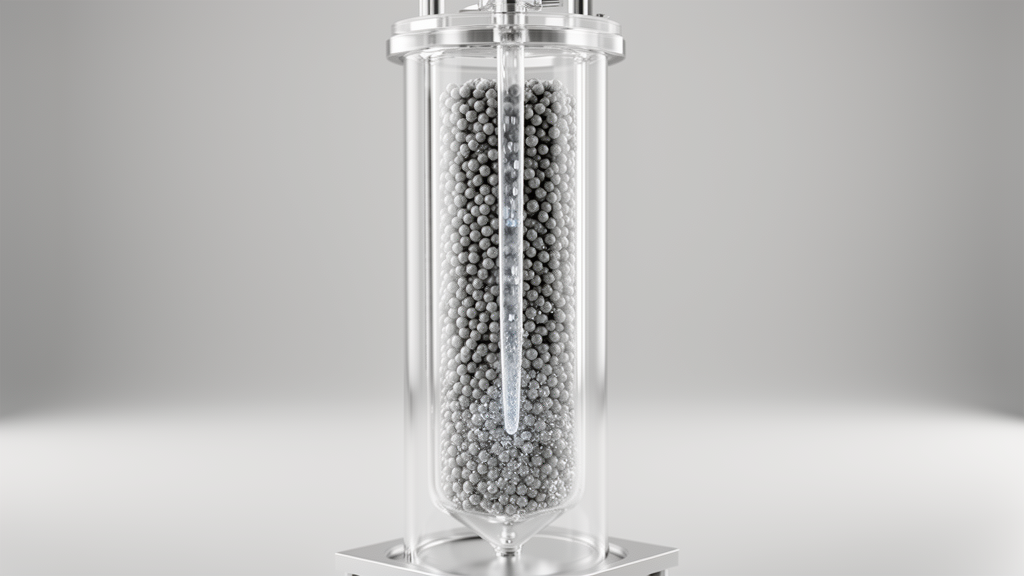
A comprehensive radiochemical study has established systematic operating parameters for anion exchange-based zinc-62/copper-62 radionuclide generators, demonstrating that fixed-bed loading and controlled eluent chemistry dramatically reduce parental isotope breakthrough while securing robust yields of copper-62 for positron emission tomography. Published in EJNMMI Radiopharmacy and Chemistry, the research addresses a critical supply bottleneck that emerged after commercial copper-62 micro-generators were discontinued from production. Because copper-62 possesses an exceptionally short physical half-life of 9.67 minutes, clinical and preclinical imaging facilities without dedicated on-site cyclotrons depend entirely on transportable generator units loaded with parent zinc-62, which decays with a 9.19-hour half-life. By conducting rigorous tracer investigations and comparative evaluations, the researchers mapped how target dissolution, resin loading methods, column dimensions, and mobile phase compositions govern generator output and product purity. Their findings demonstrate that replacing traditional batch resin loading with a fixed-bed loading protocol slashes zinc impurity breakthrough by multiple orders of magnitude, providing a dependable, transferable foundation for in-house radiopharmaceutical fabrication.
The nuclear and physical characteristics of copper-62 make it an extraordinarily attractive candidate for molecular imaging, particularly in oncologic PET applications that quantify regional tissue perfusion and cellular hypoxia. Decaying predominantly through high-energy positron emission with an average beta branching ratio of 97.8 percent and an average positron energy of 1315.5 keV, copper-62 delivers an intense imaging signal paired with favorable patient radiation dosimetry. The radioisotope is particularly suited for labeling diacetyl bis(N4-methylthiosemicarbazone), widely abbreviated as Cu-ATSM, an imaging agent that selectively accumulates within oxygen-depleted, hypoxic tumor environments. Hypoxic tumors are often more aggressive and treatment-resistant than tumors that do not display hypoxia. While cyclotron facilities can produce other copper isotopes such as copper-60 and copper-61, their short half-lives of 23.7 minutes and 3.34 hours restrict their utility to centers with proximate accelerator infrastructure. The parent-daughter equilibrium of zinc-62 and copper-62 eliminates this constraint, enabling continuous elution of copper-62 across several operating days at remote imaging clinics.
To establish a fast and reliable manufacturing procedure, the investigative team refined the cyclotron irradiation and chemical processing of natural copper target foils. Copper targets ranging from 25 to 100 micrometers in physical thickness were irradiated with 24 MeV protons at beam currents between 16 and 65 microamperes using a TR-24 cyclotron at the University of Alabama at Birmingham Cyclotron Facility. Targets mounted at a 30-degree tilt yielded an effective thickness of 200 micrometers, which degraded incident proton energies to exiting energies between 23.6 and 21.3 MeV to capture the peak production cross section of zinc-62. Alongside zinc-62, proton bombardment generated the long-lived tracer zinc-65, which has a 244-day half-life, and copper-64, which has a 12.7-hour half-life, while short-lived zinc-63 was allowed to partially decay during a two-hour cool-down period. Irradiated targets were shipped to Michigan State University, where researchers dissolved targets weighing up to 70 milligrams in 5 milliliters of mildly heated 2 M hydrochloric acid supplemented with 1.5 milliliters of 30 percent hydrogen peroxide.
This streamlined acid dissolution approach bypassed the cumbersome multi-step matrix evaporation and nitric acid conversion procedures that have historically complicated zinc-62 recovery. In previous generator protocols, drying steps and repetitive precipitations consumed valuable time and risked active radioisotope losses during processing of the 9.19-hour parent nuclide. In the reported procedure, complete dissolution of irradiated metallic foils occurred in less than five minutes at 125 degrees Celsius, after which dilution to 30 milliliters with 2 M hydrochloric acid reduced copper concentrations to approximately 2800 parts per million. Peroxide test strips verified the absence of residual oxidants prior to loading. Separation of zinc-62 from the bulk copper matrix was achieved using an isolation column containing 200 milligrams of AG 1-X8 anion exchange resin. Complete elution of the bulk copper was achieved in a 10-milliliter wash with 2 M hydrochloric acid, verified by gamma tracking of co-eluted copper-64 and resulting in less than 0.001 percent loss of zinc-62, while stripping retained zinc-62 in 10 milliliters of dilute 0.001 M hydrochloric acid delivered 98 percent recovery.
A pivotal focus of the investigation centered on the mechanical loading protocol used to seat the parent radioisotope onto the generator column resin bed. The team conducted direct head-to-head comparisons between batch loading, in which resin and radioisotope solutions are equilibrated in a shaken vessel before packing, and fixed-bed loading, in which an acidified solution is pumped directly across a pre-packed resin column. Utilizing zinc-65 tracer experiments, researchers discovered that batch loading led to catastrophic parent isotope losses, shedding 7.60 percent of loaded zinc in the initial flow-through and eluting an aggregate zinc breakthrough of 20.6 percent over 20 milliliters of mobile phase. In stark contrast, fixed-bed loading restricted zinc breakthrough to a minute 0.0011 percent across the same 20-milliliter volume. Because fixed-bed loading takes approximately the same operational duration while drastically reducing occupational radiation handling, it decisively outperformed the batch equilibration strategy.
Chromatographic principles explain this dramatic difference in breakthrough behavior between the two loading methodologies. In batch loading, a single equilibrium contact establishes a uniform concentration of zinc throughout the entire resin volume, preventing quantitative extraction and leaving the resin in a static equilibrium that permits steady, progressive desorption during subsequent elution cycles. Conversely, introducing the feed solution via fixed-bed loading at a controlled flow rate of 1 milliliter per minute establishes a dynamic chromatographic boundary. The zinc strongly adsorbs at the very top of the packed resin column, leaving the underlying resin bed completely free of parent activity. As eluent flows through the bed during repeated daughter harvests, desorbed zinc ions undergo continuous re-adsorption by the downstream resin beads, preventing parent leakage into the collected eluate fractions until the chromatographic front has migrated entirely through the column.
Column dimensions and resin bed masses also exerted a substantial influence on containment of the parent radioisotope. When researchers reduced the AG 1-X8 resin mass from 200 milligrams down to 150 milligrams in 6-millimeter inner diameter columns, parental retention degraded noticeably under repeated washing. Columns packed with 200 milligrams of anion exchange resin yielded 18 milliliters of cumulative eluate without any detectable zinc-65 tracer activity before minor breakthrough appeared. In contrast, the smaller 150-milligram resin columns exhibited measurable zinc breakthrough after the passage of only 2 milliliters of eluent, culminating in a cumulative zinc desorption of 0.056 percent over a 20-milliliter elution volume.
The study also resolved longstanding questions regarding eluent composition by evaluating standard 0.2 M hydrochloric acid with 1.8 M sodium chloride against pure 2 M hydrochloric acid. Both solutions provide an identical chloride anion concentration of 2 M, which forms negatively charged zinc chloride complexes, predominantly ZnCl42- and ZnCl3-, that bind tightly to the quaternary ammonium sites of the anion exchange resin. In static batch tests, the measured distribution coefficient of zinc was virtually identical between 2 M hydrochloric acid, at 1800 milliliters per gram, and the mixed hydrochloric acid/sodium chloride eluent, at 1700 milliliters per gram. However, under dynamic column flow conditions, columns eluted with the sodium chloride mixture exhibited nearly seven times higher zinc breakthrough than identical columns rinsed with pure hydrochloric acid. This divergence reflects the secondary cation effect, where sodium cations alter electrolyte activity and exchange kinetics compared to hydronium ions, an effect masked in batch agitation by intense mechanical phase mixing.
To ensure rigorous performance benchmarking, the investigators developed a specialized gamma spectroscopy methodology tailored to the unique physical decay behavior of copper-62. Because copper-62 emits direct gamma rays at an exceedingly low branching intensity of only 0.349 percent at 1172.97 keV, standard gamma spectroscopic quantification must rely on detecting the 511 keV annihilation photons produced when emitted positrons encounter electrons. However, the high average kinetic energy of copper-62 positrons allows them to travel significant distances in air or thin plastics, causing a large fraction of annihilations to occur outside the sample boundary and distorting detector geometry. The authors eliminated this geometry-dependent error by encasing all measurement tubes in custom-machined nylon holders with 1.7-centimeter wall thickness, sufficient to fully stop all positrons within a calibrated boundary. Combined with theoretical correction factors accounting for photon attenuation in nylon, this system corrected a 20 percent activity overestimation that occurred when samples were counted in conventional holders, an accuracy benchmark rigorously validated using gallium-68 standards.
With calibrated measurement tools in place, the researchers evaluated four operational generators loaded with up to 161.5 MBq of cyclotron-produced zinc-62. Across all configurations, copper-62 eluted rapidly and efficiently, with 84 percent of the available daughter activity recovered in a single 1-milliliter volume. Breakthrough remained undetectable across more than 30 milliliters of cumulative elution in all 200-milligram columns as well as in 150-milligram columns washed with 2 M hydrochloric acid; only the 150-milligram column eluted with the mixed sodium chloride solution showed a minor zinc-62 breakthrough of 0.092 percent after 36 milliliters. High-purity gamma spectrum counts performed after copper-62 had decayed verified complete absence of co-produced copper-64 or secondary radionuclidic contaminants. The harvested copper-62 was subsequently evaluated for ligand complexation by reacting it with H2ATSM ligand dissolved in dimethyl sulfoxide across varied pH and concentration regimes.
Radiolabeling investigations demonstrated that high apparent molar activities of 1 MBq/nmol required activity concentrations above 25 MBq/mL to achieve radiochemical yields exceeding 90 percent, establishing essential concentration thresholds for radiopharmacy practice. Although 2 M hydrochloric acid eluents required four times more sodium acetate buffer to adjust the reaction pH to 4–5 compared to the 0.2 M hydrochloric acid/1.8 M sodium chloride matrix, both eluents supported comparable radiochemical yields of [62Cu]Cu-ATSM. For translation to in vivo imaging, the radiolabeled tracer was purified across a C18 cartridge to exchange the high-osmolarity matrix for ethanol, followed by evaporation and reconstitution in 0.9 percent saline. Intravenous administration of approximately 3.7 MBq of the formulated [62Cu]Cu-ATSM into a mouse bearing a subcutaneous BXPC-3 human pancreatic adenocarcinoma xenograft produced high-resolution PET/MR images. The scan revealed rapid tracer accumulation in hypoxic tumor tissue, reaching a peak uptake of 11.1 percent injected dose per milliliter at 115 seconds post-injection alongside sustained tumor-to-blood contrast, demonstrating the preclinical viability of this accessible in-house generator system.
Subject of Research: Optimization of anion exchange-based zinc-62/copper-62 radionuclide generator systems for positron emission tomography
Article Title: A comparative evaluation of chemical processes in anion exchange-based 62Zn/62Cu generator systems
Article References: Bissen, F. L., Blanco, J. R., Heidarisafa, E. M., Mahmoudian, M., Ferreira, C. A., Lapi, S. E., & Domnanich, K. A. (2026). A comparative evaluation of chemical processes in anion exchange-based 62Zn/62Cu generator systems. EJNMMI Radiopharmacy and Chemistry, 11(1), Article 57. https://doi.org/10.1186/s41181-026-00461-z
Image Credits: AI Generated
DOI: 10.1186/s41181-026-00461-z
Keywords: radionuclide generators, copper-62, zinc-62, positron emission tomography, anion exchange chromatography, radiochemistry, Cu-ATSM, hypoxia imaging, cyclotron targetry, radiation dosimetry, breakthrough quantification, positron annihilation, gamma spectroscopy, radiopharmaceutical synthesis, preclinical PET, pancreatic cancer xenografts, radiation detection, secondary cation effect
News Source: Bethany Barker. (November 14, 2026). Fixed-Bed Loading Reduces Zinc Breakthrough in Anion Exchange Copper-62 Generators. Scienmag.