Credit: Credit: Douglas Crawford
MIAMI — In a new study, researchers at the University of Miami (UM) Rosenstiel School of Marine and Atmospheric Science examined how the interaction of two genomes in animal cells — the mitochondrial and nuclear genomes — interact to affect adaptation of the Atlantic killifish to different temperatures. They showed that although these genomes are separate physical entities, the mitochondrial genome affects the evolution of the nuclear genome, the genetic material responsible for variations in most traits such as hair color and height.
Interactions between these two genomes, which affect everything from health and physiology to fitness, have important consequences for human health and medical interventions such as mitochondrial replacement therapy in embryos.
All animal cells are made up of two genomes, the nuclear genome with 10,000s of protein coding genes and the mitochondrial genome with 13 protein-encoding genes. All 13 genes from the mitochondrial genome interact with approximately 76 nuclear genes in a single metabolic pathway — called the oxidative phosphorylation pathway — that produces nearly all the metabolic energy needed for animal cells. This study found that the interaction between these genomes and the implications on energy production is strong enough that the mitochondrial genome can alter which version of a gene is present in the nuclear genome.
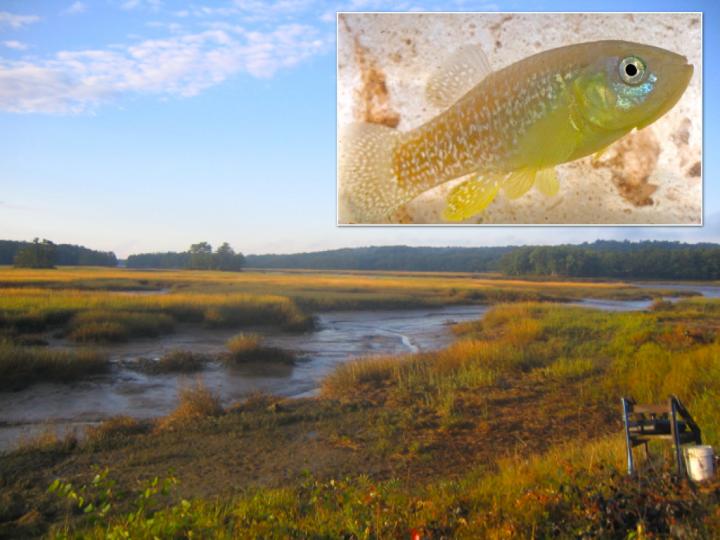
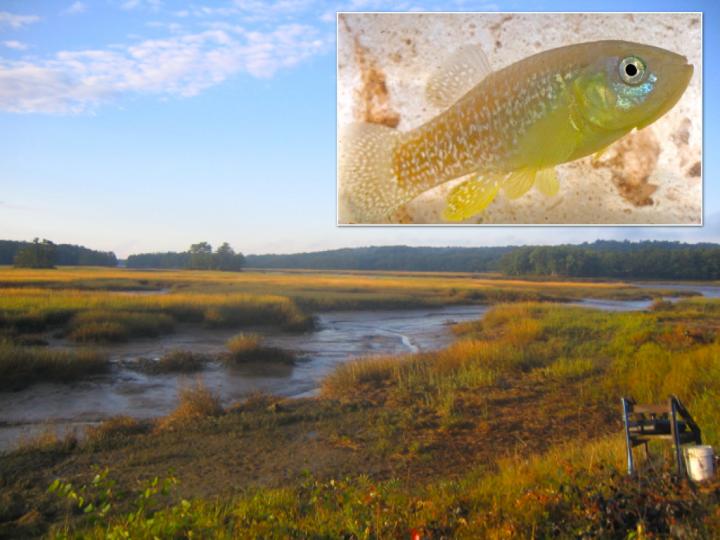
Using Atlantic killifish (Fundulus heteroclitus), the researchers examined whether mitochondrial-nuclear interactions alter the frequency of alternative forms of a gene that arise by mutation, called alleles, for over 11,000 nuclear DNA sequence variations within a population of the fish with mixed ancestry. Among individuals with two divergent mitochondrial haplotypes (mt-haplotypes), the genome-wide analyses revealed significant differences in nuclear allele frequencies.
"Our results suggest that metabolic fitness is not simply a function of the mitochondria but instead is reliant on mitochondrial-nuclear interactions and therefore important for our understanding of physiology, human health and evolution," said Doug Crawford, professor of marine biology and ecology at the UM Rosenstiel School.
The study, titled "Evolved genetic and phenotypic differences due to mitochondrial-nuclear interactions," was published in the March 31, 2017 issue of the journal PLoS Genetics. http://journals.plos.org/plosgenetics/article?id=10.1371/journal.pgen.1006517
###
The study co-authors included: Tara Z. Baris, Doug Crawford, Dominique N. Wagner, David I. Dayan, Xiao Du and Marjorie F. Oleksiak of the UM Rosenstiel School; and Pierre U. Blier and Nicolas Pichaud of the University of Québec. The research was funded by National Science Foundation grants: MCB 1434565, IOS 1147042 and DEB-1265282.
About the University of Miami's Rosenstiel School
The University of Miami is one of the largest private research institutions in the southeastern United States. The University's mission is to provide quality education, attract and retain outstanding students, support the faculty and their research, and build an endowment for University initiatives. Founded in the 1940's, the Rosenstiel School of Marine & Atmospheric Science has grown into one of the world's premier marine and atmospheric research institutions. Offering dynamic interdisciplinary academics, the Rosenstiel School is dedicated to helping communities to better understand the planet, participating in the establishment of environmental policies, and aiding in the improvement of society and quality of life. For more information, visit: http://www.rsmas.miami.edu.
Media Contact
Diana Udel
[email protected]
305-421-4704
@UMiamiRSMAS
http://www.rsmas.miami.edu
############
Story Source: Materials provided by Scienmag