• HOME
  • NEWS
  • EXPLORE
    • CAREER
      • Companies
      • Jobs
    • EVENTS
    • iGEM
      • News
      • Team
    • PHOTOS
    • VIDEO
    • WIKI
  • BLOG
  • COMMUNITY
    • FACEBOOK
    • INSTAGRAM
    • TWITTER
Tuesday, April 7, 2026
BIOENGINEER.ORG
No Result
View All Result
  • Login
  • HOME
  • NEWS
  • EXPLORE
    • CAREER
      • Companies
      • Jobs
        • Lecturer
        • PhD Studentship
        • Postdoc
        • Research Assistant
    • EVENTS
    • iGEM
      • News
      • Team
    • PHOTOS
    • VIDEO
    • WIKI
  • BLOG
  • COMMUNITY
    • FACEBOOK
    • INSTAGRAM
    • TWITTER
  • HOME
  • NEWS
  • EXPLORE
    • CAREER
      • Companies
      • Jobs
        • Lecturer
        • PhD Studentship
        • Postdoc
        • Research Assistant
    • EVENTS
    • iGEM
      • News
      • Team
    • PHOTOS
    • VIDEO
    • WIKI
  • BLOG
  • COMMUNITY
    • FACEBOOK
    • INSTAGRAM
    • TWITTER
No Result
View All Result
Bioengineer.org
No Result
View All Result
Home NEWS Science News Health

Finding genes controlling ovarian reserve could hold key to better female fertility care

Bioengineer by Bioengineer
June 19, 2018
in Health
Reading Time: 1 min read
0
Share on FacebookShare on TwitterShare on LinkedinShare on RedditShare on Telegram
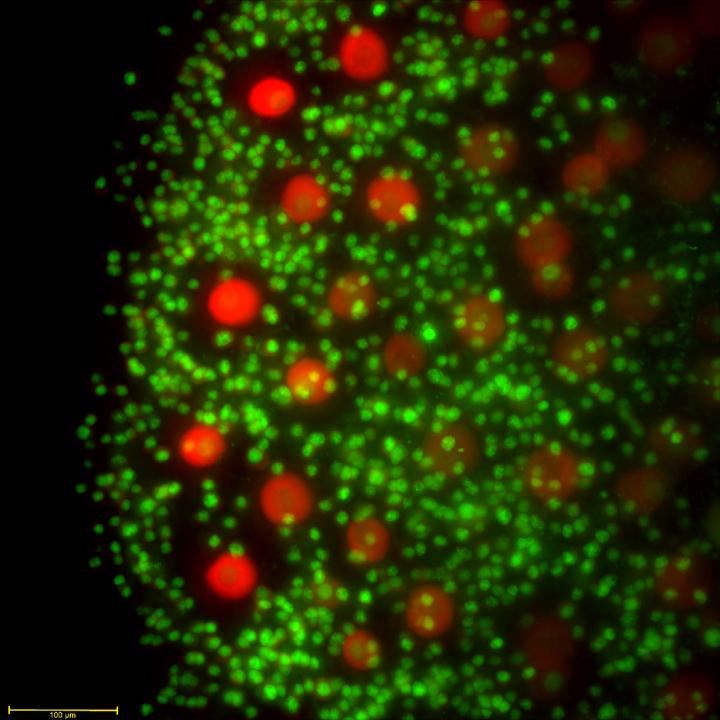
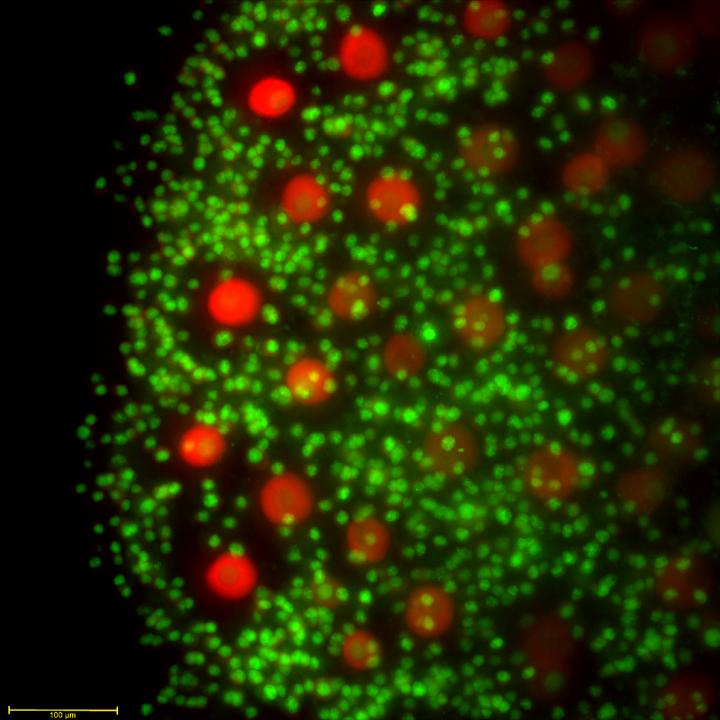
IMAGE

Credit: Jackson Laboratory image courtesy of Ewelina Bolcun-Filas, Ph.D.

For a woman to conceive and deliver a healthy baby, thousands of genes have to work correctly and together. These include genes controlling fertility factors such as the ovarian reserve, the capacity of ovaries to produce viable and fertilizable oocytes (eggs). Deficiencies in the ovarian reserve can lead to infertility and an increased incidence of miscarriages, birth defects and premature ovarian failure.

This genetic complexity stands in the way of developing accurate predictive genetic tests for female fertility and reproductive lifespan. Such tests would be especially valuable for women who are postponing childbearing or experiencing fertility problems, and for pediatric cancer patients undergoing treatments toxic to their developing ovaries.

Jackson Laboratory Assistant Professor Ewelina Bolcun-Filas, Ph.D., is looking at how multiple genetic factors regulating oocyte development determine the differences in each woman's ovarian reserve. Bolcun-Filas has received a five-year grant totaling $2,165,475 from the Eunice Kennedy Shriver National Institute of Child Health and Human Development to investigate these genetic factors, using special, genetically diverse mouse populations.

Identifying the many gene variants that contribute to ovarian reserve may provide women with new diagnosis and treatment avenues for fertility problems, and unprecedented insight and control over their lifelong fertility.

###

Media Contact

News
[email protected]
@jacksonlab

http://www.jax.org

Share12Tweet8Share2ShareShareShare2

Related Posts

Multimorbidity Drives Functional Decline in Retired Seniors

April 7, 2026

B Cell-Targeted CAR-T Therapy Shapes Vaccine Immunity

April 7, 2026

Emergency Room Screening Tool Accurately Identifies Firearm Violence Risk in Young Adults

April 6, 2026

Scientists Discover Blood Biomarker Linked to Cancer Risk in Lynch Syndrome Patients

April 6, 2026
Please login to join discussion

POPULAR NEWS

  • blank

    Revolutionary AI Model Enhances Precision in Detecting Food Contamination

    97 shares
    Share 39 Tweet 24
  • Promising Outcomes from First Clinical Trials of Gene Regulation in Epilepsy

    51 shares
    Share 20 Tweet 13
  • Imagine a Social Media Feed That Challenges Your Views Instead of Reinforcing Them

    1009 shares
    Share 399 Tweet 249
  • Popular Anti-Aging Compound Linked to Damage in Corpus Callosum, Study Finds

    44 shares
    Share 18 Tweet 11

About

We bring you the latest biotechnology news from best research centers and universities around the world. Check our website.

Follow us

Recent News

Storing Mechanical Energy with 2D Spiral Nanomaterials

Tumor Granulocytes and NETs in Colorectal Cancer

Multimorbidity Drives Functional Decline in Retired Seniors

Subscribe to Blog via Email

Enter your email address to subscribe to this blog and receive notifications of new posts by email.

Join 78 other subscribers
  • Contact Us

Bioengineer.org © Copyright 2023 All Rights Reserved.

Welcome Back!

Login to your account below

Forgotten Password?

Retrieve your password

Please enter your username or email address to reset your password.

Log In
No Result
View All Result
  • Homepages
    • Home Page 1
    • Home Page 2
  • News
  • National
  • Business
  • Health
  • Lifestyle
  • Science

Bioengineer.org © Copyright 2023 All Rights Reserved.