• HOME
  • NEWS
  • EXPLORE
    • CAREER
      • Companies
      • Jobs
    • EVENTS
    • iGEM
      • News
      • Team
    • PHOTOS
    • VIDEO
    • WIKI
  • BLOG
  • COMMUNITY
    • FACEBOOK
    • INSTAGRAM
    • TWITTER
Thursday, January 1, 2026
BIOENGINEER.ORG
No Result
View All Result
  • Login
  • HOME
  • NEWS
  • EXPLORE
    • CAREER
      • Companies
      • Jobs
        • Lecturer
        • PhD Studentship
        • Postdoc
        • Research Assistant
    • EVENTS
    • iGEM
      • News
      • Team
    • PHOTOS
    • VIDEO
    • WIKI
  • BLOG
  • COMMUNITY
    • FACEBOOK
    • INSTAGRAM
    • TWITTER
  • HOME
  • NEWS
  • EXPLORE
    • CAREER
      • Companies
      • Jobs
        • Lecturer
        • PhD Studentship
        • Postdoc
        • Research Assistant
    • EVENTS
    • iGEM
      • News
      • Team
    • PHOTOS
    • VIDEO
    • WIKI
  • BLOG
  • COMMUNITY
    • FACEBOOK
    • INSTAGRAM
    • TWITTER
No Result
View All Result
Bioengineer.org
No Result
View All Result
Home NEWS Science News Biology

Fewer scars in the central nervous system

Bioengineer by Bioengineer
January 31, 2020
in Biology
Reading Time: 2 mins read
0
IMAGE
Share on FacebookShare on TwitterShare on LinkedinShare on RedditShare on Telegram

IMAGE

Credit: Source: Schachtrup lab / University of Freiburg


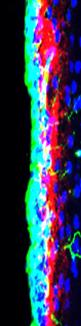
Neural stem and progenitor cells (NSPCs), from the so-called subventricular zone (SVZ), can help to repair a brain damaged by central nervous system disorders. It is known that the microenvironment within the SVZ directs the differentiation of stem and progenitor cells (NSPCs) toward cells in the nerve tissue. However, researchers have not yet been able to explain why NSPCs do not develop into neurons after injuries to the central nervous system, but rather into astrocytes. Astrocytes play a major role in the formation of scars and thus interfere with the regeneration of the nerves in the central nervous system. A team led by Prof. Dr. Christian Schachtrup and Lauriane Pous from the Faculty of Medicine at the University of Freiburg has now succeeded in analyzing a further step in these processes in the brain. The scientists present their results in the current issue of Nature Communications.

Schachtrup and his team show that, following damage to the cerebral cortex of mice, fibrinogen from the blood is enriched in the stem cell niche of the SVZ, which is located further inside the brain. Fibrinogen is a blood coagulation factor and a precursor of the protein fibrin, which coats and stabilizes the blood platelets that gather at the site of a vascular injury. Fibrinogen inhibits the neuronal differentiation of NSPCs, the researchers discovered. At the same time, the enriched fibrinogen leads to increased astrogenesis, i.e. the formation of new astrocytes, as fibrinogen activates the so-called BMP receptor signaling pathway. By experimentally reducing fibrinogen, for example by adding the snake venom Ancrod, the astrocyte formation from NSPCs was blocked, which is why only reduced scars developed.

“The discovery that an important blood coagulation protein, fibrinogen, can induce an astrogenic milieu in the SVZ stem cell niche, which determines the contribution of NSPCs to repair mechanisms in CNS diseases, has potential implications for several processes in CNS diseases in different stem cell niches,” says Schachtrup. With his research, the Freiburg researcher hopes to contribute to making neuronal regeneration processes more treatable through drugs or cell replacement therapies.

###

Media Contact
Dr. Christian Schachtrup
[email protected]
0049-761-203-5101

Original Source

https://www.pr.uni-freiburg.de/pm-en/press-releases-2020/fewer-scars-in-the-central-nervous-system

Related Journal Article

http://dx.doi.org/10.1038/s41467-020-14466-y

Tags: BiologyCell Biologyneurobiology
Share12Tweet8Share2ShareShareShare2

Related Posts

Foreign Bodies in Sheep and Goats: Prevalence and Risks

Foreign Bodies in Sheep and Goats: Prevalence and Risks

December 31, 2025
Rethinking Gender Inference from Health Record Algorithms

Rethinking Gender Inference from Health Record Algorithms

December 31, 2025

Mapping RNA Editome Development in Ningxiang Pig Fat

December 31, 2025

Revealing Chloroplast Genomes: Insights on Plant Evolution

December 31, 2025
Please login to join discussion

POPULAR NEWS

  • blank

    PTSD, Depression, Anxiety in Childhood Cancer Survivors, Parents

    109 shares
    Share 44 Tweet 27
  • NSF funds machine-learning research at UNO and UNL to study energy requirements of walking in older adults

    71 shares
    Share 28 Tweet 18
  • Exploring Audiology Accessibility in Johannesburg, South Africa

    52 shares
    Share 21 Tweet 13
  • SARS-CoV-2 Subvariants Affect Outcomes in Elderly Hip Fractures

    44 shares
    Share 18 Tweet 11

About

We bring you the latest biotechnology news from best research centers and universities around the world. Check our website.

Follow us

Recent News

Enhanced Nerve Conduits Boost Sciatic Regeneration

Assessing HPV Self-Collection Readiness in Tamil Nadu

ImmunoStruct: Advancing Deep Learning in Immunogenicity Prediction

Subscribe to Blog via Email

Enter your email address to subscribe to this blog and receive notifications of new posts by email.

Join 71 other subscribers
  • Contact Us

Bioengineer.org © Copyright 2023 All Rights Reserved.

Welcome Back!

Login to your account below

Forgotten Password?

Retrieve your password

Please enter your username or email address to reset your password.

Log In
No Result
View All Result
  • Homepages
    • Home Page 1
    • Home Page 2
  • News
  • National
  • Business
  • Health
  • Lifestyle
  • Science

Bioengineer.org © Copyright 2023 All Rights Reserved.