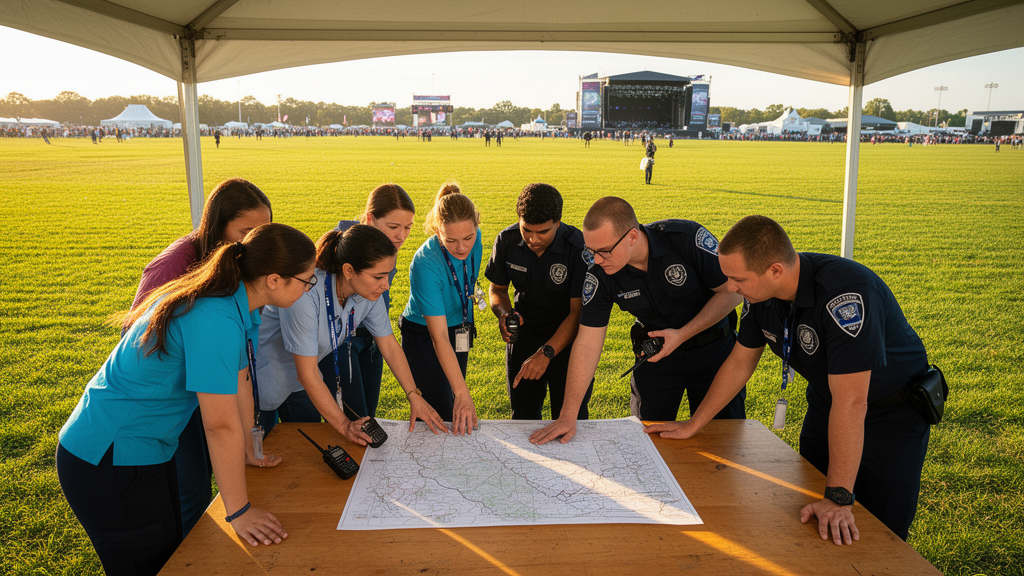
A qualitative study published in the Harm Reduction Journal examines how interdisciplinary collaboration between harm reduction and medical teams influences health and safety at large electronic dance music festivals. The research, conducted at a multi-day festival in Canada, focuses specifically on the perspectives of on-site service providers rather than attendees. The study aims to identify the perceived benefits and challenges of working across different service lines, as well as to generate recommendations for improving such collaboration to potentially reduce adverse health outcomes.
Electronic dance music festivals are recognized as environments with a high risk for various substance-related adverse health outcomes. While harm reduction services have become more prevalent at these events, often focusing on minimizing risks associated with recreational substance use, previous research has largely centered on attendee perspectives or descriptive outcome data.
The research team conducted semi-structured interviews with nine key informants from medical services and two harm reduction services. The harm reduction services included a drug checking program and a support space designed for attendees feeling overwhelmed. The interview guide explored informants’ perspectives on interdisciplinary collaboration, and the data were analyzed using reflexive thematic analysis to identify recurring patterns in the providers’ experiences and viewpoints.
The analysis revealed three primary themes: the benefits of interdisciplinary collaboration, the challenges encountered, and recommendations for improvement. Informants universally perceived that harm reduction services reduced the number of adverse health events that required intervention by on-site medical services. Both medical and harm reduction teams viewed interdisciplinary collaboration as important for capacity building, allowing each service to provide more effective care to attendees by leveraging their distinct roles and resources.
Despite the perceived benefits, several challenges to collaboration were identified. Challenges identified included differing perspectives and skill sets between services. Additionally, challenges included reluctance to burden other services.
To address these challenges, the study outlines several recommendations for enhancing interdisciplinary collaboration. These included developing formal channels of inter-team communication and building inter-team relationships prior to events and critical needs. Recommendations also included ensuring skills for the identification of medical needs present in harm reduction sanctuary-like spaces, humility across teams, and physical proximity between services.
They also included experienced volunteers rooted in festival culture. The findings underscore that the unique services provided by both medical and harm reduction teams are critical for reducing on-site adverse health outcomes, and that their synergy is essential for comprehensive care.
Subject of Research: Interdisciplinary collaboration between harm reduction and medical teams at electronic dance music festivals
Article Title: Enhancing health and safety through interdisciplinary collaboration: a qualitative study of experiences from Harm Reduction and Medical teams at a large electronic music festival in Canada
Article References: Bilan, K., Munn, M. B., & Mema, S. (2026). Enhancing health and safety through interdisciplinary collaboration: a qualitative study of experiences from Harm Reduction and Medical teams at a large electronic music festival in Canada. Harm Reduction Journal. https://doi.org/10.1186/s12954-026-01552-5
Image Credits: AI Generated
DOI: 10.1186/s12954-026-01552-5
Keywords: harm reduction, medical services, electronic dance music, interdisciplinary collaboration, qualitative study, festival safety, drug checking, health outcomes, Canada, Enhancing, health, safety
News Source: Glenn Wilkins. (November 9, 2026). Festival Teams Find Collaboration Key to Safety. Scienmag.