• HOME
  • NEWS
  • EXPLORE
    • CAREER
      • Companies
      • Jobs
    • EVENTS
    • iGEM
      • News
      • Team
    • PHOTOS
    • VIDEO
    • WIKI
  • BLOG
  • COMMUNITY
    • FACEBOOK
    • INSTAGRAM
    • TWITTER
Saturday, February 7, 2026
BIOENGINEER.ORG
No Result
View All Result
  • Login
  • HOME
  • NEWS
  • EXPLORE
    • CAREER
      • Companies
      • Jobs
        • Lecturer
        • PhD Studentship
        • Postdoc
        • Research Assistant
    • EVENTS
    • iGEM
      • News
      • Team
    • PHOTOS
    • VIDEO
    • WIKI
  • BLOG
  • COMMUNITY
    • FACEBOOK
    • INSTAGRAM
    • TWITTER
  • HOME
  • NEWS
  • EXPLORE
    • CAREER
      • Companies
      • Jobs
        • Lecturer
        • PhD Studentship
        • Postdoc
        • Research Assistant
    • EVENTS
    • iGEM
      • News
      • Team
    • PHOTOS
    • VIDEO
    • WIKI
  • BLOG
  • COMMUNITY
    • FACEBOOK
    • INSTAGRAM
    • TWITTER
No Result
View All Result
Bioengineer.org
No Result
View All Result
Home NEWS Science News Biology

Females itch less than males

Bioengineer by Bioengineer
June 24, 2022
in Biology
Reading Time: 2 mins read
0
Protective role of estradiol hormone basis for psoriasis therapy
Share on FacebookShare on TwitterShare on LinkedinShare on RedditShare on Telegram

Japan — Among the many reasons men may have for envying women  —  at least when it comes to bad skin inflammation — human females have a significantly lower incidence of severe psoriasis. However, the underlying reason for the sex differences has remained unclear.
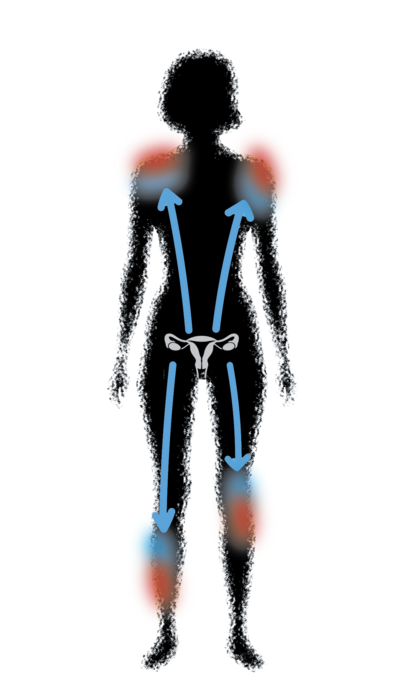
Protective role of estradiol hormone basis for psoriasis therapy

Credit: KyotoU/Global Comms

Japan — Among the many reasons men may have for envying women  —  at least when it comes to bad skin inflammation — human females have a significantly lower incidence of severe psoriasis. However, the underlying reason for the sex differences has remained unclear.

Now a team of researchers has found that the female hormone estradiol suppresses psoriasis, and the protective role of the hormone has provided a basis for its therapeutic potential.

“Our results have not only revealed the molecular mechanisms of sex differences in psoriasis but also shed new light on our understanding of the physiological role of estradiol,” says Hamamatsu University School of Medicine’s Tetsuya Honda, formerly of Kyoto University.

The team tested conditional knockout mice, or cko mice, with ovaries removed but supplemented with estradiol pellets or a placebo. In contrast to wild-type mice, the cko mice without the natural ovarian hormones estradiol showed symptoms of severe skin inflammation.

Once these mice were given estradiol, the production of IL-17A and IL-1β cytokines in neutrophil and macrophage immune cells was reversed, reducing the inflammation. This effect was also observed in human neutrophils in vitro.

What intrigued the researchers was how the lack of estrogen receptors in immune cells made estradiol ineffective against the cytokines.

“These results indicate that estradiol suppresses psoriatic inflammation by regulating neutrophil and macrophage cells,” concludes the author.

###

The paper “Estradiol suppresses psoriatic inflammation in mice by regulating neutrophil and macrophage functions” appeared on 4 May 2022 in the Journal of Allergy and Clinical Immunology, with doi: 10.1016/j.jaci.2022.03.028

About Kyoto University

Kyoto University is one of Japan and Asia’s premier research institutions, founded in 1897 and responsible for producing numerous Nobel laureates and winners of other prestigious international prizes. A broad curriculum across the arts and sciences at both undergraduate and graduate levels is complemented by numerous research centers, as well as facilities and offices around Japan and the world. For more information please see: http://www.kyoto-u.ac.jp/en


Journal

Journal of Allergy and Clinical Immunology

DOI

10.1016/j.jaci.2022.03.028

Method of Research

Experimental study

Subject of Research

Animals

Article Title

Estradiol suppresses psoriatic inflammation in mice by regulating neutrophil and macrophage functions

Article Publication Date

4-May-2022

COI Statement

The authors declare that they have no relevant conflicts of interest.

Share12Tweet8Share2ShareShareShare2

Related Posts

Florida Cane Toad: Complex Spread and Selective Evolution

Florida Cane Toad: Complex Spread and Selective Evolution

February 7, 2026
New Study Uncovers Mechanism Behind Burn Pit Particulate Matter–Induced Lung Inflammation

New Study Uncovers Mechanism Behind Burn Pit Particulate Matter–Induced Lung Inflammation

February 6, 2026

DeepBlastoid: Advancing Automated and Efficient Evaluation of Human Blastoids with Deep Learning

February 6, 2026

Navigating the Gut: The Role of Formic Acid in the Microbiome

February 6, 2026

POPULAR NEWS

  • Robotic Ureteral Reconstruction: A Novel Approach

    Robotic Ureteral Reconstruction: A Novel Approach

    82 shares
    Share 33 Tweet 21
  • Digital Privacy: Health Data Control in Incarceration

    63 shares
    Share 25 Tweet 16
  • Study Reveals Lipid Accumulation in ME/CFS Cells

    57 shares
    Share 23 Tweet 14
  • Breakthrough in RNA Research Accelerates Medical Innovations Timeline

    53 shares
    Share 21 Tweet 13

About

We bring you the latest biotechnology news from best research centers and universities around the world. Check our website.

Follow us

Recent News

Digital Health Perspectives from Baltic Sea Experts

Florida Cane Toad: Complex Spread and Selective Evolution

Exploring Decision-Making in Dementia Caregivers’ Mobility

Subscribe to Blog via Email

Enter your email address to subscribe to this blog and receive notifications of new posts by email.

Join 73 other subscribers
  • Contact Us

Bioengineer.org © Copyright 2023 All Rights Reserved.

Welcome Back!

Login to your account below

Forgotten Password?

Retrieve your password

Please enter your username or email address to reset your password.

Log In
No Result
View All Result
  • Homepages
    • Home Page 1
    • Home Page 2
  • News
  • National
  • Business
  • Health
  • Lifestyle
  • Science

Bioengineer.org © Copyright 2023 All Rights Reserved.