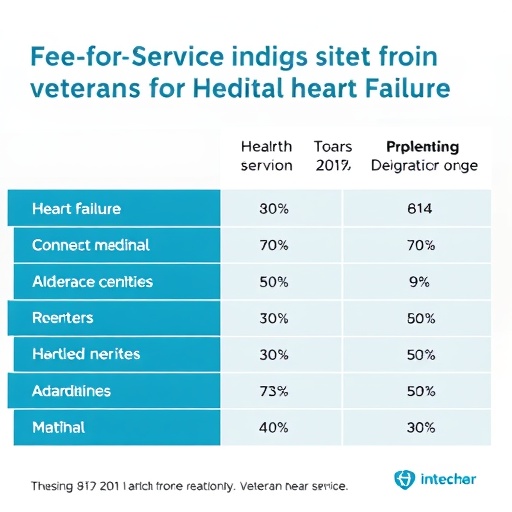
In recent years, the debate surrounding the efficacy of fee-for-service (FFS) payment models in healthcare has intensified, particularly among vulnerable populations like veterans suffering from chronic conditions. A new study, led by Shen, Thorsness, and Pizer, seeks to shed light on this important issue by examining whether FFS payment models can increase healthcare visits and subsequently improve the quality of care provided to veterans with heart failure. As healthcare systems across the globe grapple with the implications of payment structures, the findings from this research present an insightful analysis of the potential advantages and drawbacks of such systems.
The study employs a retrospective cohort analysis, a method that allows researchers to investigate the trends and outcomes associated with healthcare visits and quality of care without the need for a lengthy prospective study. This approach leveraged existing medical records from a sizable veteran population, culminating in a robust data set that affords a comprehensive view of the impacts of FFS payment models. The retrospective design not only streamlines the process but also captures real-world implications of financial incentives in healthcare delivery—critical aspects that prospective studies may overlook.
Heart failure, as a chronic condition, presents extensive challenges to healthcare systems. Veterans, who often experience compounded health issues due to factors such as prior military service and exposure to hazardous environments, can represent a unique subset of patients dealing with heart failure. The researchers made a compelling case that understanding the nuances of care delivery within this population can yield insights beneficial not just to veterans, but the broader healthcare landscape as well.
The FFS payment model traditionally incentivizes healthcare providers based on the quantity of services rendered rather than the quality of care delivered. This distinction raises questions regarding whether such a model truly serves the best interests of patients, particularly in managing chronic diseases like heart failure, which require ongoing care and monitoring. The researchers angle their analysis toward these fundamental questions: Does increased healthcare access through FFS translate into improved outcomes? What are the ramifications for patient care quality within such a framework?
To explore these questions, the study’s authors meticulously analyzed healthcare utilization patterns among veterans enrolled in the FFS system over a specified period. Their findings revealed a notable uptick in the number of patient visits within the cohort, suggesting that financial incentives may play a substantial role in encouraging veterans to seek care. This revelation opens a dialogue about whether incentivizing visits truly translates into more comprehensive management of heart failure or merely increases the volume of healthcare services provided, thereby complicating the nexus between care frequency and quality.
However, the researchers did not stop at the quantity of visits; their analysis extended to the quality of care being delivered. They employed various metrics to assess care quality, including hospital readmission rates, medication adherence, and patient-reported outcomes. Strikingly, results indicated that despite an increase in visits, improvements in care quality remained inconclusive. This finding raises critical questions regarding the effectiveness of FFS models in delivering high-quality care to veterans with heart failure.
Furthermore, the study delves into the often overlooked factors that may influence these outcomes, such as the degree of patient engagement and the provider’s ability to navigate the complexities of each individual case. While increased visits may seem beneficial on the surface, the nuances of care delivery are vital. Simply visiting a healthcare provider more frequently does not guarantee better management of a chronic condition like heart failure; indeed, the study suggests that a more integrative approach might be needed to enhance care quality.
In exploring the broader implications of their findings, Shen, Thorsness, and Pizer argue for a reassessment of the existing FFS payment model. They advocate for hybrid models that integrate elements from both FFS and value-based care paradigms. The authors posit that such an approach could foster greater accountability among providers while still facilitating necessary access to care. This shift, they argue, may result in more meaningful patient engagement and ultimately lead to improved health outcomes.
The authors also highlight the potential role of technology in reshaping how care is delivered to veterans with chronic conditions. Innovations in telemedicine, remote monitoring, and digital health applications offer promising avenues for improving patient engagement and managing care quality effectively. By untethering veterans from traditional healthcare delivery models, technology could complement the financial incentives of FFS, potentially leading to better health outcomes.
Ultimately, the study paves the way for future research into the efficacy of different payment models in the context of chronic disease management. It highlights the need to not only assess the quantity of care but also to evaluate the quality of that care in order to drive improvements in health outcomes, particularly for vulnerable populations such as veterans. As healthcare continues to evolve, the insights garnered from this analysis could influence policies aimed at enhancing the effectiveness of care delivery systems across the globe.
In conclusion, as the complexities of healthcare payment models become increasingly scrutinized, research like that conducted by Shen, Thorsness, and Pizer serves as a crucial guidepost for stakeholders across the healthcare spectrum. Their findings underscore that while FFS models may enhance access to care for veterans with heart failure, continuous evaluation and adaptation of these approaches are essential to ensure that quality is not sacrificed in the name of quantity. By fostering a more nuanced understanding of healthcare delivery, both parties in the discussion—patients and providers—can work together toward a healthcare system that genuinely prioritizes long-term well-being.
As the healthcare landscape continues to shift, it remains critical to engage in these dialogues about payment models and their implications. Understanding the interplay between incentives, access, and quality will drive future innovations in how we deliver care to those who have served our nation. The momentum for change is palpable, and the findings from this study may act as a catalyst for reimagining the potential benefits of financial models in the quest for better health outcomes.
Subject of Research:
Article Title:
Article References:
Shen, YJ., Thorsness, R. & Pizer, S.D. Does Fee-For-Service Payment Increase Visits and Improve Quality among Veterans with Heart Failure? A Retrospective Cohort Analysis. J GEN INTERN MED (2025). https://doi.org/10.1007/s11606-025-10084-w
Image Credits: AI Generated
DOI: https://doi.org/10.1007/s11606-025-10084-w
Keywords:
Tags: challenges of heart failure managementchronic condition management in veteransfee-for-service healthcare modelsfinancial incentives in healthcare deliveryhealthcare visit frequency in veteransimpacts of payment structures on veteransimplications of FFS payment modelsimproving healthcare outcomes for veteransquality of care in chronic conditionsretrospective cohort analysis in healthcareveteran healthcare systemsveterans with heart failure