Researchers evaluated an operating-regime-partitioned, sample-weighted federated averaging framework to predict one-step-ahead fuel cell voltage under dynamic loading conditions. Accurate proton exchange membrane fuel cell (PEMFC) voltage prediction remains challenging because stack voltage changes nonlinearly across varying operational states. To address this behavior, the investigation examined whether decentralized learning across partitioned operating regimes could forecast voltage variations without sharing raw measurement records among the logical partitions.
The experimental evaluation utilized recorded operational data gathered from a single 100-watt laboratory PEMFC stack. Across the study, a total of 1,706 recorded samples were categorized into logical low-, medium-, and high-load partitions. These specific partitions were established to simulate heterogeneous client datasets. Crucially, the authors noted that these simulated client partitions were purely logical divisions and did not represent physically independent fuel cell systems or separate edge computing devices deployed in practice.
A hybrid temporal convolutional network and long short-term memory (TCN–LSTM) predictor was implemented for the voltage estimation task. The research team trained this predictive model using both centralized learning and logical-client Federated Averaging (FedAvg). Under the federated learning protocol, model parameters were updated across the operating regimes while keeping the raw data records isolated within their respective logical partitions.
When evaluated on the held-out test dataset, the FedAvg TCN–LSTM model achieved an R² score of 0.8498. The predictive framework recorded a root mean square error (RMSE) of 3.5693, a mean absolute error (MAE) of 2.8483, and a mean absolute percentage error (MAPE) of 21.6090 percent. These statistical results offer a controlled proof of concept demonstrating voltage prediction capabilities across distinct logical operating regimes.
The authors emphasized several distinct operational boundaries regarding the findings. This investigation serves strictly as a proof of concept and does not demonstrate formal data privacy protection mechanisms. Furthermore, the analysis did not evaluate independent-device federation, deployed real-time digital-twin synchronization, or generalization across different fuel cell stacks.
Subject of Research: PEMFC voltage prediction using federated learning across operating regimes
Article Title: Operating-regime-aware weighted federated digital twin framework for PEMFC voltage prediction under dynamic operating conditions
Article References: Kurian, A. A., & O.V., G. S. (2026). Operating-regime-aware weighted federated digital twin framework for PEMFC voltage prediction under dynamic operating conditions. Discover Applied Sciences. https://doi.org/10.1007/s42452-026-09938-7
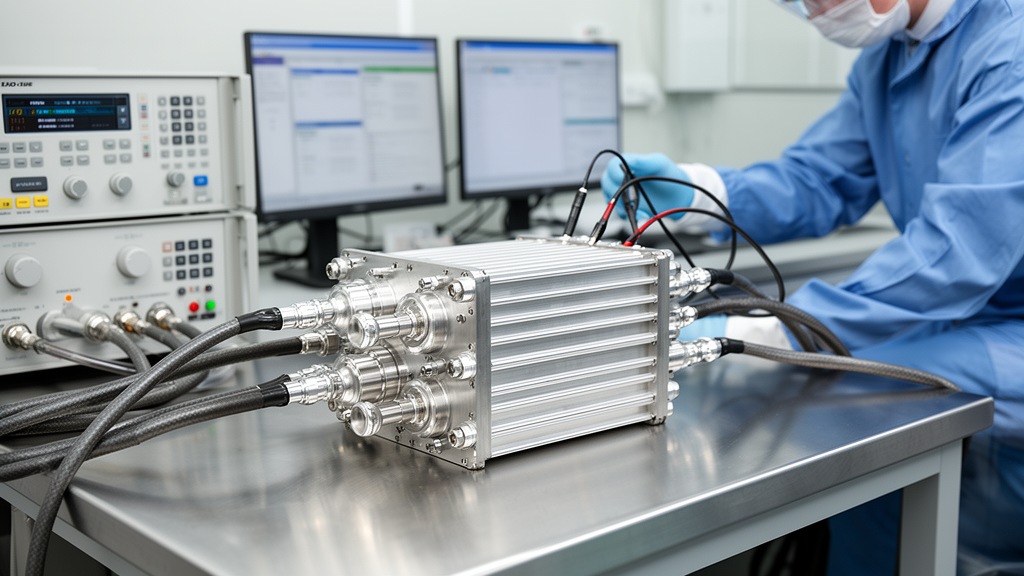
Image Credits: AI Generated
DOI: 10.1007/s42452-026-09938-7
Keywords: PEMFC voltage prediction, proton exchange membrane fuel cell, federated learning, FedAvg, TCN-LSTM, dynamic operating conditions, operating regime partitioning, sample-weighted FedAvg, 100 W fuel cell stack, one-step-ahead prediction, heterogeneous client data, digital twin framework, root mean square error, mean absolute percentage error, stack voltage dynamics, logical client partitions
News Source: Veronica Carney. (November 23, 2026). Federated Learning Predicts Fuel Cell Voltage Across Logical Load Regimes. Scienmag.