• HOME
  • NEWS
  • EXPLORE
    • CAREER
      • Companies
      • Jobs
    • EVENTS
    • iGEM
      • News
      • Team
    • PHOTOS
    • VIDEO
    • WIKI
  • BLOG
  • COMMUNITY
    • FACEBOOK
    • INSTAGRAM
    • TWITTER
Friday, January 16, 2026
BIOENGINEER.ORG
No Result
View All Result
  • Login
  • HOME
  • NEWS
  • EXPLORE
    • CAREER
      • Companies
      • Jobs
        • Lecturer
        • PhD Studentship
        • Postdoc
        • Research Assistant
    • EVENTS
    • iGEM
      • News
      • Team
    • PHOTOS
    • VIDEO
    • WIKI
  • BLOG
  • COMMUNITY
    • FACEBOOK
    • INSTAGRAM
    • TWITTER
  • HOME
  • NEWS
  • EXPLORE
    • CAREER
      • Companies
      • Jobs
        • Lecturer
        • PhD Studentship
        • Postdoc
        • Research Assistant
    • EVENTS
    • iGEM
      • News
      • Team
    • PHOTOS
    • VIDEO
    • WIKI
  • BLOG
  • COMMUNITY
    • FACEBOOK
    • INSTAGRAM
    • TWITTER
No Result
View All Result
Bioengineer.org
No Result
View All Result
Home NEWS Science News Biology

‘Fang’tastic: researchers report amphibians with snake-like dental glands

Bioengineer by Bioengineer
July 3, 2020
in Biology
Reading Time: 2 mins read
0
IMAGE
Share on FacebookShare on TwitterShare on LinkedinShare on RedditShare on Telegram

Utah State University and Butantan Institute scientists publish evolutionary findings in ‘iScience.’
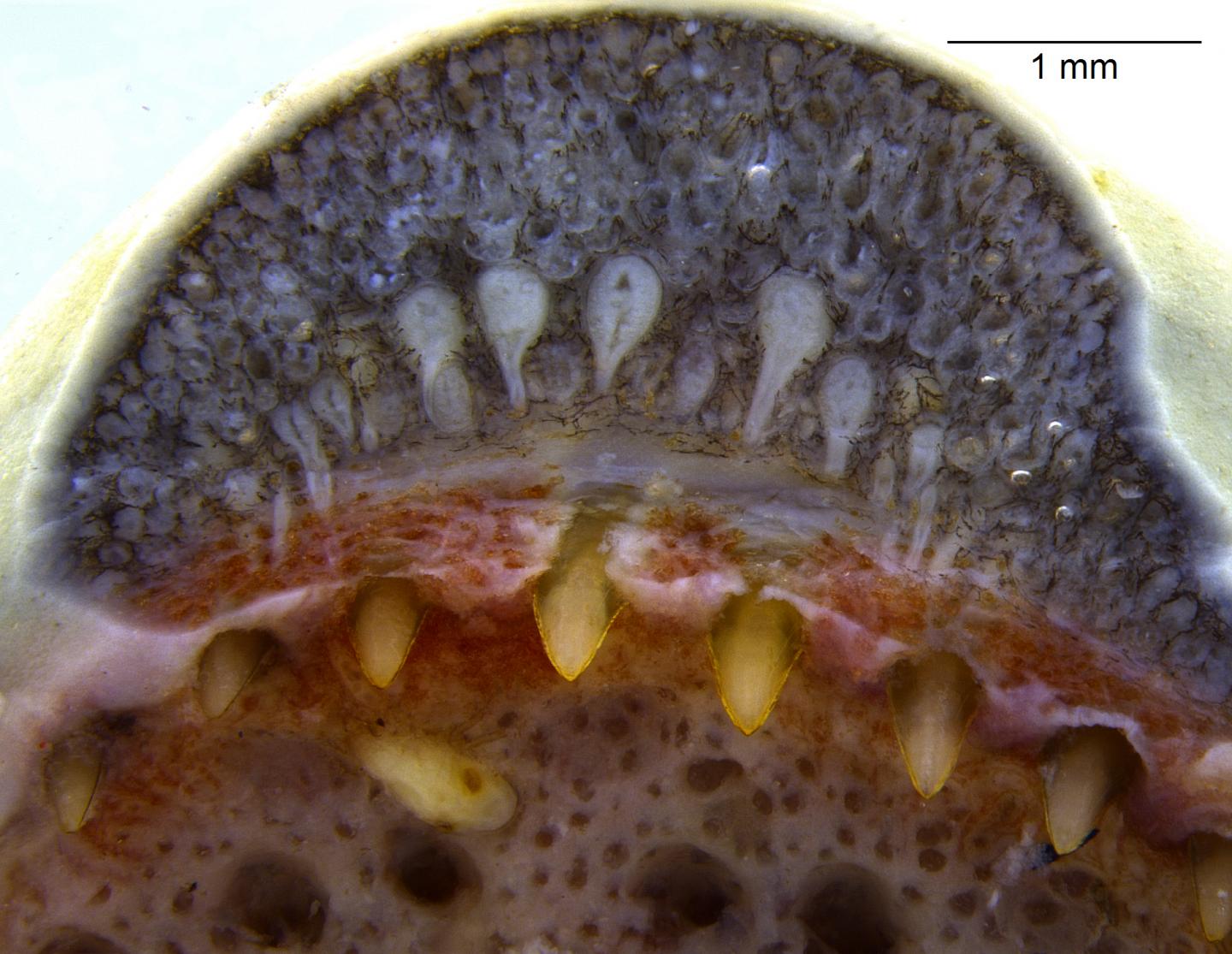
IMAGE

Credit: Butantan Institute, Brazil

LOGAN, UTAH, USA – Utah State University biologist Edmund ‘Butch’ Brodie, Jr. and colleagues from São Paulo’s Butantan Institute report the first known evidence of oral venom glands in amphibians. Their research, supported by the Brazilian National Council for Scientific and Technological Development, appears in the July 3, 2020, issue of iScience.

“We think of amphibians – frogs, toads and the like — as basically harmless,” says Brodie, emeritus professor in USU’s Department of Biology. “We know a number of amphibians store nasty, poisonous secretions in their skin to deter predators. But to learn at least one can inflict injury from its mouth is extraordinary.”

Brodie and his colleagues discovered the oral glands in a family of caecilians, serpent-like creatures related to frogs and salamanders. Neither snakes nor worms, caecilians are found in tropical climates of Africa, Asian and the Americas. Some are aquatic and some, like the ringed caecilian (Siphonops annulatus) studied by Brodie’s team, live in burrows of their own making.

In 2018, the team reported the species secreted substances from skin glands at both ends of its snake-like body. Concentrated at the head and extending the length of the body, the creature emits a mucous-like lubricant that enables it to quickly dive underground to escape predators. At the tail, caecilians have glands armed with a toxin, which acts as a last line of chemical defense, blocking a hastily burrowed tunnel from hungry hunters.

“What we didn’t know is these caecilians have tiny fluid-filled glands in the upper and lower jaw, with long ducts that open at the base of each of their spoon-shaped teeth,” Brodie says.

His research colleague Pedro Luiz Mailho-Fontana, who studied with Brodie as a visiting graduate student at USU’s Logan campus in 2015, noticed the never-before-described oral glands. Using embryonic analysis, Mailho-Fontana, first author of the paper, discovered the glands – called “dental glands” – originated from a different tissue than the slime and poison glands found in the caecilian’s skin.

“The poisonous skin glands form from the epidermis, but these oral glands develop from the dental tissue, and this is the same developmental origin we find in the venom glands of reptiles,” he says.

The researchers surmise caecilians, equipped with no limbs and only a mouth for hunting, activate their oral glands when they bite down on prey, including worms, termites, frogs and lizards.

The team doesn’t yet know the biochemical composition of the fluid held in the oral glands.

“If we can verify the secretions are toxic, these glands could indicate an early evolutionary design of oral venom organs,” Brodie says. “They may have evolved in caecilians earlier than in snakes.”

###

Media Contact
Edmund ‘Butch’ Brodie, Jr.
[email protected]

Related Journal Article

http://dx.doi.org/10.1016/j.isci.2020.101234

Tags: BiologyEvolution
Share12Tweet8Share2ShareShareShare2

Related Posts

Unlocking Fasciola hepatica Kinome for Drug Targets

Unlocking Fasciola hepatica Kinome for Drug Targets

January 16, 2026
Phage Protein Screen Uncovers Bacterial Immune Triggers

Phage Protein Screen Uncovers Bacterial Immune Triggers

January 16, 2026

MitoCommun: Decoding Mitochondrial Communication Networks

January 16, 2026

Gender Variations in Biomarkers and Memory Decline in Alzheimer’s

January 16, 2026
Please login to join discussion

POPULAR NEWS

  • Enhancing Spiritual Care Education in Nursing Programs

    155 shares
    Share 62 Tweet 39
  • PTSD, Depression, Anxiety in Childhood Cancer Survivors, Parents

    147 shares
    Share 59 Tweet 37
  • Robotic Ureteral Reconstruction: A Novel Approach

    77 shares
    Share 31 Tweet 19
  • Study Reveals Lipid Accumulation in ME/CFS Cells

    54 shares
    Share 22 Tweet 14

About

We bring you the latest biotechnology news from best research centers and universities around the world. Check our website.

Follow us

Recent News

Mechanistic Residual Learning Enhances Battery Life Monitoring

Ethanol-Diesel Blending vs. Dual-Fuel Combustion: A Comparison

Unlocking Fasciola hepatica Kinome for Drug Targets

Subscribe to Blog via Email

Enter your email address to subscribe to this blog and receive notifications of new posts by email.

Join 71 other subscribers
  • Contact Us

Bioengineer.org © Copyright 2023 All Rights Reserved.

Welcome Back!

Login to your account below

Forgotten Password?

Retrieve your password

Please enter your username or email address to reset your password.

Log In
No Result
View All Result
  • Homepages
    • Home Page 1
    • Home Page 2
  • News
  • National
  • Business
  • Health
  • Lifestyle
  • Science

Bioengineer.org © Copyright 2023 All Rights Reserved.