Dental students performing simulated endodontic procedures achieved significantly higher objective performance scores when preparing access cavities in extracted human teeth compared to resin teeth, though the artificial resin models permitted faster completion times, according to a randomized crossover educational study. The investigation evaluated how different preclinical training substrates influence technical execution, operational duration, and trainees’ ability to evaluate their own technical work accurately.
Simulation models represent standard educational tools utilized extensively throughout preclinical endodontic instruction. However, educational researchers noted that the precise extent to which alternative training materials influence students’ technical outcomes and self-assessment accuracy has remained unclear. To address this question, the educational experiment examined how both the underlying tooth substrate and the order in which materials were introduced influenced procedural speed, technical precision, and self-evaluation fidelity.
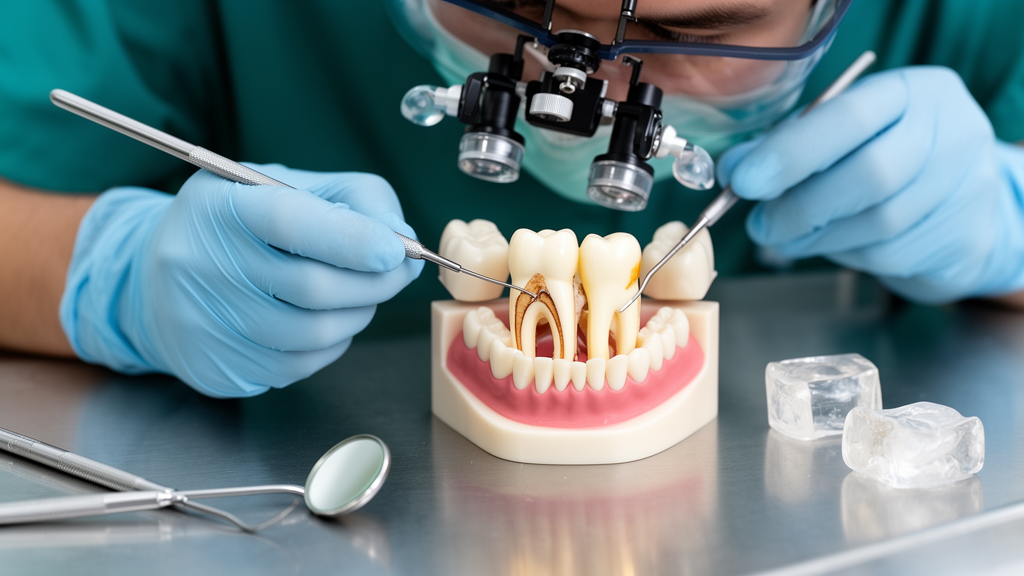
The trial enrolled a cohort of fifty third-year dental students who had successfully completed their theoretical endodontic coursework but had not yet initiated direct clinical patient care. Each student performed access cavity preparation on two distinct specimens: an extracted human maxillary central incisor and a synthetic resin maxillary central incisor. All cavity preparations were executed under standardized preclinical laboratory conditions without the use of optical magnification.
To control for potential order effects during training, the fifty participants were randomly assigned to one of two operational sequences, performing the exercise either on the resin tooth first or on the extracted human tooth first. Trainee performance was objectively measured by two blinded evaluators using a weighted analytical rubric. Additionally, procedural time was systematically recorded for each attempt, and students completed standardized self-assessment forms alongside a Likert-scale questionnaire. Linear mixed-effects models were implemented to analyze the effects of tooth type and presentation sequence.
The objective evaluations demonstrated that access cavity preparations executed on extracted human teeth attained significantly higher scores than those completed on resin teeth, showing a model effect of beta equals 18.80 with a significance level of P less than .001. In contrast, preparations performed on the artificial resin teeth required significantly less procedural time (P = .025). The randomized application sequence did not exert a statistically significant influence on objective performance scores or total procedure time.
Evaluations of student self-assessment revealed weak positive correlations between subjective ratings and objective rubric scores across both experimental conditions. For extracted human teeth, the association showed a Spearman rank correlation coefficient of rho equals 0.20 (P = .168), while resin teeth demonstrated a coefficient of rho equals 0.21 (P = .136), with neither relationship achieving statistical significance. Responses from the Likert-scale questionnaire indicated that students experienced low levels of perceived stress and maintained generally high confidence across both tooth substrates.
Based on these findings, the authors concluded that the specific type of tooth model used during preclinical endodontic access cavity preparation directly affects technical quality and procedural duration. Extracted natural teeth fostered higher technical performance scores, whereas resin teeth facilitated more rapid procedure completion. The researchers emphasized that additional studies remain necessary to establish how diverse simulation materials can be optimally integrated into preclinical dental curricula.
Subject of Research: Preclinical endodontic training materials and access cavity preparation performance
Article Title: Resin versus extracted human teeth in preclinical endodontic training: a randomized crossover study of access cavity preparation performance
Article References: Ozasir, T., Ormeci, B., Ozasir, B., & Gulsahi, K. (2026). Resin versus extracted human teeth in preclinical endodontic training: a randomized crossover study of access cavity preparation performance. BMC Medical Education. https://doi.org/10.1186/s12909-026-10880-w
Image Credits: AI Generated
DOI: 10.1186/s12909-026-10880-w
Keywords: endodontics, preclinical education, dental students, access cavity preparation, extracted human teeth, resin teeth, simulation models, randomized crossover study, analytical rubric, procedure time, self-assessment accuracy, linear mixed-effects models, maxillary central incisor, blinded evaluation, dental simulation, Likert-scale questionnaire
News Source: Courtney Benton. (November 18, 2026). Extracted Human Teeth Yield Higher Scores Than Resin in Endodontic Training. Scienmag.