


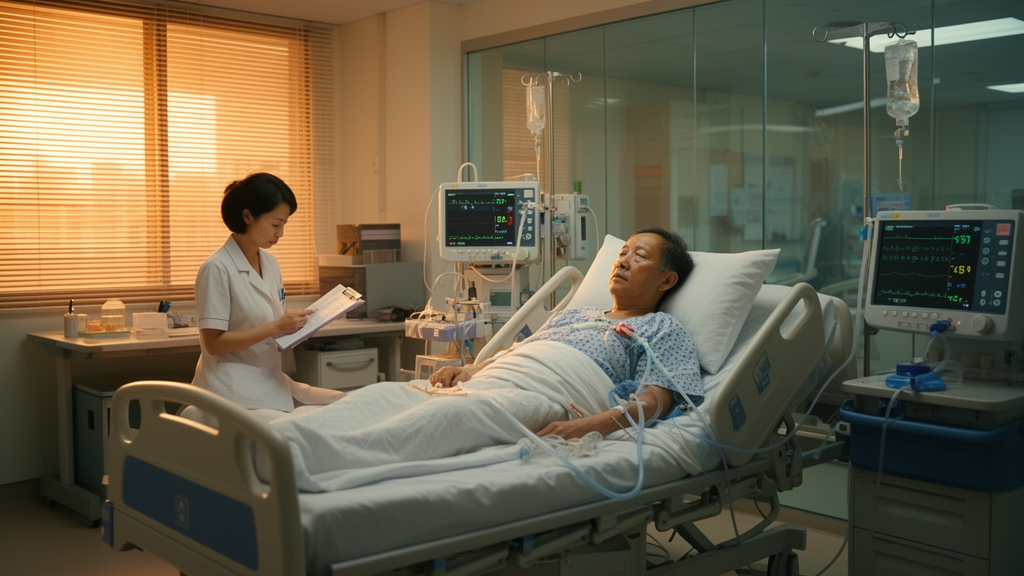
Each additional day that a patient spends in intensive care after pulmonary endarterectomy adds roughly 14,790 yuan, about 2,171 US dollars, to the total hospitalization bill, according to a new cost analysis of Chinese patients with chronic thromboembolic pulmonary hypertension. The same extra intensive care day was associated with an increase of 11,990.85 yuan, or 1,760.26 dollars, in the amount patients paid out of their own pockets, and it prolonged the actual hospital stay by 0.88 days. The finding comes from a study published in the journal Cost Effectiveness and Resource Allocation, which examined the direct economic burden of this demanding operation and the factors that shape it.
Chronic thromboembolic pulmonary hypertension, or CTEPH, is a progressive disease in which obstruction of the pulmonary artery lumen and vascular remodeling lead to right heart failure, with high morbidity and mortality if left untreated. Pulmonary endarterectomy, abbreviated PEA, is the first-line surgical treatment for the condition. It is, however, a high-risk and technically demanding procedure that requires multidisciplinary collaboration and consumes substantial medical resources. The authors note that, before their work, there was a lack of studies on the direct economic burden of PEA in Chinese CTEPH patients and on the factors influencing it, a gap they say hinders rational healthcare resource allocation and cost management.
To address that gap, the research team assembled a cohort of 100 CTEPH patients who underwent pulmonary thromboendarterectomy at a Beijing hospital over the prior seven years. They used descriptive analyses and a generalized linear regression model to explore the patients’ medical costs and the contributing factors behind their medical burden. The study was published as open access research on 24 October 2026, and the version shared online is a peer-reviewed, accepted manuscript that is citable and carries a permanent DOI, subject to further edits before the final Version of Record appears.
The regression results draw a clear line between factors that matter and factors that do not. Gender, age and the duration of the PEA operation itself had no effect on the medical burden borne by patients. The type of medical insurance a patient held made no difference to the total inpatient expense, although it did have an effect on the out-of-pocket expense. What dominated the economic picture was the postoperative course: the duration of postoperative intensive care emerged as the main factor affecting the patients’ medical burden.
That single variable carried substantial weight in the model. Beyond the increases in total and out-of-pocket expense and the nearly one additional day of hospitalization per intensive care day, the result underscores how sensitive the economics of this surgery are to what happens after the operation ends. The authors conclude that the postoperative recovery of patients has a significant impact on both cost and length of hospital stay, and that the structure of hospitalization costs needs further optimization.
The study also highlights problems on the financing side. Patients in the cohort had accumulated too many hospitalizations and carried too high a proportion of self-paid expense, according to the paper’s conclusion. The authors argue that it is necessary to promote centralized purchasing of surgical consumables and to enhance perioperative care in order to reduce the use of therapeutic consumables, as well as to improve the coverage of medical insurance.
For readers weighing the significance of the work, the scope matters. This was a single-center analysis of 100 patients treated at one Beijing hospital over seven years, using descriptive statistics and generalized linear regression rather than a randomized comparison. The reported figures describe associations within this cohort, and the paper does not report clinical outcomes of the surgery itself, only its costs and length of stay. The authors frame their conclusions as guidance for resource allocation and cost management rather than as evidence about surgical efficacy.
Even with those limits, the analysis offers a concrete signal for health systems managing CTEPH. Combined with the proposed centralized purchasing of surgical consumables and broader insurance coverage, the study points to a set of levers that operate after the operating room, where the authors find the greatest economic leverage lies.
For now, the message of this cost study is straightforward: in pulmonary endarterectomy, the recovery period is where the money is, and improving it may be the most direct route to easing the financial burden on patients and the health system alike.
Subject of Research: The costs and contributing factors of pulmonary endarterectomy for chronic thromboembolic pulmonary hypertension in Chinese patients.
Article Title: A study of the cost and its contributing factors in Chinese patients with chronic thromboembolic pulmonary hypertension undergoing pulmonary endarterectomy
Article References: Liu, B., Hu, N., Liu, D., Mu, W., Xu, C., Bi, C., Peng, M., Zhai, Z., & Jia, C. (2026). A study of the cost and its contributing factors in Chinese patients with chronic thromboembolic pulmonary hypertension undergoing pulmonary endarterectomy. Cost Effectiveness and Resource Allocation. https://doi.org/10.1186/s12962-026-00842-w
Image Credits: AI Generated
DOI: 10.1186/s12962-026-00842-w
Keywords: chronic thromboembolic pulmonary hypertension, pulmonary endarterectomy, hospitalization costs, intensive care, out-of-pocket expense, medical insurance, China, health economics, cost analysis, generalized linear regression, perioperative care, resource allocation
News Source: Ophelia Keating. (October 28, 2026). Extra ICU Days Drive Costs of Pulmonary Endarterectomy in Chinese CTEPH Patients. Scienmag.



