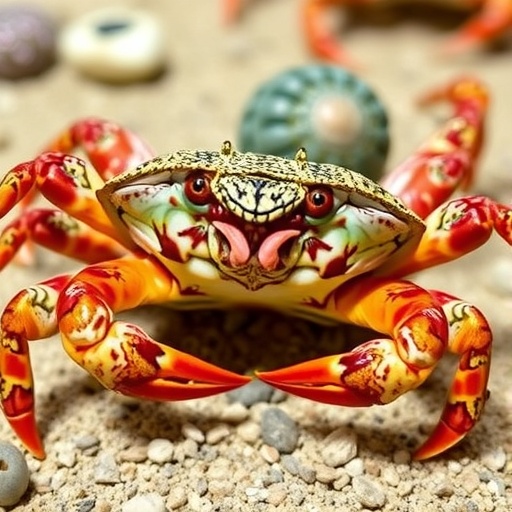
In a groundbreaking study set to be published in 2026, researchers Chen, Xie, and Bao, along with their esteemed colleagues, have made a significant advancement in our understanding of the Sox gene family within brachyuran crabs. This research not only uncovers the genome-wide identification of these genes but also elucidates their evolutionary diversification and developmental expression patterns, unveiling crucial insights into the genetic framework governing crustacean biology.
The Sox gene family has long been recognized for its pivotal role in various biological processes, including development, differentiation, and the maintenance of stem cells. While extensive research has been conducted on the Sox gene family in vertebrates, its exploration within invertebrate groups such as crabs has remained relatively under-explored. This study fills a critical gap in the literature, shedding light on the functional implications of Sox genes in brachyuran crabs, which are among the most diverse and ecologically significant groups within crustaceans.
Through a meticulous genome-wide analysis, the authors identified a comprehensive catalogue of Sox genes in three distinct species of brachyuran crabs. This process involved employing advanced bioinformatics techniques to analyze the genetic sequences, allowing for the precise identification of Sox gene members across these species. The findings revealed significant variations in the number and type of Sox genes present in each crab species, indicating a complex evolutionary history shaped by environmental adaptations and ecological needs.
Moreover, the study delves into the evolutionary diversification of these genes, highlighting how evolutionary pressures have sculpted the Sox gene repertoire in brachyuran crabs over millions of years. This diversification is crucial for understanding how these organisms have adapted to their habitats, showcasing the interplay between genetics and environmental factors. It not only informs us about the evolutionary pathways taken by these crabs but also suggests that the Sox gene family is integral to their survival and reproductive success.
The developmental expression profiles of the Sox genes were meticulously mapped in the three crab species, revealing a dynamic pattern of expression across different life stages. The researchers utilized a range of molecular techniques, including quantitative PCR and in situ hybridization, to assess the spatial and temporal expression of these genes. The results demonstrated distinct expression patterns associated with critical developmental processes such as embryogenesis, larval differentiation, and metamorphosis.
One notable finding was the differential expression of specific Sox genes during key developmental transitions. For instance, certain genes exhibited heightened expression levels during early embryonic stages, while others were more active during the transition from larval to juvenile stages. These observations underscore the importance of the Sox gene’s regulatory functions during crucial life history events, indicating their potential roles as master regulators in developmental timing and morphological changes in brachyuran crabs.
In addition to their developmental roles, the study discusses the potential implications of Sox gene functions in the context of environmental stressors. Brachyuran crabs often inhabit fluctuating environments, and the adaptability of their Sox genes may provide them with a robust means of responding to such changes. This aspect of the research opens up intriguing avenues for exploring how genetic adaptations can mitigate the effects of climate change and habitat degradation on marine crustaceans.
Furthermore, the evolution of the Sox gene family within these crabs poses important questions regarding the conservation of genetic functions across species. The research indicates that despite the divergence of the three crab species, there is a remarkable conservation of certain Sox gene functions, which may point to essential biological roles that are critical for the survival of crustaceans. This conservation hints at a deeply embedded genetic toolkit that has persisted through evolutionary time, highlighting the necessity of these genes in maintaining physiological and developmental integrity.
The implications of these findings extend beyond just academic interest; they could have significant ramifications for the aquaculture industry, biodiversity conservation, and ecosystem management. Understanding the genetic bases of growth, reproduction, and environmental resilience in brachyuran crabs could enhance breeding programs aimed at improving yield and sustainability. Furthermore, as human activities threaten marine ecosystems, insights gained from this study may guide conservation efforts to protect essential habitats and species.
The caliber of the research conducted by Chen et al. is further amplified by its interdisciplinary approach, bridging molecular biology, evolutionary genetics, and environmental sciences. By integrating genomic data with ecological perspectives, the study not only elucidates the nuances of gene function but also situates these findings within the broader context of environmental change and species survival.
As the research is set to reach a wider audience, it holds the potential to inspire further investigations into not only the Sox gene family but also the genetic underpinnings of other crucial biological processes in crustaceans. Such future studies could expand our knowledge of how marine organisms adapt to their environments, providing insights that are increasingly vital as global challenges intensify.
In conclusion, this comprehensive study on the Sox gene family within brachyuran crabs marks a significant milestone in our understanding of crustacean genetics. By uncovering the gene’s identification, evolutionary history, and developmental roles, the authors have laid a foundation for future research while emphasizing the importance of these genes in addressing ecological and evolutionary challenges. As the scientific community awaits the publication of these findings, there is a palpable excitement about the doors this research will open, both in academia and beyond.
This pioneering research invites scholars, conservationists, and industry professionals alike to consider the vital role that genetic diversity plays in the resilience of marine organisms. By sowing the seeds of knowledge regarding the Sox gene family, the authors illuminate the path forward for further exploration into the genetic strategies that underpin life in our oceans and underscore the urgent need to protect the intricate web of life that thrives beneath the waves.
Subject of Research: Genome-wide identification and evolutionary diversification of the Sox gene family in brachyuran crabs.
Article Title: Genome-wide identification, evolutionary diversification and developmental expression of the Sox gene family in three brachyuran crabs.
Article References:
Chen, D., Xie, X., Bao, C. et al. Genome-wide identification, evolutionary diversification and developmental expression of the Sox gene family in three brachyuran crabs.
BMC Genomics (2026). https://doi.org/10.1186/s12864-026-12578-1
Image Credits: AI Generated
DOI:
Keywords: Sox gene family, brachyuran crabs, evolutionary diversification, developmental expression, genome-wide identification.
Tags: advancements in crab genetics researchbioinformatics in genetic analysiscomparative genomics in crustaceansdevelopmental expression patterns in crabsecological significance of brachyuran crabsevolutionary diversification of Sox genesfunctional implications of Sox genesgenetic framework of crustacean biologygenome-wide identification of Sox genesinvertebrate genetics researchSox gene family in brachyuran crabsstem cell maintenance in crabs