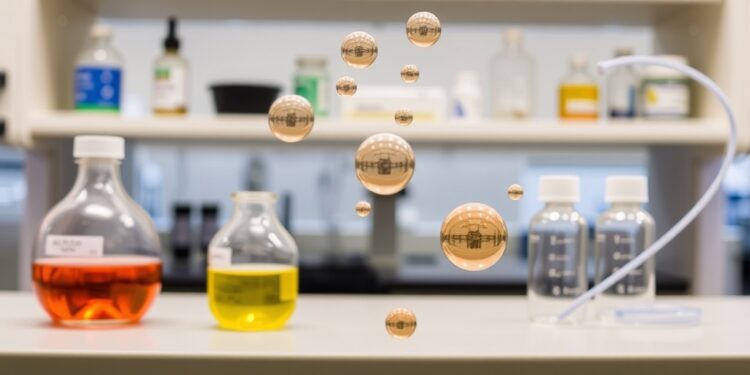

Researchers have made a significant advancement in the field of cellular biology, particularly in how fatty acids (FAs) are prepared for scientific experimentation. FAs are crucial components in cellular processes, influencing membrane structure, energy storage, and various signaling pathways. Traditionally, the preparation of FA solutions has been fraught with challenges due to the inherent amphipathic nature of these molecules, which leads to low solubility in aqueous solutions. This difficulty has often necessitated the use of albumin as a carrier, which can inadvertently introduce variabilities and biases in experimental results.
A novel method proposed by researchers addresses these challenges by utilizing sodium salts of FAs combined with ethanol and ultrasonication techniques. This innovative approach allows for the rapid creation of stable FA micelles, providing a reliable means of delivering FAs in both in vitro and in vivo studies. The authors of this research have conducted extensive validations of their method through standardized techniques such as thin-layer chromatography (TLC) and gas chromatography-mass spectrometry (GC-MS). These analyses confirm that the integrity of the fatty acids remains intact throughout the preparation process, thus ensuring that the experimental outcomes are based on the actual biological effects of the FAs used.
Central to the effectiveness and applicability of this method is the efficiency with which FA solutions can be prepared. The process eliminates the need for heat application or reliance on albumin, rendering it particularly valuable in studies where albumin-induced inflammation could skew results. The authors report that their technique produces stable micelle solutions in just a few minutes. Impressively, these solutions exhibit stability for over six months when stored appropriately—at 4°C and shielded from light—making this method a game-changer for researchers dependent on reliable FA preparations.
In practical applications, the research demonstrates that this method is versatile across a range of fatty acid types, covering saturated, monounsaturated, and polyunsaturated fatty acids. This wide range enables scientists to investigate the differential impacts of various fatty acids on essential biological processes, such as fat metabolism and insulin signaling pathways. By offering a means to prepare these solutions without compromising their fidelity, researchers can trust that their findings will be consistent and reproducible, thereby strengthening the foundation upon which further knowledge can be built.
Another noteworthy aspect of the research is the broad spectrum of applications for the prepared FA solutions. Since their introduction, the technique has been shared with over ten laboratories, reinforcing its reliability within the scientific community. Researchers using this technique have explored various aspects of lipid metabolism, including lipid droplet dynamics and the signaling associated with the delivery of fatty acids. These findings underscore the method’s potential to drive forward the understanding of complex metabolic pathways, ultimately providing insights into obesity, insulin resistance, and other metabolic diseases.
The significance of this research cannot be overstated; as our understanding of lipid biology deepens, so does the need for reliable methodologies to study these molecules. The integrity of fatty acids is paramount to accurately assess their function and interaction in biological systems. The employment of ultrasonication represents a refined approach that presents numerous advantages over conventional methodologies, allowing for quicker preparations while maintaining precision in fatty acid delivery.
Moreover, the attention to preserving the molecular structure of fatty acids elevates the methodological rigor and invites numerous possibilities for future research endeavors. Given the established relationship between fatty acids and critical bodily functions, this technique positions itself to catalyze further discoveries in the fields of nutrition, pharmacology, and cellular biology, making it a vital tool for researchers committed to unraveling the complexities of lipid metabolism.
The advancements outlined in this study contribute to the ongoing evolution of methodologies aimed at understanding lipid interactions and their physiological implications. As the demand for such refined techniques grows, scholars and practitioners alike are compelled to consider how these innovations can be harnessed to better explore the rich tapestry of lipid biology. This research not only fills a crucial gap in the existing literature but also serves as a springboard for future inquiries that may lead to further breakthroughs in health and disease management.
The work conducted by the researchers signifies more than just an improvement in laboratory protocols; it symbolizes a step towards more granular and precise explorations of cellular and metabolic processes. The implications of such a robust technique resonate across various contexts, from fundamental biological research to applied clinical investigations, positioning fatty acids at the forefront of biomedicine. As science continues to strive for greater accuracy and reliability, this innovative method redefines the landscape of fatty acid solutions, revealing the potential for enhanced comprehension of lipid-mediated signaling and metabolism.
The researchers’ publication in the peer-reviewed journal reveals both the credibility of their findings and the increasing recognition of the importance of refined methodologies in biochemical research. As more laboratories adopt their approach, the scientific community may witness an exponential increase in the quality of data pertaining to fatty acids and their roles in health and disease. The future of lipid research appears promising, armed with new tools that empower scientists to make discoveries that could alter our understanding of human biology.
This transformation in the preparation of fatty acids is a testimony to the ingenuity of the scientific process, where challenges in methodology are met with creativity and innovation. By prioritizing the preservation of fatty acid integrity and minimizing extraneous influences, researchers are setting a precedent for future investigations in the realms of lipid biology, metabolism, and cellular signaling.
The publication of this work not only marks a significant contribution to the field but also emphasizes the collaborative nature of scientific inquiry, where the sharing of techniques can enrich multiple research contexts. As this novel method gains traction, its application across diverse laboratories will foster a collaborative spirit essential for addressing the intricate challenges presented by lipid biology.
In summary, the groundbreaking methodology for FA preparation promises to invigorate research focused on lipid dynamics, providing a pathway to deeper understanding of their role in metabolic disease and the quest for therapeutic targets. Through this work, the authors illuminate the path ahead, guiding the next generation of research in lipidology.
Subject of Research: Cells
Article Title: Preparation of fatty acid solutions for investigating lipid signaling, metabolism, and lipid droplets
News Publication Date: 17-Dec-2024
Web References: Protein & Cell
References: DOI: 10.1093/procel/pwae068
Image Credits: Shuyan Zhang, Mengwei Zhang, Shimeng Xu, Xiaochuan Fu, Qiumin Liao, Bin Pan, Liujuan Gu, Pingsheng Liu
Keywords: lipid biology, fatty acids, cellular metabolism, signaling pathways, biochemical methodologies
Tags: amphipathic molecule challengescellular membrane structure researchexperimental bias in fatty acid researchfatty acid signaling pathwaysgas chromatography-mass spectrometry validationin vitro and in vivo fatty acid studiesinnovative methods in lipid metabolismlipid droplet research techniquessodium salts of fatty acidsstable fatty acid micelles preparationthin-layer chromatography in cellular biologyultrasonication in lipid studies