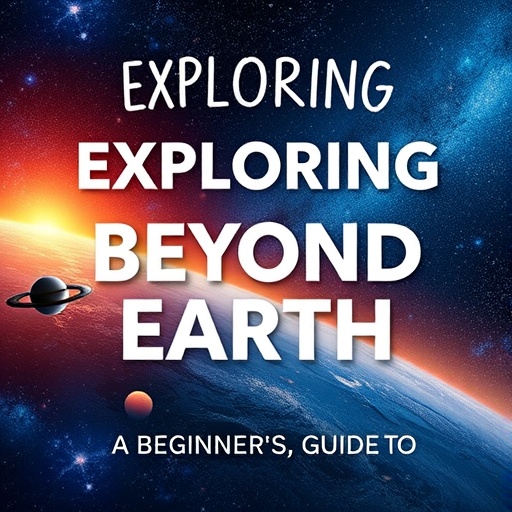
Exploring the intricate nexus between the cosmos and life, the forthcoming book Life in Space: Astrobiology for Nonscientists offers a groundbreaking synthesis of astrophysics and biology. Co-authored by Dr. Amri Wandel, an astrophysicist, and Dr. Joseph Gale, a biologist from the Hebrew University of Jerusalem, this work signifies a pioneering attempt to elucidate the conditions necessary for life, both on Earth and beyond. Published by Springer Nature in 2025, this textbook is designed to be accessible to a broad audience, including undergraduate students, policymakers, and curious general readers, making the sophisticated science of astrobiology comprehensible and compelling.
Astrobiology is an inherently interdisciplinary science, uniting fields as diverse as astronomy, chemistry, physics, biology, and philosophy in its quest to understand life’s cosmic origins. Life in Space bridges these disciplines by tracing the processes that lead from star formation to planetary development, and ultimately, to the emergence and sustenance of biological systems. In doing so, it addresses one of humanity’s most profound questions: How does life emerge, flourish, and potentially exist elsewhere in the universe?
One of the core features of this book is its ability to communicate the scientific methodologies underpinning astrobiology. By drawing on scientific reasoning and the empirical rigor characteristic of the physical and biological sciences, the authors demystify complex concepts such as biosignatures, habitability criteria, and planetary climatology. This approach provides readers with critical tools to evaluate the significance of ongoing and future space missions, such as the James Webb Space Telescope’s search for atmospheric components indictive of life, or Mars rover expeditions seeking microbial traces.
The book delves deeply into the chemical origins of life, examining the molecular precursors and environmental conditions necessary for abiogenesis—the transition from non-living chemistry to living organisms. By addressing prebiotic chemistry in environments ranging from hydrothermal vents on Earth to icy moons like Europa and Enceladus, the authors expand traditional biological perspectives to include planetary science and geochemistry. This comprehensive approach fosters a holistic understanding of life’s beginnings that transcends disciplinary silos.
Crucially, Life in Space offers an up-to-date examination of exoplanetary research, highlighting the discovery of thousands of planets orbiting distant stars and the criteria that define planetary habitability. It scrutinizes the delicate balance of factors such as stellar radiation, planetary atmospheres, magnetic fields, and liquid water presence that render a planet conducive to sustaining life. These insights come hand-in-hand with the latest technological advances in telescopic instrumentation and data analysis, illustrating the dynamic interplay between technological progress and scientific discovery.
Beyond the pursuit of life detection, the book thoughtfully engages readers with the ethical dimensions of astrobiology and space exploration. It prompts reflection on humanity’s responsibilities as cosmic explorers, considering the implications of contaminating or otherwise impacting extraterrestrial ecosystems. This ethical discourse bridges philosophy with science policy, urging readers to contemplate the broader consequences of humanity’s venture into the cosmos.
In educational terms, the textbook is meticulously structured to support undergraduate learning. Each chapter concludes with clear summaries and suggested readings, promoting critical engagement with scientific content and encouraging independent inquiry. The narrative style balances technical rigor with readability, supporting learners of diverse backgrounds and fostering a deeper appreciation for the scientific method in practice.
The authors emphasize the significance of understanding Earth’s evolving climate and environment within the astrobiological framework. By recognizing Earth as both a unique laboratory and a benchmark for identifying extraterrestrial life, readers gain insights into planetary dynamics and the fragility of life-supporting ecosystems. This dual perspective informs the wider search for life elsewhere, underscoring the importance of comprehensive environmental monitoring.
Moreover, through their extensive teaching experience at the Hebrew University of Jerusalem, Drs. Wandel and Gale infuse the book with pedagogical clarity and coherence. They leverage over two decades of classroom expertise to transform the multi-faceted and often fragmented knowledge of astrobiology into a unified narrative. This mentorship by proxy ensures the book’s relevance and accessibility for future scientists and informed citizens alike.
The book also intricately examines the methodologies employed in detecting biosignatures—subtle chemical or physical indicators of life—across various celestial bodies. It explicates techniques such as spectroscopy for atmospheric analysis, isotopic studies, and remote sensing, elucidating how data from advanced instruments inform hypotheses about life’s presence beyond Earth. This technical discourse enhances the reader’s understanding of both the promises and limitations inherent in contemporary astrobiological research.
Significantly, Life in Space does not merely catalog knowledge but also invigorates inquiry into intelligent life and the prospects for communication or contact. By discussing historical and modern searches for extraterrestrial intelligence (SETI), the book explores the scientific protocols and philosophical questions that emerge when contemplating other sentient beings in the universe. This engagement with one of science’s most profound quests enriches the narrative and aligns cosmic exploration with humanity’s self-understanding.
In sum, Life in Space: Astrobiology for Nonscientists offers an unparalleled, collegiate-level voyage through one of today’s most thrilling scientific frontiers. Its integration of astrophysical discoveries, biological principles, and ethical considerations crafts a panoramic understanding of life’s place in the cosmos. As humanity continues to probe the universe’s depths, this book stands as a vital resource for those eager to grasp the scientific truths and mysteries that define our cosmic context.
Subject of Research: Astrobiology, the interdisciplinary study exploring the origins, evolution, distribution, and future of life in the universe.
Article Title: Life in Space: Astrobiology for Nonscientists—Bridging Cosmic and Cellular Understanding
News Publication Date: 2025
Keywords: Astrobiology, Science Education, Textbooks, Academic Publishing, Space Sciences, Astronomy
Tags: Accessible science for general readersAstrobiology for beginnersAstrophysics and biology synthesisBridging astronomy and biologyConditions necessary for life beyond Earthcosmic origins of lifeExploring the universe and lifeInterdisciplinary science of astrobiologyLife in Space textbook overviewPlanetary development and life emergenceScientific methodologies in astrobiologyUnderstanding life in the cosmos