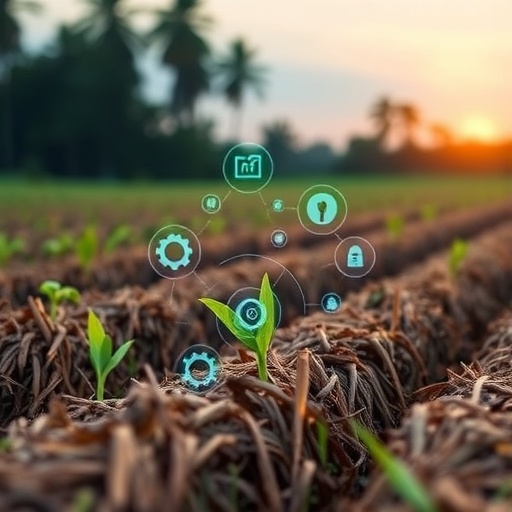
The Internet of Things (IoT) is revolutionizing various sectors worldwide, and agriculture is no exception. Recent studies reveal that the integration of IoT into farming practices ushers in a new era of efficiency, productivity, and sustainability. By harnessing the power of sensors, connectivity, and data analytics, farmers can now monitor crop health, manage resources intelligently, and enhance overall yield like never before. This technological wave is paving the way for a more data-driven approach to agriculture, fundamentally changing how food is produced.
According to a bibliometric analysis authored by Singh, Verma, and Lochab, there has been a notable uptick in research efforts around the application of IoT in agriculture. This study systematically assesses the evolution of scholarly works, revealing significant trends and advancements in the field. The research spans various dimensions including smart irrigation, precision farming, and livestock monitoring, emphasizing the wide-ranging impact IoT holds for the agricultural landscape.
One of the standout aspects of IoT in agriculture is its ability to facilitate real-time monitoring. Farmers are increasingly adopting various sensor technologies that provide up-to-the-minute data on soil moisture, temperature, and crop health. This immediacy allows for quick decision-making, minimizing waste and optimizing resource allocation. As a result, farmers can apply water and fertilizers only where necessary, promoting both environmental sustainability and cost-effectiveness.
Moreover, with the advent of smart irrigation systems, water conservation has become more achievable. IoT-enabled devices can assess the moisture levels in the soil and determine when and how much water is needed. This not only conserves water but also ensures that crops receive optimal hydration, leading to higher quality produce. Increased efficiency translates to better harvesting outcomes, which is vital in the face of global food security challenges.
Another area ripe for IoT applications is precision agriculture. This method integrates various technologies to analyze the plethora of data collected from fields. By employing data analytics, farmers can gain insights into how to optimize planting patterns and crop rotations. Such an approach prioritizes data-driven decisions over traditional methods, allowing for specialized care tailored to specific areas within fields, effectively maximizing yields.
The bibliometric analysis also sheds light on the collaboration between academia and industry in advancing IoT applications. Successful implementation of IoT technologies often relies on partnerships that foster innovation and ensure that research aligns with practical agricultural needs. Such collaborations have sparked numerous pilot projects and case studies that demonstrate the tangible benefits of these technologies on the ground.
Furthermore, the role of education and training cannot be understated. For IoT technologies to be effectively integrated into agricultural practices, farmers must be equipped with the requisite knowledge to leverage these tools. Initiatives aimed at educating agricultural professionals on utilizing IoT have been gaining traction, ensuring a more informed community capable of harnessing these advancements.
In addition to education, challenges remain in the widespread adoption of IoT in agriculture. Issues related to infrastructure, interoperability of devices, and data privacy continue to pose hurdles. Nonetheless, stakeholders are actively working to address these concerns, fostering an environment where the benefits of IoT can be fully realized without compromising data security or system functionality.
Adopting IoT technology also represents an opportunity to promote sustainable farming practices. With advancements in data collection and analysis, it becomes possible to implement smarter agricultural practices that not only boost productivity but also support ecological sustainability. For instance, insights gathered from IoT devices can inform farmers about the optimal timing for pesticide applications, thereby reducing chemical usage and its impact on surrounding ecosystems.
The environmental advantages of IoT applications extend beyond just crop management. Livestock farming too stands to benefit enormously. IoT devices can be utilized for monitoring the health and well-being of animals, ensuring they are well-fed, healthy, and free from disease. This level of monitoring facilitates higher productivity and ethical farming practices, which is becoming increasingly pertinent in today’s conscious consumer market.
As the findings of Singh, Verma, and Lochab suggest, there is an undeniable trajectory toward greater research and investment in the IoT sector within agriculture. This shift is reflective of a broader acknowledgment that modern agriculture must evolve in response to external pressures, including climate change and population growth. The integration of IoT enables a smarter, more responsive agricultural system ready to meet these challenges head-on.
Looking forward, the potential for IoT in agriculture is boundless. Emerging technologies, such as machine learning and artificial intelligence, can be integrated with IoT frameworks to create even more powerful predictive models that help farmers anticipate challenges and optimize their responses. The marriage of big data with IoT will arm farmers with insights that were previously unfathomable, paving the way for a new generation of farming practices that could revolutionize the industry altogether.
In conclusion, the research encapsulated in the bibliometric analysis underscores a crucial point: the intersection of IoT technology and agriculture is not just a passing trend; it is a fundamental shift reshaping the future of food production. The studies reveal that the momentum for adopting IoT solutions is strong and gaining traction at an unprecedented rate. As the agricultural sector continues to innovate, it is clear that embracing IoT will be pivotal for achieving a sustainable and food-secure future.
Subject of Research: Global application of Internet of Things (IoT) in agriculture
Article Title: Examining the global application of internet of things (IoT) in agriculture: a bibliometric analysis of research trends
Article References:
Singh, K.P., Verma, R., Lochab, A. et al. Examining the global application of internet of things (IoT) in agriculture: a bibliometric analysis of research trends. Discov Agric 4, 38 (2026). https://doi.org/10.1007/s44279-026-00500-y
Image Credits: AI Generated
DOI: https://doi.org/10.1007/s44279-026-00500-y
Keywords: Internet of Things, agriculture, precision farming, smart irrigation, sustainability, data analytics, livestock monitoring.
Tags: advancements in livestock monitoringagricultural productivity improvementsbibliometric analysis of agricultural researchdata analytics in farmingimpact of IoT on food productionIoT in agricultureIoT sensor applicationsprecision agriculture practicesreal-time crop monitoringresource management in farmingsmart farming technologiessustainable agriculture solutions