


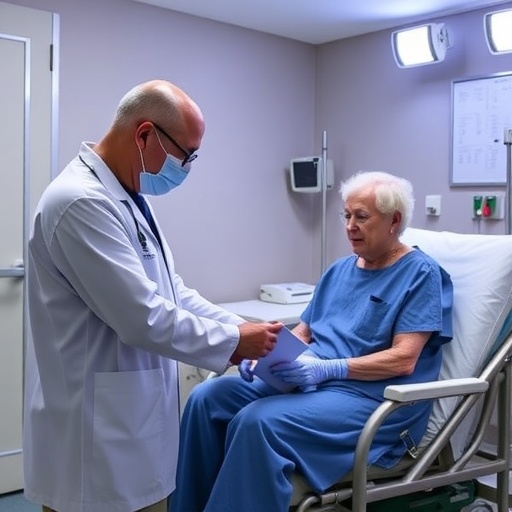
In an era marked by an increasing elderly population, the importance of tailored healthcare delivery systems has never been more critical. Recent research shines a spotlight on a pioneering approach in the realm of emergency medical services: a geriatrician-led model specifically designed to cater to the unique needs of older patients. This innovative framework not only addresses the medical complexities associated with aging but also reflects a growing recognition of the necessity for specialized care in emergency settings. As emergency departments (EDs) continue to grapple with the demands of an aging populace, the implications of this study cannot be understated.
The researchers, led by Yap C.Y.L. and colleagues, embarked on a qualitative exploration of the implementation of a geriatrician-led model in emergency departments. Their study offers profound insights into how this model could potentially transform the landscape of emergency care for elderly individuals. By utilizing the Consolidated Framework for Implementation Research (CFIR), the team systematically identified factors critical to the effective operationalization of this model within existing healthcare structures. The choice of CFIR as a guiding principle demonstrates a commitment to rigorously assessing not just the outcomes of this model, but also the processes underpinning its adoption and sustainability.
One striking aspect of the geriatrician-led model is its emphasis on a holistic approach to patient care. Traditional emergency care often prioritizes rapid assessment and intervention driven by immediate clinical needs. In contrast, this new model integrates comprehensive evaluations that consider the multifaceted health profiles of older adults. It acknowledges that elderly patients frequently present with a combination of chronic conditions, cognitive impairments, and socio-environmental factors that necessitate nuanced management strategies. Therefore, the involvement of geriatric specialists is crucial in steering the course of treatment away from one-size-fits-all solutions.
Moreover, the geriatrician-led model champions the concept of interdisciplinary collaboration. In emergency departments, the interplay between various healthcare professionals is paramount to ensuring comprehensive care. Through this model, geriatricians work closely with nurses, social workers, and allied health professionals to create a synergistic approach to management. This collaboration not only enhances the quality of care but also fosters an environment of shared knowledge and continuous learning, benefiting all practitioners involved.
Key findings from Yap and colleagues’ research highlight several barriers and enablers to effectively implementing the geriatrician-led model of care. One significant barrier identified is the potential resistance from staff accustomed to traditional emergency care protocols. Changes in workflow and hierarchical dynamics can pose challenges, necessitating robust training programs to foster acceptance and adaptability among current ED personnel. Such programs can alleviate concerns by demonstrating the value added by specialists in geriatric care, thereby aligning staff interests with the overarching aim of improving patient outcomes.
On the flip side, the study uncovered crucial enablers that could streamline the integration of this model into emergency departments. One particularly compelling enabler is the growing body of evidence supporting the efficacy of geriatric assessments in improving health outcomes for older adults. This evidence is persuasive not only among healthcare professionals but also among hospital administrators concerned with resource allocation and operational efficiencies. As advocacy for geriatric care strengthens, it cultivates an environment conducive to change that could revolutionize ED care.
Furthermore, the impact of organizational culture cannot be overlooked in the context of implementing this new model. The research illuminated the need for an organizational commitment to geriatric care as a priority, underlined by leadership endorsement and the establishment of dedicated resources. Cultivating a culture that values geriatric expertise enriches the overall ethos of the emergency department, fostering an environment where innovative practices can thrive, ultimately benefiting patient care.
In terms of patient satisfaction, the geriatrician-led model promises a significant enhancement in the experiences of older patients navigating emergency care. By addressing the unique aspects of geriatric care—such as communication barriers, anxiety surrounding medical procedures, and cognitive impairment—the intervention is poised to ameliorate patient experiences. Improved satisfaction is not merely a bonus; it contributes significantly to adherence to treatment regimens, further improving health outcomes.
The implications of the geriatrician-led model extend beyond direct patient care; they reach into the realm of health policy and future research agendas as well. Policymakers must consider the findings of such studies when structuring health systems to accommodate the needs of an aging society. By prioritizing geriatric care within emergency services, there is an opportunity to mitigate the challenges posed by demographic changes, ensuring that healthcare systems remain responsive and effective.
In conclusion, the findings from Yap and colleagues’ qualitative study illuminate the potential of a geriatrician-led emergency department model as a transformative approach to elder care. This innovative model holds the promise of not only improving health outcomes for older adults but also enriching the healthcare experience for both patients and providers. As research continues to unfold in this vital area, the commitment to implementing and refining geriatric care frameworks will undoubtedly play a crucial role in shaping the future of emergency medicine.
As emergency departments evolve, the integration of specialized care for older adults stands as a testament to the healthcare community’s responsiveness to the complexities of aging. With the geriatrician-lead model paving the way, the emotional, medical, and social needs of elderly patients are set to take center stage, ensuring that healthcare navigates towards becoming not just efficient but also compassionate.
Ultimately, the smoking gun of healthcare transformation may very well lie in the embrace of innovation, collaboration, and a steadfast focus on population health, wherein the geriatrician-led model serves as a hallmark of progress in emergency medicine.
Subject of Research: Geriatrician-led emergency department model of care
Article Title: Evaluating implementation of a geriatrician-led emergency department model of care: a qualitative study using the consolidated framework for implementation research.
Article References: Yap, C.Y.L., Haywood, C.J., Amadoru, S. et al. Evaluating implementation of a geriatrician-led emergency department model of care: a qualitative study using the consolidated framework for implementation research. Eur Geriatr Med (2025). https://doi.org/10.1007/s41999-025-01394-7
Image Credits: AI Generated
DOI: 10.1007/s41999-025-01394-7
Keywords: Geriatric Medicine, Emergency Care, Health Services Research, Implementation Science, Interdisciplinary Collaboration
Tags: challenges in emergency departments for aging populationConsolidated Framework for Implementation Researchemergency medical services for seniorsgeriatrician-led care in emergency departmentshealthcare delivery systems for elderly patientsimplementation of geriatric care modelsimproving healthcare outcomes for elderly patientsoperationalizing geriatrician-led modelsqualitative research in healthcarespecialized emergency care for older adultstailored healthcare for aging populationtransforming emergency care for elderly



