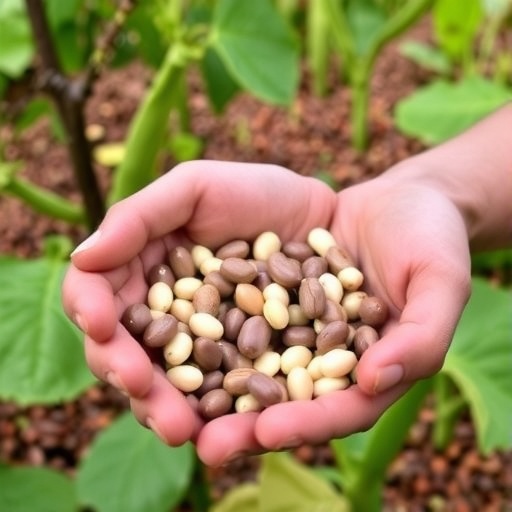
In Central Ethiopia, a region characterized by its diverse agricultural practices and unique climatic conditions, advancements in agricultural technology are creating significant opportunities for farmers. One recent study, conducted by researchers T. Fikre and D. Hailu, delves into the preferences of farmers regarding specific traits in common bean varieties and how these preferences influence productivity. The findings from this study reveal critical insights that could reshape the agricultural landscape in Ethiopia, an area where beans serve as a staple food and a vital source of income for many households.
Common beans (Phaseolus vulgaris) are a key crop in Ethiopia, offering nutritional benefits as well as economic viability. The researchers emphasized the importance of understanding farmers’ preferences not just for the bean itself but for various traits such as yield potential, disease resistance, drought tolerance, and cooking quality. By aligning breeding programs with these preferences, researchers and agronomists can facilitate the development of crop varieties that meet the specific needs and desires of farmers.
Utilizing technology demonstrations, the study aimed to illustrate the impacts of different common bean varieties among local farmers. These demonstrations served not only as a platform for showcasing new breeds but also as a means of engaging farmers in the evaluation process. By allowing farmers to interact with various bean traits first-hand, the researchers gathered valuable feedback that provided insights on which traits were most desirable. The participatory approach encouraged discussions among farmers, fostering a community-driven effort towards improving agricultural practices.
One of the aspects that emerged from the study was the acknowledgment of local knowledge. Farmers brought years of experience and understanding of environmental conditions into the demonstrations. Their input was vital for assessing which traits would be most advantageous. For example, those in regions affected by drought expressed a strong preference for varieties that exhibited greater drought resistance. This speaks volumes about the importance of localized agricultural research, which recognizes the significance of environmental challenges faced by the farmers.
Another significant finding was the role of market access in shaping farmers’ preferences. Farmers are not only concerned with their immediate needs—such as family nutrition or resilience to climate impact—but also with the commercial market. Many farmers expressed a desire for bean varieties that could fetch higher prices or meet market demands, indicating that economic pressures significantly influence trait preferences. This adds another layer of complexity to agricultural development, suggesting that for any new variety to succeed, it must align with both social and economic contexts.
The involvement of male and female farmers also highlighted important gender dynamics within agricultural practices. The research indicated differing preferences between genders; for instance, women often prioritize attributes related to cooking and nutrition, while men might focus on yield and resilience. This distinction underscores the necessity for inclusive research that captures the diverse needs and opinions of the entire farming community.
Data collected during the technology demonstrations revealed that the top-ranked traits among farmers included high yield potential, disease resistance, and improved taste. These rankings provide a clear pathway for breeders to focus their efforts on developing varieties that are not only sustainable but also culturally and economically relevant to the farmers they aim to serve. By optimizing these essential traits, breeders can create new opportunities for agricultural productivity and food sovereignty in the region.
As climate change continues to pose threats to agricultural systems around the globe, the demand for resilient crop varieties is on the rise. The study importantly notes that common bean varieties need to be adaptable to varying environmental conditions. Breeders are encouraged to focus on establishing a genetic pool that diversifies the common bean’s adaptive traits. In doing so, it becomes possible to provide farmers with options that can withstand the uncertainties of changing climates, thereby ensuring more stable production and income.
Additionally, the importance of proper education and training for farmers cannot be understated. As new varieties are introduced, accompanying training on best practices for cultivation, pest management, and post-harvest handling become essential. The study advocates for a multifaceted extension service that incorporates the feedback from demo plots, thus fostering an environment where farmers are educated about the potential benefits and proper management of new technologies.
As researchers move forward, the potential for collaboration between public and private sectors becomes increasingly evident. Partnerships can amplify the impact of the findings by leading to increased access to resources, technology, and funding. Leveraging both public interest in food security and private sector innovation can generate sustainable pathways towards improving agricultural productivity.
Furthermore, the implications of this research extend beyond the immediate context of Ethiopia. As global food production faces immense pressures from population growth and climate challenges, lessons learned from farmers’ preferences in Ethiopia may serve as a model for other regions. By implementing farmer-focused research and development, the agricultural community worldwide can enhance resilience and adaptability in food systems globally.
In conclusion, the study by Fikre and Hailu emphasizes the significance of understanding farmers’ preferences when developing agricultural technologies. By recognizing their needs and challenges, the agricultural sector can innovate more effectively, leading to increased productivity, sustainability, and food security in Ethiopia and beyond. The collaborative efforts observed in this research highlight an emerging paradigm in agricultural development: one that respects and integrates farmer perspectives to drive impactful change.
Subject of Research: Farmers’ trait preferences in common bean technology demonstrations.
Article Title: Farmers’ trait preferences and productivity in common bean technology demonstrations in Central Ethiopia.
Article References:
Fikre, T., Hailu, D. Farmers’ trait preferences and productivity in common bean technology demonstrations in Central Ethiopia. Discov Agric 4, 12 (2026). https://doi.org/10.1007/s44279-026-00479-6
Image Credits: AI Generated
DOI: https://doi.org/10.1007/s44279-026-00479-6
Keywords: Common Beans, Ethiopia, Agricultural Technology, Farmer Preferences, Climate Resilience, Crop Breeding, Food Security.
Tags: agricultural development and technologyagricultural innovations in Ethiopiaaligning breeding programs with farmer needscommon bean varieties traitsdisease resistance in cropsdrought tolerance in beanseconomic impact of bean farmingenhancing productivity in agriculturefarmers’ preferences in common beansnutritional benefits of common beansstaple food crops in Ethiopiatechnology demonstrations in agriculture