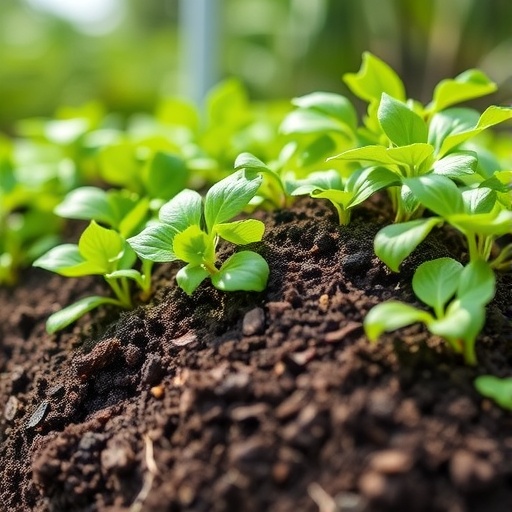
In a world increasingly facing the dual challenges of food security and environmental sustainability, innovative agricultural practices have emerged as critical components in addressing these issues. One such innovation is the application of bio-compost, a product derived from organic waste that can significantly enhance soil health and agricultural productivity. Recent research conducted by Tanwar, Sharma, and Sharma breaks new ground in this field by exploring the microstructural characteristics of bio-compost and its potential applications in sustainable agriculture. This study provides crucial insights into how bio-compost can be leveraged to improve agricultural outcomes while promoting environmental sustainability.
Bio-compost is a form of organic fertilizer created through the decomposition of agricultural residues, kitchen scraps, and other organic materials. The process not only recycles waste but also enriches the soil, enhancing its fertility and structure. Traditional farming techniques often rely heavily on chemical fertilizers, which can lead to soil degradation and environmental pollution. By contrast, bio-compost offers a natural alternative that not only replenishes soil nutrients but also improves soil microbiology, fostering a more resilient agricultural ecosystem.
The research by Tanwar et al. highlights the importance of microstructural characterization in understanding the unique benefits of bio-compost. By examining the microscopic properties of bio-compost, researchers can gain insights into its composition, nutrient availability, and overall effectiveness as a soil amendment. This detailed analysis also allows for a better understanding of how bio-compost interacts with soil microorganisms, promoting enhanced microbial activity that is vital for nutrient cycling and soil health.
One of the key findings of the study is that the microstructural properties of bio-compost can vary significantly depending on the raw materials used in its production. For instance, bio-compost derived from kitchen waste may exhibit different microstructural characteristics compared to that made from agricultural residues. These variations can influence the effectiveness of the compost in improving soil health and fertility, necessitating a tailored approach to compost production that considers the specific requirements of the intended application.
In addition to improving soil health, bio-compost also plays a significant role in enhancing crop yield. The nutrients present in bio-compost, including essential minerals and organic matter, provide plants with the necessary resources to grow and thrive. The slow-release nature of these nutrients ensures that crops receive a steady supply over time, reducing the risk of nutrient leaching and promoting sustainable farming practices. As a result, farmers utilizing bio-compost can achieve higher crop yields with less reliance on synthetic fertilizers, contributing to both economic and environmental benefits.
The implications of this research extend beyond individual farms. The widespread adoption of bio-compost in agricultural practices could lead to significant improvements in overall soil health and ecosystem functioning on a global scale. Healthy soils are fundamental to sustainable agriculture, as they support plant growth, sequester carbon, and protect against erosion. The transition to bio-compost utilization aligns with global efforts to promote sustainable farming practices that mitigate climate change and protect natural resources.
Furthermore, the use of bio-compost could help address the issue of organic waste management, a growing concern in urban and rural areas alike. By converting organic waste into a valuable resource, communities can not only reduce landfill burdens but also create a circular economy that emphasizes sustainability and resource efficiency. This approach not only minimizes waste but also promotes environmental stewardship among local farmers and residents.
The research also suggests that bio-compost can contribute to enhancing the resilience of agricultural systems against climate-related challenges. As weather patterns become increasingly unpredictable due to climate change, the ability to improve soil structure and water retention through bio-compost becomes a crucial strategy for safeguarding food production. Farmers employing bio-compost may find their crops more resilient to droughts, floods, and other extreme weather events, ultimately ensuring a more stable food supply.
Despite the numerous advantages of bio-compost, it is essential for agricultural stakeholders to be educated about its production, application, and potential benefits. As this study demonstrates, not all bio-compost is created equal, and an understanding of its microstructural composition can aid in maximizing its effectiveness. Local agricultural extension services, universities, and research institutions play a pivotal role in facilitating knowledge transfer regarding bio-compost practices, contributing to the sustainable growth of agriculture.
Moreover, policy frameworks must be developed to encourage the production and application of bio-compost within agricultural systems. Governments and agricultural organizations should provide incentives for farmers to adopt bio-compost practices, including grants for compost production facilities and training programs on organic waste management. By fostering a supportive policy environment, stakeholders can help accelerate the transition to a more sustainable agricultural future.
The unveiling of the potential of bio-compost through microstructural characterization represents a significant advancement in our understanding of sustainable agriculture practices. By harnessing the power of organic waste and improving soil microbiology, bio-compost stands as a beacon of hope for farmers and communities seeking sustainable solutions to food production challenges. As this research indicates, the future of agriculture lies not in chemical dependency but in the adoption of regenerative practices that honor nature and work in harmony with ecological systems.
In summary, bio-compost emerges not only as a viable alternative to chemical fertilizers but also as a catalyst for transforming agricultural practices for a more sustainable future. Through continued research, education, and policy support, the agricultural sector can capitalize on the potential of bio-compost, ensuring both food security and environmental protection for generations to come.
Subject of Research: The potential of bio-compost via microstructural characterization for sustainable agriculture.
Article Title: Unveiling the potential of bio-compost via microstructural characterization for sustainable agriculture.
Article References:
Tanwar, D., Sharma, N. & Sharma, P. Unveiling the potential of bio-compost via microstructural characterization for sustainable agriculture.
Discov Agric 4, 11 (2026). https://doi.org/10.1007/s44279-026-00492-9
Image Credits: AI Generated
DOI: https://doi.org/10.1007/s44279-026-00492-9
Keywords: Bio-compost, sustainable agriculture, soil health, organic waste, crop yield, microstructural characterization.
Tags: agricultural productivity enhancementbio-compost benefits for agricultureenhancing soil microbiologyenvironmental sustainability in agricultureinnovative agricultural solutionsmicrostructural analysis of bio-compostnatural fertilizers for crop productivityorganic waste recyclingreducing chemical fertilizers in farmingresilient agricultural ecosystemssoil health improvementsustainable farming practices