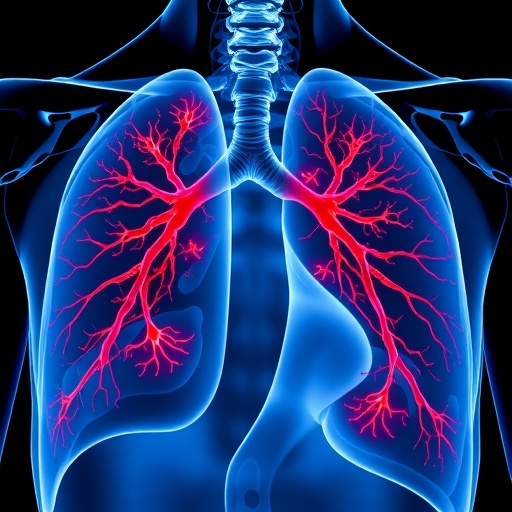
In a groundbreaking study unveiled at the 2026 Society of Thoracic Surgeons Annual Meeting in New Orleans, researchers have identified a critical gap in the current surgical protocols for non-small cell lung cancer (NSCLC). The findings suggest that the existing standards for lymph node examination during surgery may be insufficient, potentially overlooking the true extent of cancer spread in many patients. This revelation is set to prompt significant changes in how surgeons approach lymph node dissection in lung cancer treatment, with profound implications for patient outcomes and survival rates.
Non-small cell lung cancer, known for its varied histological subtypes and complex progression patterns, often necessitates meticulous surgical evaluation to determine the precise stage of disease. Surgical lymph node assessment traditionally focuses on sampling a defined set of nodes based on established guidelines. In North America, these protocols stipulate evaluation of three N2 mediastinal lymph nodes and a single N1 lymph node located at the lung root. However, this new research challenges the adequacy of such a limited assessment, advocating for a more expansive approach targeting multiple N1 nodes, particularly those adjacent to the bronchi.
The investigative team, led by Dr. Christopher Seder of Rush University Medical Center, mined data from the Society of Thoracic Surgeons General Thoracic Surgery Database (GTSD)—an extensive repository with nearly 800,000 surgical records contributed by over 900 surgeons. Analyzing nearly 49,000 patients with clinically node-negative NSCLC, their analysis revealed that cancer was more commonly detected in multiple N1 lymph nodes than in the traditionally emphasized N2 nodes. This contradicts assumptions held in surgical practice where the mediastinal nodes have historically been the primary focus for staging.
Clinically node-negative patients are those whose imaging studies, including PET-CT scans, show no evidence of metastatic spread to lymph nodes. Despite this, the study found that over 11% of these patients were upstaged postoperatively, a dramatic indicator that cancer had spread beyond initial imaging detection. This upstaging is clinically significant, as it influences subsequent treatment strategies, including the introduction of systemic therapies aimed at eradicating micrometastatic disease and improving overall survival.
Surgical interventions in the study cohort ranged across wedge resections, segmentectomies, and lobectomies, performed between mid-2021 and 2024 at 279 U.S. and Canadian centers. The exclusion of patients who had received neoadjuvant therapy or preoperative mediastinoscopy ensured the analysis focused on cases with minimal prior intervention, allowing for a clearer assessment of the lymph node dissection’s role in accurate staging.
Dr. Seder emphasized that the operative technique for lymphadenectomy must evolve beyond current recommendations. More comprehensive sampling of N1 nodes—particularly those anatomically situated near bronchial structures—could dramatically improve detection of nodal metastases that often go unnoticed with limited dissection. The implications of these findings advocate for recalibrating surgical standards to encompass a wider nodal evaluation, thereby refining staging accuracy.
Furthermore, the responsibility extends beyond the operating room. Pathologists must engage in more thorough examination of the entire lung resection specimen, diligently searching for occult lymph nodes harboring microscopic disease. This dual approach—detailed surgical retrieval coupled with rigorous pathological analysis—will close the gap in cancer detection, providing a clearer picture of disease burden.
The study deftly illustrates the intricate balance surgeons must strike during lymph node dissection. Removing too few nodes risks understaging, whereas overly aggressive dissection may introduce unnecessary morbidity. Yet by leveraging large-scale, real-world data, this research provides compelling evidence that the current nodal assessment may be too conservative, potentially denying some patients the benefits of adjuvant therapies informed by more accurate staging.
These findings not only bear on immediate surgical practice but also have the potential to influence national and international guidelines, which have historically varied widely in their recommendations about lymph node removal extent. The near 11% rate of upstaging observed underscores a substantive clinical impact that could reshape lung cancer treatment algorithms and improve survival.
The utilization of the GTSD database proved instrumental—its nationwide scope and comprehensive clinical details offer an unparalleled platform for evaluating outcomes and informing evidence-based practice. This massive dataset allowed for nuanced analyses that transcend single-center observations, generating findings that could be widely generalizable and transformative for thoracic oncology.
As lung cancer remains the leading cause of cancer mortality worldwide, innovations that refine staging accuracy and subsequent therapeutic decision-making are paramount. This study signals a pivotal shift towards more aggressive and systematic lymph node evaluations, potentially altering the clinical landscape and paving the way for improved patient prognoses.
The Society of Thoracic Surgeons, which represents thousands of surgeons and allied health professionals globally, continues to foster cutting-edge research and quality improvement. This latest investigation exemplifies their commitment to elevating standards of care in cardiothoracic surgery, leveraging data-driven insights to enhance cancer management.
In summation, this landmark study calls for expanded lymph node dissection protocols during NSCLC surgery to better identify cancer spread. By challenging existing norms and embracing a more detailed operative and pathological approach, the surgical community may improve accurate staging, personalize adjuvant therapy, and ultimately enhance survival outcomes for lung cancer patients worldwide.
Subject of Research: Expanded lymph node dissection to improve staging accuracy in non-small cell lung cancer surgery.
Article Title: Lymph Node Examination Expansion Enhances Cancer Spread Detection in Lung Cancer Surgery
News Publication Date: January 31, 2026
Web References: Data sourced from the Society of Thoracic Surgeons General Thoracic Surgery Database (GTSD); presentation at the 2026 Society of Thoracic Surgeons Annual Meeting.
Keywords: Health and medicine, Cancer, Lung cancer, Small cell lung cancer
Tags: cancer spread evaluationcomprehensive lymph node assessment in NSCLCexpanded lymph node examinationhistological subtypes of lung cancerimplications for lung cancer survival rateslung cancer treatment protocolsN1 and N2 lymph node analysisnon-small cell lung cancer assessmentpatient outcomes in lung cancerSociety of Thoracic Surgeons Annual Meeting 2026surgical lymph node dissectionthoracic surgery advancements