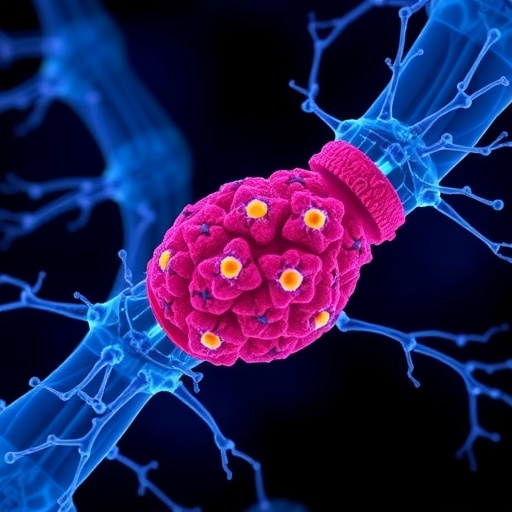
In an extraordinary breakthrough poised to reshape our understanding of prostate cancer metastasis, a recent study has unraveled the intricate molecular mechanisms through which exosome-transmitted long noncoding RNA (lncRNA) SNHG1 propagates bone metastasis in prostate cancer. This seminal research, published in the journal Cell Death Discovery, elucidates how the SNHG1 lncRNA orchestrates metastatic progression by interacting with the YBX1/MMP16 signaling axis, revealing promising new horizons for targeted therapeutic strategies in advanced prostate cancer.
Prostate cancer remains a formidable adversary in oncology, ranking as one of the leading causes of cancer-related mortality among men worldwide. The dissemination of cancer cells to bone tissue, a frequent and devastating consequence of prostate malignancies, not only signifies advanced disease stages but also introduces severe clinical complications such as pathological fractures, bone pain, and hypercalcemia. Elucidating the molecular underpinnings of this metastatic cascade is thus paramount to devising effective interventions to thwart disease progression and improve patient prognosis.
This pioneering research focuses on lncRNAs, a subclass of RNA molecules that, despite lacking protein-coding potential, exert profound regulatory influences on gene expression and cellular behavior. Among these, SNHG1 has recently attracted intense scientific scrutiny for its putative oncogenic roles in various cancers. The investigators embarked on a thorough exploration of SNHG1’s function in prostate cancer, particularly its role in mediating communication between tumor cells and the bone microenvironment through extracellular vesicles known as exosomes.
Exosomes, nanoscale vesicles secreted by cells, have emerged as pivotal conveyors of intercellular signals. By ferrying nucleic acids, proteins, and lipids, exosomes facilitate the remodeling of distant tissue niches to favor metastatic colonization. In this context, the study’s discovery that prostate cancer-derived exosomes are enriched with SNHG1 lncRNA unveils a critical vector for metastasis-promoting signals. Detailed molecular analyses confirmed that upon release, these exosomes traverse the circulatory system to infiltrate bone tissue, where SNHG1 modulates the local microenvironment to encourage metastatic growth.
Central to the mechanism uncovered by the research team is the interaction between SNHG1 and the Y-box binding protein 1 (YBX1), a transcriptional regulator known for its multifaceted roles in cancer biology. SNHG1 physically associates with YBX1, enhancing its stability and nuclear localization within recipient bone cells. This interaction precipitates a transcriptional upregulation of matrix metalloproteinase 16 (MMP16), an enzyme implicated in extracellular matrix degradation, angiogenesis, and tumor invasion. This newly identified SNHG1-YBX1-MMP16 axis orchestrates a pro-metastatic landscape within bone tissue, facilitating cancer cell adhesion, migration, and colonization.
The ramifications of this signaling cascade extend beyond cellular biomechanics; they fundamentally alter the tumor-bone microenvironment equilibrium. By promoting MMP16 expression, SNHG1-expressing exosomes accelerate the breakdown of the bone matrix, thereby releasing growth factors stored within the mineralized matrix. This release fosters a fertile niche that supports tumor growth and disrupts normal bone remodeling dynamics. The study’s findings underscore the dualistic nature of SNHG1’s influence, simultaneously enhancing cancer aggressiveness and undermining bone integrity.
Methodologically, the investigators employed a suite of cutting-edge techniques, including RNA sequencing, co-immunoprecipitation assays, and in vivo metastasis models, to authenticate their claims. Using humanized mouse models grafted with prostate cancer cells, the team demonstrated that genetic ablation or pharmacological inhibition of SNHG1 markedly attenuated bone metastatic burden. Conversely, enforced overexpression of SNHG1 amplified metastatic lesions, further consolidating its role as a potent metastasis facilitator.
Beyond mechanistic insights, the study pioneers therapeutic vistas by identifying SNHG1 as a viable molecular target. Given the challenges associated with directly targeting lncRNAs, the research points towards intercepting the exosomal pathway or disrupting the SNHG1-YBX1 interaction as plausible strategies. These interventions may restrain the metastatic cascade at multiple junctures, offering patients a lifeline against the inexorable progression of advanced prostate cancer. Moreover, exosomal SNHG1 levels in patient plasma present a promising biomarker for early detection of metastatic propensity, potentially transforming clinical monitoring paradigms.
The implications of this research ripple through the broader field of cancer biology, shedding light on the pervasive influence of noncoding RNAs mediated through extracellular vesicles. SNHG1’s role as a molecular architect of the metastatic niche exemplifies the nuanced complexity of tumor-host interactions. This knowledge not only enriches the fundamental understanding of metastasis but also establishes a framework for exploring analogous mechanisms in other malignancies characterized by bone involvement, such as breast and lung cancers.
While this study marks a watershed moment, it also raises pivotal questions warranting further investigation. The precise molecular determinants governing SNHG1’s selective packaging into exosomes, the temporal dynamics of SNHG1 expression during metastatic progression, and the interplay with immune components within the bone marrow microenvironment remain fertile grounds for future research. Unraveling these dimensions could enhance the specificity and efficacy of therapeutic interventions aimed at this newly unveiled axis.
Furthermore, probing the translational potential of these findings involves addressing challenges in clinical application. The development of delivery systems capable of selectively targeting SNHG1 lncRNA or its effector pathways within bone tissue is a formidable but surmountable obstacle. Advances in nanotechnology and RNA therapeutics, coupled with insights from this study, bolster the optimism for realizing targeted anti-metastatic treatments that could significantly improve patient quality of life and survival outcomes.
The discovery of the SNHG1/YBX1/MMP16 axis thus represents a paradigm shift in understanding prostate cancer metastasis. By elucidating the molecular dialogues mediated by exosome-transmitted lncRNAs, this research redefines the metastatic landscape and offers a beacon of hope in the crusade against one of the deadliest manifestations of prostate cancer. The road ahead is illuminated with possibilities, promising to translate molecular insights into tangible clinical triumphs.
In summary, the publication by Yang et al. crystallizes the critical role of exosomal SNHG1 in driving bone metastasis through the stabilization and activation of YBX1, culminating in the upregulation of MMP16. This triad fosters an environment conducive to metastatic colonization and progression, providing new molecular targets to combat the lethal spread of prostate cancer. As the field advances, such integrative approaches linking lncRNA biology, exosome science, and metastasis will undoubtedly inform next-generation cancer therapies.
With prostate cancer metastasis posing a significant clinical challenge, the identification of exosome-mediated lncRNA signaling mechanisms stands as a clarion call for incorporating molecular diagnostics and precision therapies into routine oncological care. This groundbreaking work not only charts a new course for research but also kindles hope for patients burdened by the specter of metastatic prostate cancer.
Subject of Research: Prostate cancer bone metastasis and the role of exosome-transmitted long noncoding RNA SNHG1.
Article Title: Exosome-transmitted long noncoding RNA SNHG1 promotes prostate cancer bone metastasis via YBX1/MMP16 axis.
Article References:
Yang, T., Luo, J., Long, Z. et al. Exosome-transmitted long noncoding RNA SNHG1 promotes prostate cancer bone metastasis via YBX1/MMP16 axis. Cell Death Discov. 12, 7 (2026). https://doi.org/10.1038/s41420-025-02855-5
Image Credits: AI Generated
DOI: 08 January 2026
Tags: advancements in cancer treatmentbone metastasis mechanismsclinical complications of bone metastasisexosome-transmitted long noncoding RNAlncRNA roles in cancermetastatic progression in prostate cancermolecular mechanisms of cancer metastasisprostate cancer mortality ratesprostate cancer research breakthroughsSNHG1 prostate cancer researchtargeted therapeutic strategies prostate cancerYBX1/MMP16 signaling axis