BATON ROUGE, Louisiana – While no medically recognized treatment exists for Long COVID, exercise may break the vicious cycle of inflammation that can lead to developing diabetes and depression months after a person recovers from the virus.
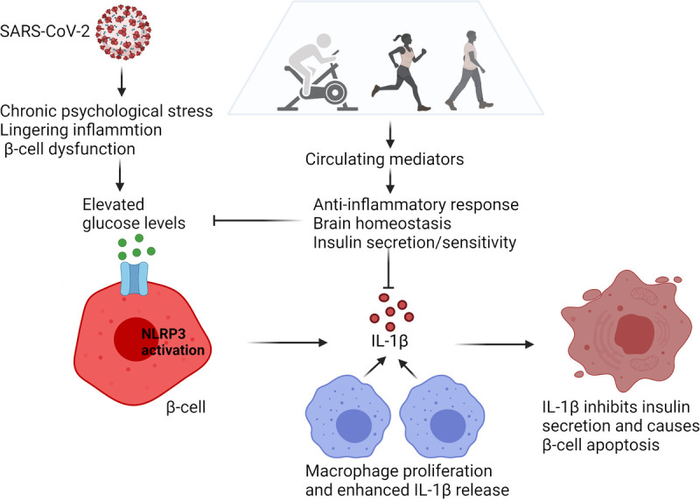
Credit: Dr. Candida Rebello
BATON ROUGE, Louisiana – While no medically recognized treatment exists for Long COVID, exercise may break the vicious cycle of inflammation that can lead to developing diabetes and depression months after a person recovers from the virus.
“We know that Long COVID causes depression, and we know that it can increase blood glucose levels to the point where people develop diabetic ketoacidosis, a potentially life-threatening condition common among people with type 1 diabetes,” said Candida Rebello, Ph.D., a research scientist at Pennington Biomedical Research Center. “Exercise can help. Exercise takes care of the inflammation that leads to elevated blood glucose and the development and progression of diabetes and clinical depression.”
It’s unclear how many people suffer from Long COVID. But estimates range from 15 percent to 80 percent of the people infected. Based on those figures, it’s possible that as many as 1 million of Louisiana’s residents suffer from Long COVID.
Long COVID causes what the Centers for Disease Control describes as “a constellation of other debilitating symptoms” including brain fog, muscle pain, and fatigue that can last for months after a person recovers from the initial infection.
“For example, a person may not get very sick from COVID-19, but six months later, long after the cough or fever is gone, they develop diabetes,’ Dr. Rebello said.
One solution is exercise. Dr. Rebello and her co-authors describe their hypothesis in “Exercise as a Moderator of Persistent Neuroendocrine Symptoms of COVID-19,” published in the journal Exercise and Sport Sciences Reviews.
“You don’t have to run a mile or even walk a mile at a brisk pace,” Dr. Rebello said. “Walking slowly is also exercising. Ideally, you would do a 30-minute session of exercise. But if you can only do 15 minutes at a time, try to do two 15-minute sessions. If you can only walk 15 minutes once a day, do that. The important thing is to try. It doesn’t matter where you begin. You can gradually build up to the recommended level of exercise.”
“We know that physical activity is a key component to a healthy life. This research shows that exercise can be used to break the chain reaction of inflammation that leads to high blood sugar levels, and then to the development or progression of type 2 diabetes,” said Pennington Biomedical Executive Director John Kirwan, Ph.D., who is also a co-author of the paper.
This work was supported in part by award number 1K99AG065419-02 from the National Institute on Aging of the National Institutes of Health and from the National Institute of General Medical Sciences of the National Institutes of Health, which funds the Louisiana Clinical and Translational Science Center through award number U54 GM104940. The content is solely the responsibility of the authors and does not necessarily represent the official views of the sponsors or the National Institutes of Health.
###
About the Pennington Biomedical Research Center
The Pennington Biomedical Research Center is at the forefront of medical discovery as it relates to understanding the triggers of obesity, diabetes, cardiovascular disease, cancer and dementia. The Center architected the “Obecity, USA” awareness and advocacy campaign to help solve the obesity epidemic by 2040. The Center conducts basic, clinical, and population research, and is affiliated with Louisiana State University. The research enterprise at Pennington Biomedical includes over 480 employees within a network of 40 clinics and research laboratories, and 13 highly specialized core service facilities. Its scientists and physician/scientists are supported by research trainees, lab technicians, nurses, dietitians, and other support personnel. Pennington Biomedical is located in state-of-the-art research facilities on a 222-acre campus in Baton Rouge, Louisiana. For more information, see https://www.pbrc.edu.
Journal
Exercise and Sport Sciences Reviews
DOI
10.1249/JES.0000000000000284
Method of Research
Literature review
Subject of Research
People
Article Title
Exercise as a moderator of persistent neuroendocrine symptoms of Covid 19
Article Publication Date
12-Jan-2022
COI Statement
None