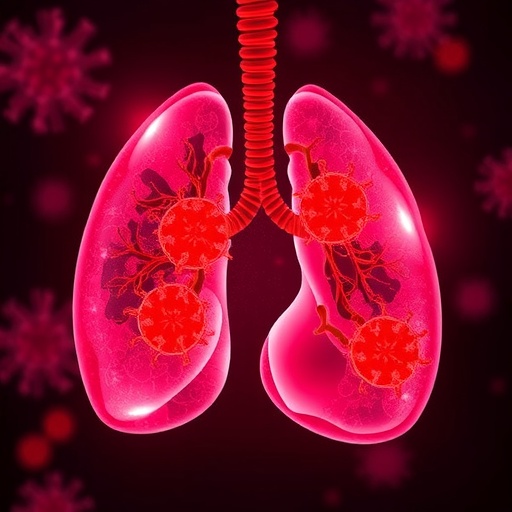
In the relentless pursuit to unravel the intricate mechanisms underlying severe respiratory infections, a groundbreaking study has illuminated a pivotal cellular process exacerbating pneumonia induced by a seemingly innocuous influenza virus compounded with secondary methicillin-resistant Staphylococcus aureus (MRSA) infection. Published in the renowned journal Cell Death Discovery in 2026, the research led by Tian Z.C., Liu Y., and Niu Y.J. delves deep into the destructive interplay between the host’s immune response and microbial pathogens, spotlighting pyroptosis as the culprits’ chief executor.
Lower-lethality influenza viruses traditionally manifest with mild to moderate symptoms, posing less immediate mortality risk than their highly virulent counterparts. However, the clinical trajectory can sharply worsen when secondary bacterial co-infections, especially involving drug-resistant strains such as MRSA, complicate the disease course. This synergy often culminates in severe pneumonia and escalated mortality rates. The team’s investigative focus targeted the cellular dynamics responsible for this exacerbation, zeroing in on pyroptosis—a highly inflammatory mode of programmed cell death distinguished from apoptosis by its capacity to release potent pro-inflammatory intracellular contents.
Pyroptosis, driven by the activation of inflammatory caspases such as caspase-1 and caspase-11, unleashes gasdermin D-mediated pore formation in the plasma membrane. This event not only compromises cell integrity but also triggers an intense inflammatory cascade through the secretion of cytokines like IL-1β and IL-18. While pyroptosis serves as an essential defense mechanism against intracellular pathogens, its dysregulation can precipitate a hyperinflammatory state detrimental to host tissues. This delicate balance unveils the paradox where the immune system’s protective measures become pathogenic drivers themselves.
Using cutting-edge in vivo models mimicking human co-infection scenarios, the researchers observed that infection with a low-pathogenic influenza virus alone induces moderate pyroptotic activity within pulmonary tissues. However, subsequent MRSA infection drastically amplified this response, triggering an excessive pyroptotic cascade that overwhelmed the lungs’ structural and immune defenses. Histopathological examinations revealed substantial alveolar damage, immune cell infiltration, and barrier disruption consistent with severe pneumonia.
At the molecular level, the study demonstrated upregulation of key pyroptosis regulators, including NLRP3 inflammasome components and activated caspase-1, correlating strongly with worsening lung pathology. These findings were buttressed by quantitative PCR and immunoblot analyses confirming elevated expression and processing of pyroptotic mediators. Notably, chemical or genetic inhibition of pyroptosis pathways significantly mitigated tissue damage, dampened inflammatory signaling, and improved survival outcomes in co-infected animals, underscoring the mechanistic importance of this pathway.
Importantly, the researchers also mapped the temporal dynamics of host-pathogen interaction, revealing that the initial influenza infection primes pulmonary immune cells, rendering them hyperresponsive to secondary bacterial stimuli. This priming effect orchestrates a maladaptive amplification loop wherein MRSA triggers exaggerated inflammasome activation and pyroptosis beyond physiologic control. Such insight offers a nuanced understanding of why some otherwise manageable infections spiral into life-threatening complications.
The clinical implications are profound, especially in an era marked by increasing antibiotic resistance and recurring influenza outbreaks. By highlighting pyroptosis as a therapeutic target, this work opens avenues for adjunct therapies aimed at modulating the host immune response rather than solely eradicating pathogens. The prospect of developing small molecules or biologics that can finely tune inflammasome activity could revolutionize treatment strategies for viral-bacterial co-infections.
Furthermore, the study extends broader relevance to other pulmonary conditions characterized by dysregulated inflammation, including acute respiratory distress syndrome (ARDS) and chronic obstructive pulmonary disease (COPD). Understanding the triggers and regulators of pyroptosis within the lung milieu could illuminate pathophysiological processes common across multiple respiratory diseases, offering a unified framework for intervention.
This investigation also underscores the critical need for heightened surveillance and prompt management of bacterial superinfections in patients recovering from influenza, even in cases classified as low risk based on initial viral pathogenicity. Healthcare providers might reconsider current protocols and integrate biomarkers indicative of pyroptotic activity to better stratify patient risk and tailor therapeutic approaches.
Mechanistically, the role of the NLRP3 inflammasome in bridging viral and bacterial insults spotlights its central function as a molecular hub. Activation of this multiprotein complex culminates not only in pyroptosis but also in the release of inflammatory mediators that recruit and activate additional immune cells. While such recruitment is essential for pathogen clearance, excessive infiltration exacerbates tissue injury, setting a vicious cycle difficult to break without precise intervention.
Moreover, the interplay between viral modulation of host immune responses and bacterial evasion tactics emerges as a sophisticated battlefield. Influenza viruses can alter macrophage function and cytokine profiles, creating niches conducive to MRSA expansion. Conversely, MRSA’s expression of immune-modulatory proteins and toxins intensifies inflammasome activation, highlighting a synergistic pathogenic dance.
Noteworthy is how the study leverages advanced transcriptomic and proteomic analyses to dissect the cellular milieu within infected lungs at unprecedented resolution. By identifying distinct immune cell populations undergoing pyroptosis and correlating these with disease severity, the research enhances our understanding of cellular contributors beyond conventional paradigms focused solely on neutrophils and macrophages.
Interestingly, the authors propose that future investigations might explore host genetic predispositions influencing pyroptotic thresholds, potentially explaining interindividual variability in disease outcomes. Such insights could catalyze personalized medicine approaches where patient-specific inflammasome activity guides prophylactic or therapeutic decisions during respiratory infections.
In conclusion, this seminal research redefines our comprehension of pneumonia pathogenesis in the setting of viral-bacterial co-infections by placing excessive pyroptosis at the core of disease exacerbation. With the global burden of respiratory infections persisting as a major public health challenge, these findings galvanize efforts toward innovative interventions targeting host responses, heralding a new era in managing infectious diseases marked by co-infection complexities and immune dysregulation.
Subject of Research:
The role of excessive pyroptosis in worsening pneumonia during co-infection by a low-lethality influenza virus and methicillin-resistant Staphylococcus aureus (MRSA).
Article Title:
Excessive pyroptosis mediates the exacerbation of pneumonia caused by low-lethality influenza virus and secondary MRSA co-infection.
Article References:
Tian, ZC., Liu, Y., Niu, YJ. et al. Excessive pyroptosis mediates the exacerbation of pneumonia caused by low-lethality influenza virus and secondary MRSA co-infection. Cell Death Discov. (2026). https://doi.org/10.1038/s41420-026-03031-z
Image Credits:
AI Generated
DOI:
https://doi.org/10.1038/s41420-026-03031-z
Tags: drug-resistant MRSA bacterial pneumoniaexcessive pyroptosis in pneumoniagasdermin D pore formationinflammatory caspases in pneumoniainflammatory response in MRSA pneumoniainfluenza virus and MRSA co-infectionprogrammed cell death in lung infectionpyroptosis role in respiratory infectionspyroptosis versus apoptosis in immunitysecondary bacterial infections in flusevere pneumonia pathogenesis mechanismstherapeutic targets in flu and MRSA pneumonia