• HOME
  • NEWS
  • EXPLORE
    • CAREER
      • Companies
      • Jobs
    • EVENTS
    • iGEM
      • News
      • Team
    • PHOTOS
    • VIDEO
    • WIKI
  • BLOG
  • COMMUNITY
    • FACEBOOK
    • INSTAGRAM
    • TWITTER
Wednesday, October 7, 2026
BIOENGINEER.ORG
No Result
View All Result
  • Login
  • HOME
  • NEWS
  • EXPLORE
    • CAREER
      • Companies
      • Jobs
        • Lecturer
        • PhD Studentship
        • Postdoc
        • Research Assistant
    • EVENTS
    • iGEM
      • News
      • Team
    • PHOTOS
    • VIDEO
    • WIKI
  • BLOG
  • COMMUNITY
    • FACEBOOK
    • INSTAGRAM
    • TWITTER
No Result
View All Result
Bioengineer.org
No Result
View All Result
Home NEWS Science News Health

Even fake illness affects relationships among vampire bats

Bioengineer by Bioengineer
March 4, 2020
in Health
Reading Time: 3 mins read
0
IMAGE
Share on FacebookShare on TwitterShare on LinkedinShare on RedditShare on Telegram

IMAGE

Credit: Josh More


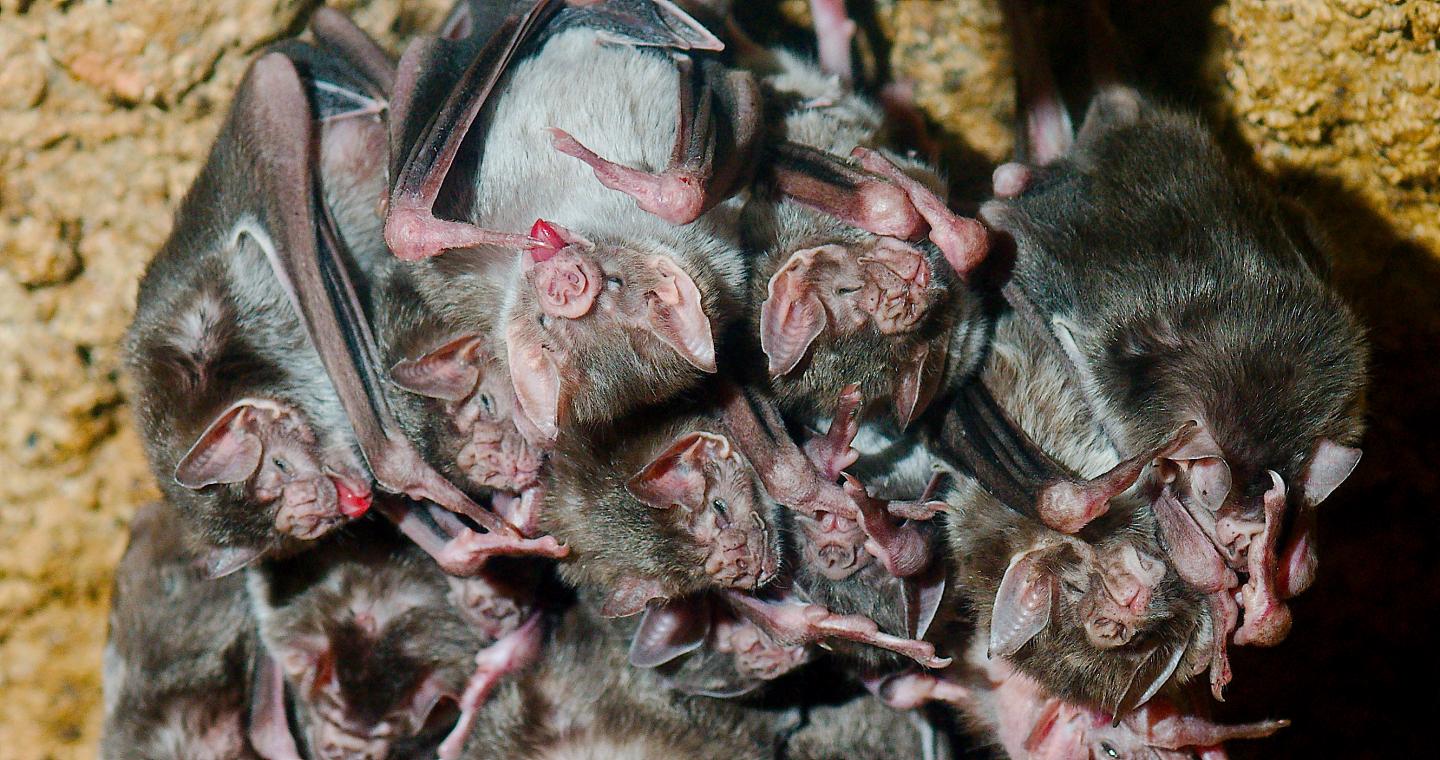
As Italy urges tourists not to cancel their plans in the face of the coronavirus outbreak and a National Basketball Association memo reportedly encourages teammates to avoid hi-fives, a new study conducted at the Smithsonian Tropical Research Institute (STRI) in Panama takes a look at how social bonds change in response to illness in another highly social animal: the vampire bat. In these bats, just as in humans, strong family bonds were less affected by the appearance of disease than were weaker social relationships.

Vampire bats are an extremely social species. Their interactions range from grooming both family members and unrelated individuals, to saving another bat from starvation by sharing a regurgitated blood meal.

“By asking how different social connections change in response to sickness, we can better understand how social networks change as a pathogen spreads,” said Gerry Carter, research associate at STRI and assistant professor of biology at The Ohio State University.

The lead author of the paper, Sebastian Stockmaier, did this project at STRI as part of his doctoral research at the University of Texas at Austin, advised by Dr. Daniel Bolnick at the University of Connecticut. Stockmaier injected vampire bats in a captive colony with a bacterial extract that challenged their immune systems, making them feel sick without harming their health or any risk of transmission. He then observed how the appearance of being sick would affect the ill bats’ social relationships with other colony members.

Just as a sick person might choose to stop shaking hands with strangers but would still need to go to buy groceries, their results, published in the Journal of Animal Ecology, showed that sick vampire bats may reduce the amount of time they spend grooming–not a very important social interaction–but not food sharing–a more important social interaction.

Family relationships are very important: “A female vampire bat is less likely to groom an unrelated bat that is sick, but she won’t reduce the amount of time grooming her own sick offspring,” said Stockmaier.

“What we demonstrated in this study is that the type of social connection matters,” Carter said. “Just as in the recent COVID-19 outbreak, we would expect that a virus transmitted by contact would spread mainly within family groups, because these social connections will not be reduced by sickness behavior. In vampire bats, as well as in humans, the most important social behaviors and relationships don’t change as much when individuals are sick.”

“This study underlies the importance of basic research,” Page said. “Understanding how social interactions change in the face of illness is a key component in predicting the channels and speed at which a pathogen can spread across a population. Close observation of vampire bat behavior sheds light on how social animals interact, and how these interactions change – and importantly, when they do not change but persist – as individuals become sick.”

###

The Smithsonian Tropical Research Institute, headquartered in Panama City, Panama, is a unit of the Smithsonian Institution. The Institute furthers the understanding of tropical biodiversity and its importance to human welfare, trains students to conduct research in the tropics and promotes conservation by increasing public awareness of the beauty and importance of tropical ecosystems. Promo video.

Stockmaier, S., Bolnick, D.I., Page, R.A. and Carter, G.G. 2020. Sickness effects on social interactions depend on the type of behavior and relationship. Journal of Animal Ecology, https://doi.org/10.1111/1365-2656.13193

Media Contact
Beth King
[email protected]
507-212-8216

Related Journal Article

http://dx.doi.org/10.1111/1365-2656.13193

Tags: BiologyEnvironmental HealthSocial/Behavioral ScienceVirology
Share12Tweet8Share2ShareShareShare2

Related Posts

Brain Waste-Clearance System Scans Could Predict Epilepsy Surgery Success

Brain Waste-Clearance System Scans Could Predict Epilepsy Surgery Success

October 7, 2026
Psilocybin users with depression are not abandoning conventional mental health care, study finds

Psilocybin users with depression are not abandoning conventional mental health care, study finds

October 7, 2026

Gene Behind Hereditary Spastic Paraplegia Linked to Rare Plaque-Only Dementia

October 7, 2026

Blood Cell Counts Reveal Which Children With Gastroenteritis Get Admitted

October 7, 2026
Please login to join discussion

POPULAR NEWS

  • Alloys That Shrink Their Own Grains: New PIX Mechanism Refines Metals With Heat Alone

    Alloys That Shrink Their Own Grains: New PIX Mechanism Refines Metals With Heat Alone

    29 shares
    Share 12 Tweet 7
  • Endurance Exercise Reshapes the Liver in Males and Females Through Distinct Molecular Routes

    29 shares
    Share 12 Tweet 7
  • Single Transcription Factor PU.1 Rapidly Converts Fibroblasts into Macrophage-Lineage Cells

    29 shares
    Share 12 Tweet 7
  • New Scale Measures How Ready Nurse Educators Really Are for the AI Era

    29 shares
    Share 12 Tweet 7

About

We bring you the latest biotechnology news from best research centers and universities around the world. Check our website.

Follow us

Recent News

Alloys That Shrink Their Own Grains: New PIX Mechanism Refines Metals With Heat Alone

Endurance Exercise Reshapes the Liver in Males and Females Through Distinct Molecular Routes

Single Transcription Factor PU.1 Rapidly Converts Fibroblasts into Macrophage-Lineage Cells

Subscribe to Blog via Email

Success! An email was just sent to confirm your subscription. Please find the email now and click 'Confirm' to start subscribing.

Join 85 other subscribers
  • Contact Us

Bioengineer.org © Copyright 2023 All Rights Reserved.

Welcome Back!

Login to your account below

Forgotten Password?

Retrieve your password

Please enter your username or email address to reset your password.

Log In
No Result
View All Result
  • Homepages
    • Home Page 1
    • Home Page 2
  • News
  • National
  • Business
  • Health
  • Lifestyle
  • Science

Bioengineer.org © Copyright 2023 All Rights Reserved.