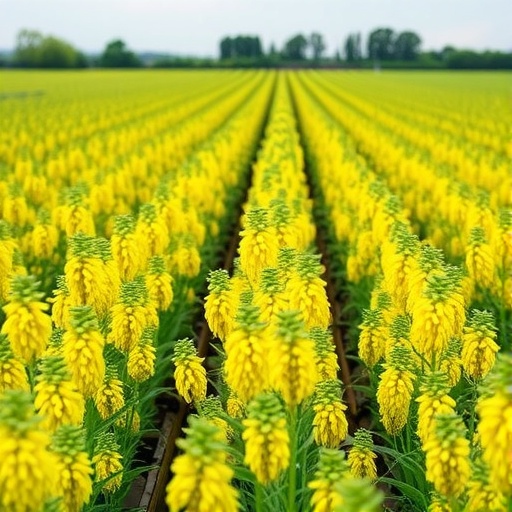
The quest for agricultural improvement has paved the way for the exploration of various crops, including rapeseed, or Brassica napus L., a species renowned for its versatility and economic importance. In recent findings reported by a team of researchers, significant advancements have been made in assessing the performance and estimation of variability among different rapeseed genotypes. These developments hold the promise of enhancing agricultural yields and ensuring food security in a world confronted by changing climate conditions.
Rapeseed, a member of the Brassicaceae family, is primarily cultivated for its oil-rich seeds. The oil derived from these seeds has various applications, including cooking, industrial uses, and biofuel production. As a consequence, the optimization of rapeseed cultivation practices has garnered immense interest from agronomists and agricultural scientists alike. Understanding the genetic diversity within rapeseed genotypes is pivotal in developing varieties that can thrive under varying environmental conditions.
The recent research, led by a team at a prominent agricultural institution, involved a comprehensive analysis of multiple rapeseed genotypes. Researchers meticulously evaluated traits such as growth patterns, yield potential, and resistance to diseases and pests. Each of these factors plays a crucial role in determining the overall performance of the crops. Statistical models were applied to quantify the extent of genetic variability, providing insights into which genotypes exhibited superior traits in a competitive setting.
One noteworthy aspect of this research was the effort to quantify variability among the genotypes. Genetic variability is vital for plant breeding programs, as it can lead to the development of enhanced crop varieties. The study utilized various experimental designs to analyze the genotypes over different environmental conditions, ensuring that robust conclusions could be drawn about their performance. These detailed analyses shed light on how each genotype responds to stressors such as drought or nutrient deficiencies, both of which are increasingly relevant in our rapidly changing climate.
Furthermore, the research revealed that certain genotypes significantly outperformed others in terms of yield and resilience. These discoveries emphasize the importance of genetic selection in breeding programs aimed at maximizing productivity. The researchers have highlighted that with continued exploration and breeding efforts, there exists a high potential for uncovering even more robust rapeseed varieties that are better adapted to different agricultural regions around the world.
The implications of this study extend beyond just improving rapeseed yields; they touch on broader agricultural practices, including sustainability and resource management. By identifying and breeding superior genotypes, farmers can adopt practices that not only boost crop yields but also minimize inputs such as fertilizers and pesticides. This aligns with the global agenda for sustainable agriculture and food security while addressing the pressing challenges posed by environmental changes.
In addition to yield assessments, the research team explored the relationship between various traits to better understand how they interact and contribute to overall plant performance. Advanced statistical methods were employed to unravel the complex traits that govern rapeseed quality. Insights gained from such analyses could pave the way for new agronomic practices that are more efficient and sustainable, offering a dual benefit to farmers and the ecosystem alike.
Moreover, the adaptability of new rapeseed varieties to climate variations was a focal point of this research. Given that climate conditions are becoming more unpredictable, developing crops that can maintain their productivity under stress is a fundamental challenge for agronomists. The identification of genotypes that perform well across different environments is a step toward creating more resilient agricultural systems capable of withstanding climate adversity.
The research findings have administrative implications as well. Policymakers are likely to take note of these new developments as they consider agricultural policies and support for research initiatives. The increased productivity of rapeseed can lead to enhanced economic outcomes for farmers, while also engaging local communities in sustainable farming practices that support biodiversity and environmental health.
As this research continues to ripple through the scientific community, it is likely to inspire further studies exploring other crops utilizing similar methodologies. The quest for understanding plant genetic variation is an ongoing journey that will undoubtedly yield more fruits in diverse agricultural settings worldwide. Ultimately, the research underscores the crucial role that innovative genetics and rigorous scientific inquiry play in tackling some of the most significant global challenges, including food security and sustainable agriculture.
In conclusion, the ongoing exploration and assessment of rapeseed genotypes offer a beacon of hope for the agricultural sector. As the methodologies refine and our genetic understanding of crops deepens, it is clear that there remains considerable potential for improving not only rapeseed yields but also the resilience of the world’s agricultural systems. The commitment to research and innovation will undoubtedly have lasting effects well into the future, providing critical resources to combat the looming challenges associated with food production and environmental stewardship.
Subject of Research: Rapeseed (Brassica napus L.) genotypes performance assessment and variability estimation.
Article Title: Assessment of performance and estimation of variability in rapeseed (Brassica napus L.) genotypes.
Article References:
Abu, M., Mengistu, B., Mola, T. et al. Assessment of performance and estimation of variability in rapeseed (Brassica nappus L.) genotypes.
Discov Agric 4, 26 (2026). https://doi.org/10.1007/s44279-026-00487-6
Image Credits: AI Generated
DOI: https://doi.org/10.1007/s44279-026-00487-6
Keywords: Rapeseed, Brassica napus, genetic variability, crop performance, sustainable agriculture.
Tags: agricultural performance assessmentagronomic practices for rapeseedclimate-resilient rapeseed varietiesenhancing agricultural yieldsfood security and crop improvementgenetic diversity in cropsindustrial applications of rapeseed oiloilseed crop research advancementsoptimizing rapeseed cultivationpest and disease resistance in rapeseedrapeseed genotype evaluationvariability in Brassica napus