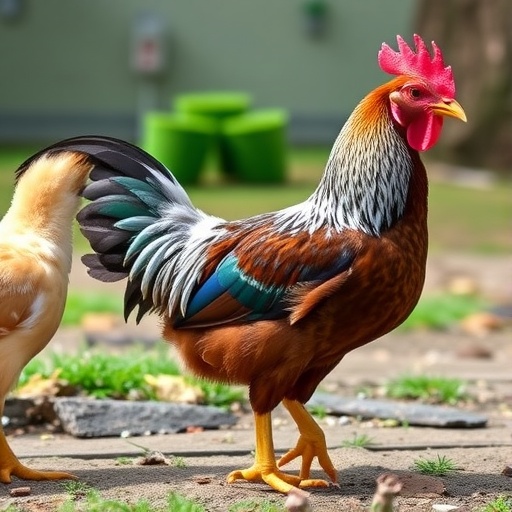
In recent years, the agricultural sector has been increasingly concerned about the impact of pests and diseases on livestock, particularly in regions heavily reliant on poultry farming. The pursuit of effective pest control methods continues to advance, with new research emerging that explores the efficacy of various solutions. A groundbreaking study conducted by Berihun, A.M., Hailu, E., and Demessie, Y. focuses on the assessment of two essential agents—Diazinon and botanical extracts—specifically Tephrosia vogelii and Cissus quadrangularis. This research takes into account Ethiopian conditions, where avian flea infestations present significant challenges for local chicken farmers.
Understanding the significance of flea control in chickens is crucial for minimizing economic losses associated with poultry management. Fleas not only cause discomfort to the birds but can also lead to more severe health issues, impacting growth rates and overall productivity. Hence, the need for effective control strategies is paramount. The efficacy of chemical solutions like Diazinon has been well-documented in various agricultural contexts; however, the exploration of botanical extracts as viable alternatives has gained momentum due to increasing concerns about the safety and environmental impacts of chemical pesticides.
Diazinon, an organophosphate pesticide, works by inhibiting the activity of an essential enzyme in pests, leading to their eventual mortality. Despite its effectiveness, its use has raised alarm bells owing to potential health risks for humans and other non-target organisms. Consequently, researchers and farmers alike are seeking environmentally friendly options that still deliver considerable results. The integration of botanical extracts, known for their insecticidal properties, represents a promising route for pest control that could mitigate some of the concerns associated with synthetic chemicals.
Botanical extracts such as Tephrosia vogelii and Cissus quadrangularis have been investigated not only for their insect repelling capabilities but also for their safety profile in comparison to conventional pesticides. Tephrosia vogelii, often referred to as the “fish poison tree,” has a long history of use in traditional pest control within various cultures due to the potent compounds it contains that are deleterious to insects. Similarly, Cissus quadrangularis, known for its medicinal properties, has shown potential in repelling pests and promoting overall poultry health.
This factorial study, designed meticulously under Ethiopian conditions, aimed to evaluate both the efficacy and safety of these agents when utilized in the context of poultry farming. Researchers employed varying concentrations and combinations of Diazinon and the botanical extracts to examine their effects on flea populations and the health status of chickens subjected to these treatments. The trials were conducted with an emphasis on complying with best practices in animal welfare and safety evaluation.
Initial results from the study provide promising insights into the competitive performance of botanical extracts alongside Diazinon. It was observed that the application of Tephrosia vogelii, when used in conjunction with Diazinon, significantly reduced flea populations. Notably, the study’s findings suggest that the combined approach not only enhances pest control but may also offer a dual benefit by promoting healthier poultry, thus increasing productivity.
Evaluating the safety profile of such treatments is critical in determining their feasibility for widespread adoption in poultry farming. The research team undertook a comprehensive assessment of the health markers in chickens treated with both Diazinon and the botanical extracts. Initial findings indicated minimal adverse effects, presenting these methods as potentially safe alternatives for existing pest management strategies.
Furthermore, the stances on pest control are evolving, with increasing advocacy for approaches that harmonize productivity and ecological sustainability. The findings from this factorial study could serve as a springboard for further research into integrated pest management practices that enhance the well-being of livestock while minimizing environmental footprints. Farmers are consistently looking for methods that can improve yields without compromising the health of their livestock or their surroundings.
The backdrop of Ethiopian poultry farming provides a unique context for this research, where traditional practices often clash with modern agricultural needs. Many farmers continue to rely on basic methods of pest control that may not be sufficient to combat ongoing infestations effectively. As the demand for poultry products increases, innovative solutions like those proposed by Berihun and colleagues become vital for fostering resilient farming systems capable of meeting consumer demands.
In addition to the economic implications, the study emphasizes the importance of knowledge transfer to local farmers. Engaging with poultry producers to share research findings and best practices will allow for the cultivation of a more informed community capable of making better pest management decisions. Educational efforts focused on demonstrating the safe and effective use of these treatments can foster acceptance and facilitate the transition toward improved agricultural practices.
As global food security initiatives continue to shape policy and practice in agriculture, ensuring the health of poultry populations is paramount. Pest control efforts that adopt both chemical and botanical solutions may pave the way for more sustainable practices. This study provides a key resource that highlights the potential for blend approaches that accommodate traditional pest management while advancing modernization amongst poultry producers.
In summary, the factorial study conducted under Ethiopian conditions presents an exciting intersection of innovation, sustainability, and animal welfare in poultry pest management. The combination of Diazinon and botanical extracts like Tephrosia vogelii and Cissus quadrangularis not only showcases practical efficacy but also embodies a shift towards safer agricultural practices. The impact of this research has the potential to resonate far beyond the study’s immediate geographical context, inspiring similar investigations that can address pest control in diverse settings worldwide.
The implications of these findings could lead to broader adoption of integrated pest management strategies that embrace both efficacy and safety in the pursuit of healthier livestock and sustainable agricultural practices. As researchers delve deeper into the intricate relationships between pest control methods, farmers stand to benefit significantly from adopting evidence-based approaches tailored to their specific agricultural environments.
Subject of Research: Efficacy and safety of Diazinon and botanical extracts for flea control in chickens.
Article Title: Efficacy and safety of Diazinon and botanical extracts (Tephrosia vogelii, Cissus quadrangularis) for flea control in chickens: a factorial study under Ethiopian conditions.
Article References:
Berihun, A.M., Hailu, E., Demessie, Y. et al. Efficacy and safety of Diazinon and botanical extracts (Tephrosia vogelii, Cissus quadrangularis) for flea control in chickens: a factorial study under Ethiopian conditions. Discov Agric 4, 30 (2026). https://doi.org/10.1007/s44279-026-00474-x
Image Credits: AI Generated
DOI: https://doi.org/10.1007/s44279-026-00474-x
Keywords: Diazinon, Tephrosia vogelii, Cissus quadrangularis, flea control, poultry farming, integrated pest management.
Tags: avian flea infestation solutionsbotanical extracts for flea controlchicken health and productivityCissus quadrangularis in agricultureDiazinon efficacy in livestockeconomic losses from flea infestationseffective pest management in poultryenvironmental impact of chemical pesticidesnatural flea control for chickenspoultry farming pest control strategiessustainable pest control alternativesTephrosia vogelii as pest deterrent